Pathology and Diagnostic Laboratory Cleaning Standards Australia: Essential Protocols and Compliance Guidelines
Pathology and diagnostic laboratory cleaning standards define the environmental hygiene practices required to protect diagnostic accuracy, patient and staff safety, and regulatory compliance within clinical testing facilities. This article explains why rigorous cleaning protocols matter, outlines the Australian regulatory framework that governs laboratory sanitation, and provides practical, audit-friendly procedures for zoning, specimen handling, biohazard waste, and product selection. Readers will gain concise, actionable checklists, tables mapping regulator requirements to on-the-ground cleaning actions, and verification strategies that support NPAAC accreditation and infection-control objectives. The guide also explains specialised equipment and TGA-relevant disinfectant classes, and it closes with how a local specialist can partner with facilities to implement compliant programs. Understanding these standards helps laboratory managers, facility cleaners, procurement teams, and quality officers reduce contamination risk and maintain uninterrupted diagnostic services while meeting contemporary Australian expectations.
Why Are Pathology Lab Cleaning Protocols Critical for Diagnostic Accuracy and Safety?
Pathology lab cleaning protocols are the structured set of actions, products, and verification measures that prevent environmental contamination from altering test results, transmitting infections, or causing operational disruptions. Rigorous protocols reduce cross-contamination between specimens and equipment, maintain instrument integrity for sensitive assays, and protect staff and patients from exposure to infectious agents. Following standardised protocols also ensures audit readiness for accreditation bodies and minimises downtime due to contamination incidents or recall investigations. Maintaining a proactive cleaning program delivers both diagnostic reliability and operational resilience, and it prepares teams for escalations such as outbreak response or high-volume testing demands.
Proper cleaning interrupts contamination pathways by targeting defined hotspots, and the next subsections explain those mechanisms and the infection-control role that frames all laboratory cleaning decisions.
How Does Proper Cleaning Prevent Cross-Contamination in Laboratories?
Proper cleaning prevents cross-contamination by removing organic matter and microbes from surfaces, then applying disinfectants with validated contact times to inactivate residual pathogens. Transmission commonly occurs via specimen handling surfaces, shared equipment like centrifuges and microscopes, and aerosolised droplets settling on benches; cleaning disrupts these pathways through removal, disinfection, and workflow controls. Verification methods such as ATP testing and periodic surface swabs provide objective evidence that cleaning has reduced bioburden to acceptable levels; these tools are useful for trending performance and pinpointing recurring hotspots. Consistently applied technique—wiping from clean-to-dirty areas, using fresh wipes, and observing dwell times—ensures that disinfection is effective rather than merely cosmetic, and these practices feed directly into routine audit records and continuous improvement processes.
What Role Does Infection Control Play in Medical Laboratory Hygiene?
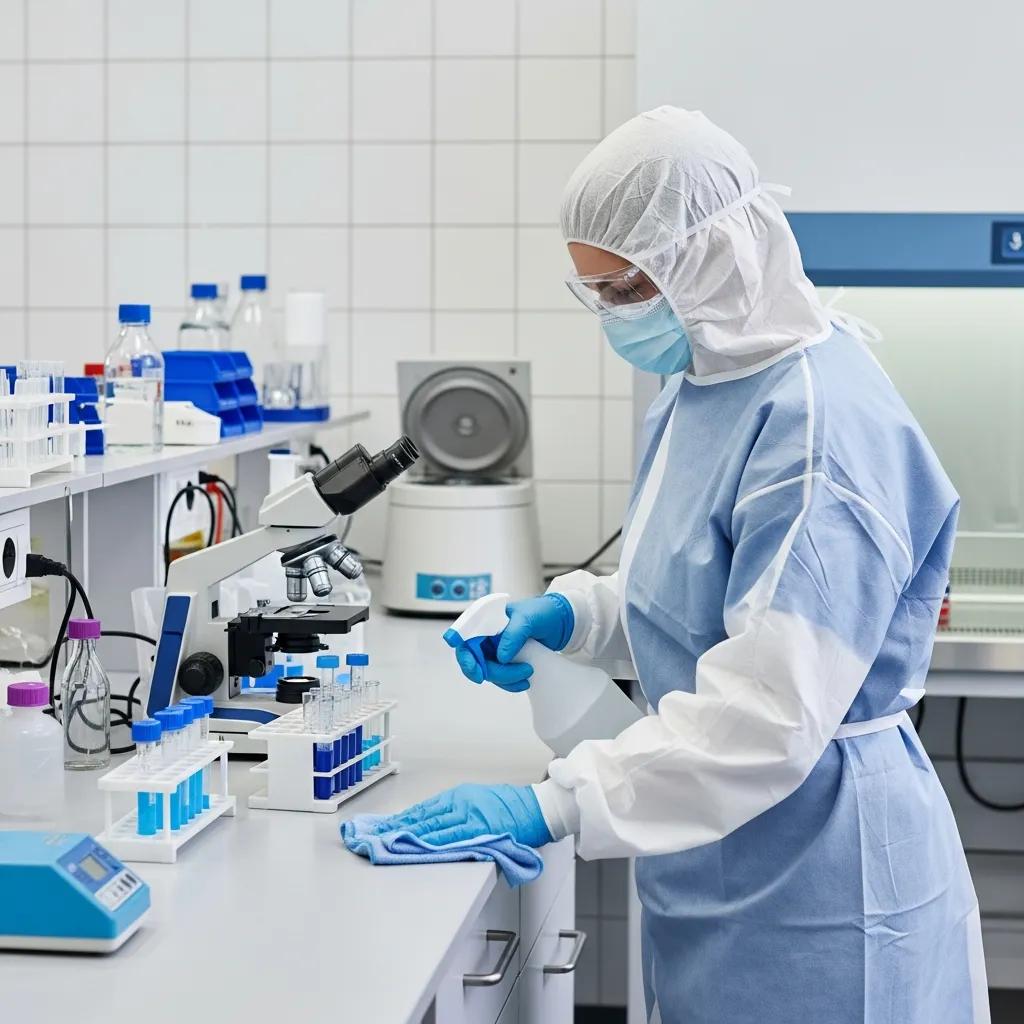
Infection control provides the overarching principles—standard precautions, risk assessment, and transmission-based procedures—that shape laboratory cleaning policies and day-to-day hygiene actions. Environmental cleaning is one pillar alongside PPE and hand hygiene; together they create multiple layers of protection that reduce both occupational exposure and the risk of sample contamination. Policies derived from infection-control concepts specify when enhanced cleaning is required, such as after spills, handling of high-risk specimens, or during an outbreak, and they define responsibilities across clinical and cleaning teams. Integrating infection surveillance data with cleaning verification closes the loop: rising surface contamination or incident reports trigger targeted retraining, adjusted schedules, and documented corrective actions that restore compliance and safety.
What Are the Australian Regulatory Standards for Pathology and Diagnostic Laboratory Cleaning?
Australian pathology cleaning standards reference a combination of accreditation expectations, national guidance, and product regulation to ensure safe, evidence-based practice across diagnostic settings. NPAAC sets laboratory accreditation expectations that influence required documentation and scope of cleaning, NHMRC provides infection prevention principles relevant to healthcare environments, and the TGA regulates disinfectants and medical products used for sanitisation. State-level guidance, such as from Queensland Health, interacts with national frameworks to add operational specifics; facilities must align local procedures with national accreditation criteria to remain audit-ready.
The table below maps authorities to actionable cleaning requirements for operational teams.
| Regulatory Authority | Key Requirement | Practical Action for Cleaners |
|---|---|---|
| NPAAC (accreditation) | Documented SOPs, cleaning schedules and evidence for laboratory processes | Maintain signed daily logs, SOPs for zone cleaning, and audit evidence for scope and frequency |
| NHMRC (infection control guidance) | Principles for standard and transmission-based precautions in healthcare environments | Align cleaning frequency and PPE with risk levels and embed spill-response procedures |
| TGA (product regulation) | Approval and labelling of disinfectants and medical-grade sanitising products | Use TGA-registered active ingredient classes and record product selection, batch, and contact times |
This comparison clarifies which authority governs which aspect of cleaning and how teams translate requirements into routine actions that support accreditation and safety.
How Does NPAAC Accreditation Influence Cleaning Requirements?
NPAAC accreditation drives cleaning programs by requiring documented processes, evidence of staff competence, and records demonstrating consistent implementation of hygiene tasks. Accreditation expectations include written SOPs for cleaning and disinfection, documented schedules showing frequency by zone, competency records for personnel who handle infectious material, and logs of verification testing such as environmental swabs or ATP results.
Audit-ready facilities keep retention copies of cleaning checklists, incident reports, and corrective-action records that demonstrate sustained compliance over time. Preparing cleaners and quality teams to present this documentary evidence during external assessment reduces non-conformance risk and supports continuous improvement cycles.
What Are the NHMRC and TGA Guidelines for Laboratory Sanitation?
NHMRC guidance provides infection-prevention principles—hand hygiene, surface decontamination, and risk-based cleaning frequency—that laboratories must apply within their operational context, while the TGA’s remit covers the regulatory status of disinfectants and manufacturers’ claims. Practical takeaways include selecting disinfectants with validated contact times, following manufacturer instructions for dilution and use, and ensuring products are suitable for laboratory surfaces and equipment. Verifying product suitability means checking active ingredient class, recommended dwell time, and compatibility with instruments; documentation of that selection process is part of good procurement and audit practice. Together, NHMRC and TGA guidance help facilities choose effective, compliant disinfectant regimens and operationalise infection-control principles.
Which Cleaning Protocols Apply to Key Laboratory Zones and Specimen Handling Areas?
Zone-based cleaning recognises that different areas within a pathology or diagnostic laboratory carry distinct contamination risks and therefore require tailored tasks, frequencies, and products. Typical zones include specimen reception and accessioning, testing benches, instrument rooms, storage and cold chain areas, and administrative spaces; each zone needs a defined cleaning regimen that protects specimens and equipment while supporting staff safety. A zone-focused approach reduces cross-over of tools, limits shared equipment, and clarifies responsibilities for cleaning staff versus laboratory personnel. The following table provides a quick-reference audit-friendly mapping of zones, tasks, and recommended disinfectant classes with typical frequencies.
| Zone | Surface / Task | Recommended Disinfectant & Frequency |
|---|---|---|
| Specimen reception / accessioning bench | Wipe down work surface after each specimen batch and after visible soiling | Chlorine or quaternary ammonium compound; after-batch and immediate spill response |
| Testing benches and instrument touchpoints | Clean and disinfect between assays or daily for low-throughput benches | Alcohol-based wipe for quick touchpoints; validated disinfectant for instrument housings; between-run or daily |
| Storage / cold chain surfaces | Clean shelving and fridge handles weekly and after any spill | Neutral pH disinfectant compatible with cold storage; weekly or event-driven |
Using a zone-based table simplifies audits and helps ensure cleaning frequency is matched to risk and workflow.
What Are Best Practices for Specimen Handling Area Disinfection?
Best practice for specimen handling areas begins with immediate removal of gross contamination, followed by cleaning to remove organic load, and then disinfection with an appropriate product and validated contact time. PPE must be worn during all specimen handling and spill cleanup events, and staff should follow donning and doffing sequences that prevent self-contamination and cross-transfer to clean zones. Verification steps—such as spot ATP testing after routine disinfection—confirm that procedures achieve expected reductions in surface bioburden; records of these checks support accreditation and continuous improvement discussions. Clear workflows that separate dirty-to-clean movement and limit shared instruments in handling zones further reduce the likelihood of sample cross-contamination.
How Should Biohazard Waste Be Managed in Diagnostic Labs?
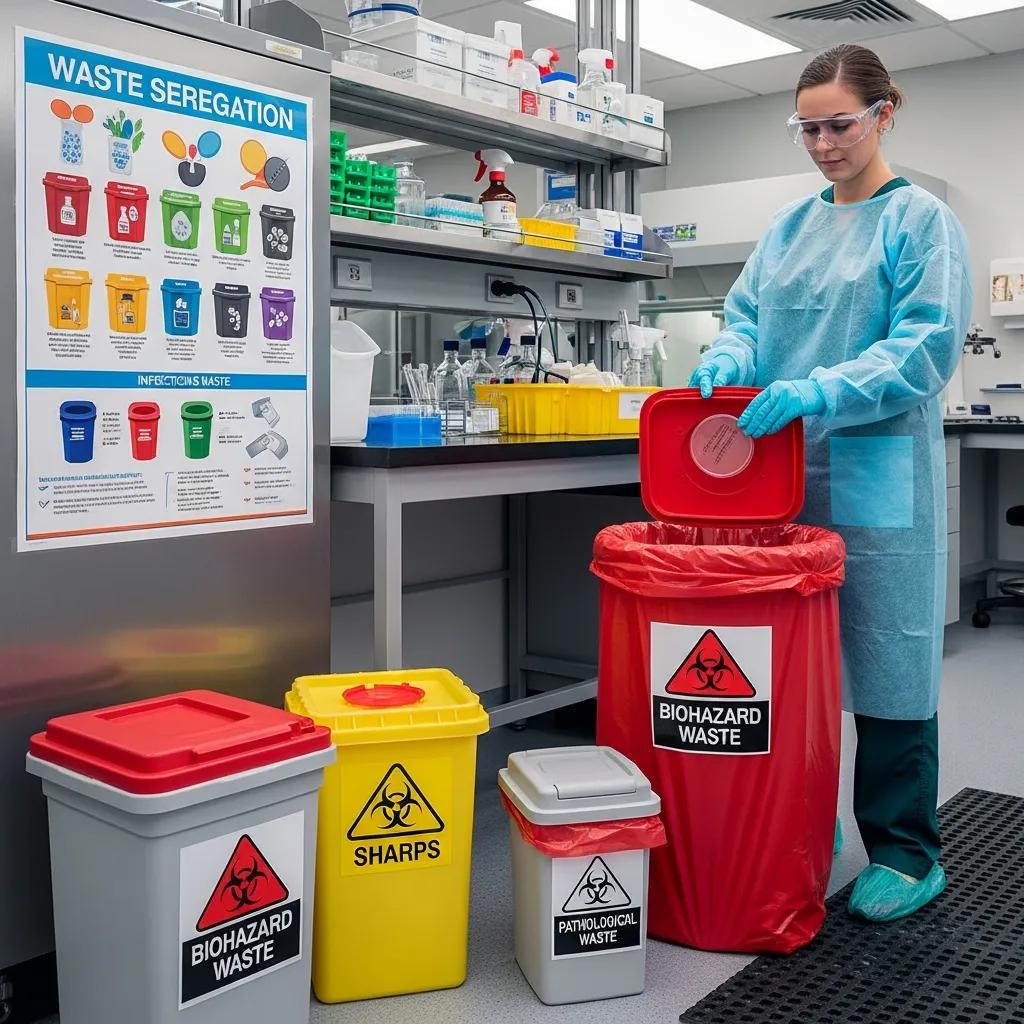
Biohazard waste management requires strict segregation, containment, labelling, and secure storage pending collection by authorised waste contractors, with records that demonstrate chain-of-custody and safe handover. Common categories include sharps, infectious clinical waste, and contaminated consumables; each has prescribed containment (e.g., puncture-resistant sharps containers) and colour-coded systems consistent with local regulations. Secure, time-limited storage reduces risks of exposure and environmental contamination, and documentation such as waste disposal manifests and contractor receipts provide audit evidence. Integrating waste-handling steps into cleaning SOPs and training ensures that cleaners and clinical staff understand roles and maintain compliance.
What Specialised Equipment and Hospital-Grade Products Are Used in Pathology Lab Cleaning?
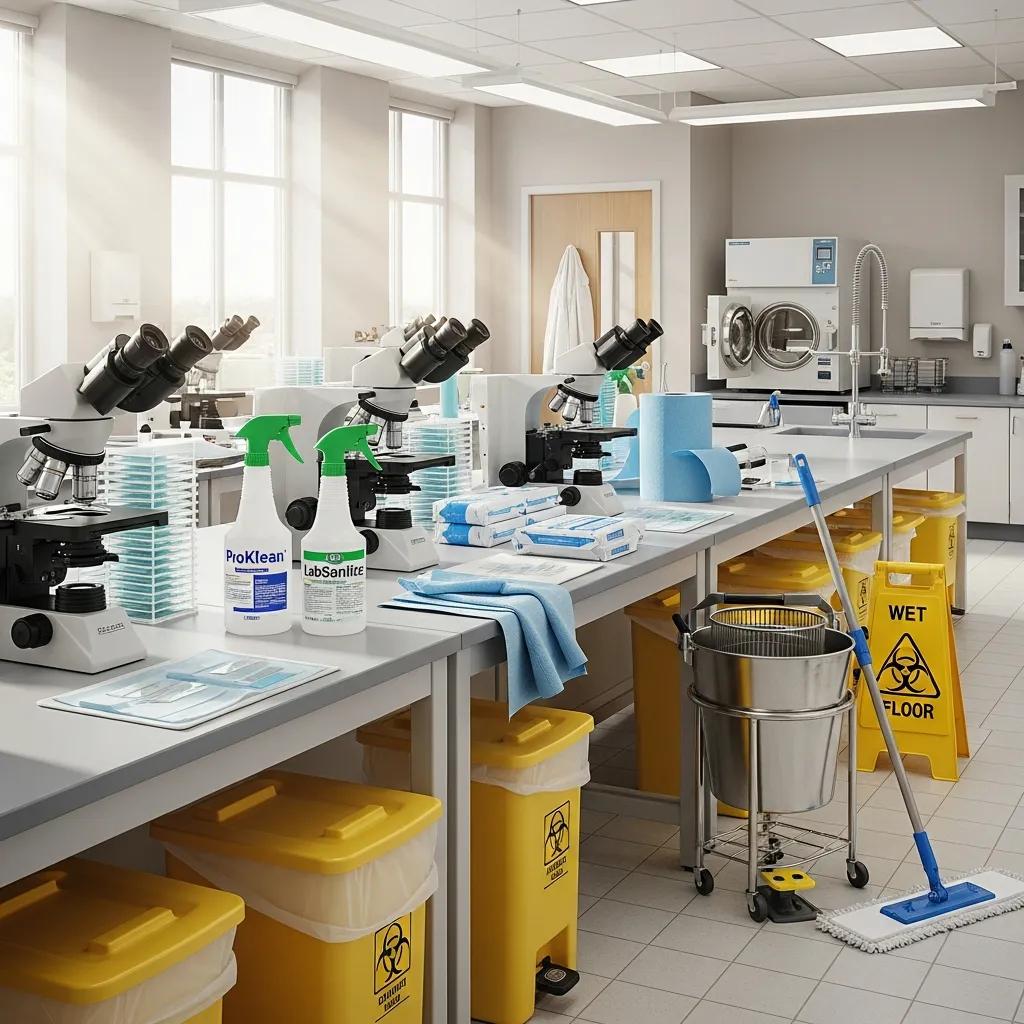
Specialised cleaning in pathology labs uses hospital-grade disinfectants, microfibre cleaning systems that remove soil effectively, HEPA-filtered vacuums for particulate control, and point-of-use applicators that support correct contact times. Selection criteria prioritise product efficacy (validated contact times), material compatibility to avoid instrument damage, and regulatory status of active ingredients. Procurement teams should favour disinfectant classes that meet TGA expectations and select application equipment that promotes efficient, traceable cleaning—such as labelled dosing systems and single-use consumables where cross-contamination risk is high. Properly chosen tools and products reduce rework, protect sensitive equipment, and simplify training and verification.
| Product / Disinfectant | TGA Status / Use-Case | Compatible Surfaces / Contact Time |
|---|---|---|
| Chlorine-based (sodium hypochlorite) | Widely accepted for high-level disinfection of surfaces and spill response | Hard, non-porous surfaces; contact time typically 1–10 minutes depending on concentration |
| Alcohol-based (ethanol / isopropyl) | Rapid contact for touchpoints; suitable for quick decontamination | Instrument touchpoints and small surfaces; contact time 30 seconds–2 minutes |
| Quaternary ammonium compounds | Broad environmental disinfection with surface compatibility | Benchtops and non-critical equipment; contact time 5–10 minutes and check material compatibility |
This table assists procurement and compliance teams when choosing products that balance efficacy with instrument safety and operational needs.
Which TGA-Approved Disinfectants Are Recommended for Medical Laboratories?
TGA oversight focuses on product claims and safety; recommended disinfectant classes for labs include chlorine-based agents for gross contamination, alcohols for rapid touchpoint disinfection, and quaternary ammonium compounds for routine environmental cleaning. Selection should consider validated contact times, the presence of organic load, and compatibility with laboratory instruments and surfaces to avoid damage or residue that could interfere with assays. Always consult product technical data sheets for concentration, surface compatibility, and manufacturer-recommended contact times, and retain procurement documentation as part of your quality records. Combining classes appropriately based on zone risk ensures both effective microbial control and equipment preservation.
How Do Color-Coded Cleaning Systems Enhance Laboratory Hygiene?
Colour-coded cleaning systems reduce cross-contamination by assigning distinct colours to tools and consumables used in different zones or tasks, such as specimen handling, general areas, and washrooms, thereby preventing inadvertent transfer of contaminants. Implementation requires clear assignment of colours, labelled tool storage, and staff training that reinforces consistent tool use and replacement schedules for consumables. Audits should include spot checks that observe colour adherence and tool condition, and corrective actions should be documented when cross-use occurs. Consistent application of colour-coding is a simple but effective behavioural control that supports other procedural safeguards and verification activities.
How Does Divine Commercial Cleaning Ensure Compliance and Quality in Pathology Lab Cleaning?
Divine Commercial Cleaning applies a compliance-first approach tailored to pathology and diagnostic environments, combining consultation-led planning, trained personnel, and documented audit processes to maintain diagnostic hygiene standards. The company provides a consultation to assess zone risks and develop bespoke cleaning schedules that align with accreditation expectations, and it deploys experienced professional cleaners trained in infection-control principles and laboratory protocols. Service delivery emphasises environmentally conscious practices, use of state-of-the-art tools and eco-friendly yet hospital-grade products, and a satisfaction guarantee supported by quality control checks and client feedback loops. Divine Commercial Cleaning serves the Sunshine Coast and Brisbane region from its Maroochydore base, offering flexible solutions without lock-in contracts to support facility needs and audit readiness.
Below is a concise list of the concrete service components facilities can expect when partnering with a specialised commercial cleaner.
- Consultation and Risk Assessment: On-site review to map zones, risks, and required frequencies.
- Tailored Cleaning Schedules: Customised SOPs and schedules aligned to accreditation needs.
- Trained Personnel and PPE Protocols: Staff trained in lab hygiene, spill response, and documented competency checks.
These service components form the basis for reliable, compliant cleaning programs, and the following subsections explain staff training and audit practices that support continuous compliance.
What Training and PPE Protocols Do Cleaning Staff Follow?
Training for laboratory cleaning staff emphasises infection control principles, safe handling of clinical waste, correct use of disinfectants with attention to contact times, and spill-response procedures that protect both staff and specimens. Competency assessments are conducted on practical tasks—such as correct dilution, cleaning technique, and PPE donning/doffing—and records of training and refresher sessions are kept to provide audit evidence. PPE selection is task-specific: gloves, eye protection, and gowns are standard for spill cleanup and high-risk specimen handling, and training covers fit, use, and safe removal to prevent self-contamination. Maintaining training records, incident logs, and documented corrective actions demonstrates an organisation’s commitment to safety and accreditation readiness.
How Are Cleaning Schedules and Audits Conducted for Diagnostic Centers?
Cleaning schedules are developed based on zone risk, throughput, and instrument sensitivity, with documented frequencies for routine cleaning, after-batch cleaning, and event-driven actions such as spill response or outbreak escalation. Audits occur internally and can be third-party, using checklists that verify SOPs, staff competence, product usage, and verification testing results; audit findings prompt corrective action plans with assigned owners and closure timelines. Evidence retained for audits typically includes signed checklists, environmental testing results, training records, and waste manifest receipts, and these items form the basis for continual improvement cycles that reduce recurrence of non-compliance. Regular review of schedules against surveillance data ensures cleaning intensity matches operational risk.
What Are the Frequently Asked Questions About Pathology and Diagnostic Laboratory Cleaning Standards?
This FAQ-style section answers common practitioner questions about cleaning frequency, contamination prevention, and product selection in a concise, actionable manner designed for quick reference and inclusion in facility knowledge bases.
How Often Should a Pathology Laboratory Be Professionally Cleaned?
Baseline cleaning frequency depends on zone risk: specimen reception and high-throughput testing benches typically require cleaning after each specimen batch or between runs, while instrument rooms and storage areas may be cleaned daily or weekly depending on use. Administrative and low-risk zones follow lower-frequency schedules such as daily or several times per week, with event-driven increases during outbreaks, high throughput periods, or after contamination incidents. Facilities should document frequency rationales in SOPs and retain evidence of performed tasks in logs for audit purposes. Trending verification data can justify increasing or reducing frequencies to maintain both efficacy and efficiency.
What Are the Essential Practices to Prevent Cross-Contamination in Labs?
Preventing cross-contamination relies on a set of coordinated practices that create physical, procedural, and verification barriers between specimens and clean areas. The top actionable practices laboratories should implement are listed below.
- Zone Separation and Unidirectional Workflow: Design workflows that move samples from dirty to clean areas without crossover.
- Dedicated Tools and Colour-Coding: Use assigned tools per zone and reinforce colour-coded systems to prevent cross-use.
- Routine Verification and Staff Training: Conduct regular surface testing and competency refreshers to ensure procedures are followed consistently.
These practices, combined with documented SOPs and incident response procedures, form a practical defence that protects diagnostic integrity and staff safety.
For facilities seeking partnership or a customised quote for pathology or diagnostic centre cleaning, specialist providers based in Maroochydore and serving the Sunshine Coast and Brisbane can offer consultation-led programs, eco-conscious hospital-grade products, tailored schedules, and audit support to help maintain compliance and operational continuity. Their approach typically includes consultation, bespoke scheduling, trained staff, and quality control with client feedback to drive continuous improvement.

Dianne, originally from Rockhampton, hails from a business-oriented family, with her father owning electrical stores and her uncle serving as Mayor. Moving to the Sunshine Coast at 13, she later pursued a rewarding real estate career and raised three children. As a single mom, she balanced university studies with domestic cleaning work. Armed with a Bachelor’s Degree in Business, majoring in Supply Chain Management, Dianne founded and grew Divine Commercial Cleaning into a thriving company. Her success is rooted in strong family mentorship, a positive attitude, and a solution-oriented approach, offering tailored cleaning services with integrity and strategic insight.