Consistency That Shows: Practical Quality Assurance for Carseldine Commercial Cleaning
Consistency in commercial cleaning means every site meets the same high standards for hygiene, presentation and compliance — every time. That comes from repeatable processes, trained staff and measurable quality checks. This article explains what consistency looks like for Carseldine businesses, lays out the core quality assurance (QA) pillars that deliver reliable cleaning, and shows how those pillars map to an operational model used by local providers like Divine Commercial Cleaning. Facility managers and business owners often face missed tasks, inconsistent outcomes and unclear accountability with conventional cleaners; a structured QA approach cuts that risk and delivers predictable results. Read on for the essential QA elements, the six-step Divine Cleaning System that turns policy into practice, the checklists and inspections that sustain performance, and the tech and training that lock in consistency. You’ll find practical lists, comparison tables and measurable metrics that Carseldine teams can use to evaluate, buy and manage dependable commercial cleaning services.
What Defines Consistent Commercial Cleaning Quality Assurance in Carseldine?
Consistent QA in commercial cleaning is a system that makes sure every site meets agreed hygiene, safety and presentation standards. It relies on documented processes, verification and corrective action — combining standard operating procedures (SOPs), measurable checklists, trained staff and scheduled inspections so results stay repeatable, even with different shifts or locations. The main benefit is reduced variation: steadier cleanliness, lower infection risk and stronger client confidence that keeps businesses running. Local factors in Carseldine — such as hygiene rules for healthcare, childcare and retail — mean QA must be tailored to each industry’s tasks and frequencies. Knowing these pillars helps procurement teams move the conversation beyond price and judge how a provider will keep results consistent over time.
The core pillars of consistent QA for commercial cleaning in Carseldine are:
- Clear SOPs and standardised checklists that define how tasks are done and measured.
- Structured training and certification so staff are competent and work safely.
- Regular inspections and audits with KPIs and set corrective-action timelines.
- Real-time reporting and documentation that give transparency and proof of work.
- Client feedback loops and scheduled reviews that drive continuous improvement.
These pillars form a practical framework for selecting a provider and set clear expectations for service-level agreements. Next, we explain how a local supplier puts this framework into everyday operations.
Below we briefly illustrate how a local provider aligns these pillars with on-site practice.
How Does Divine Commercial Cleaning Ensure Reliability Across Job Sites?
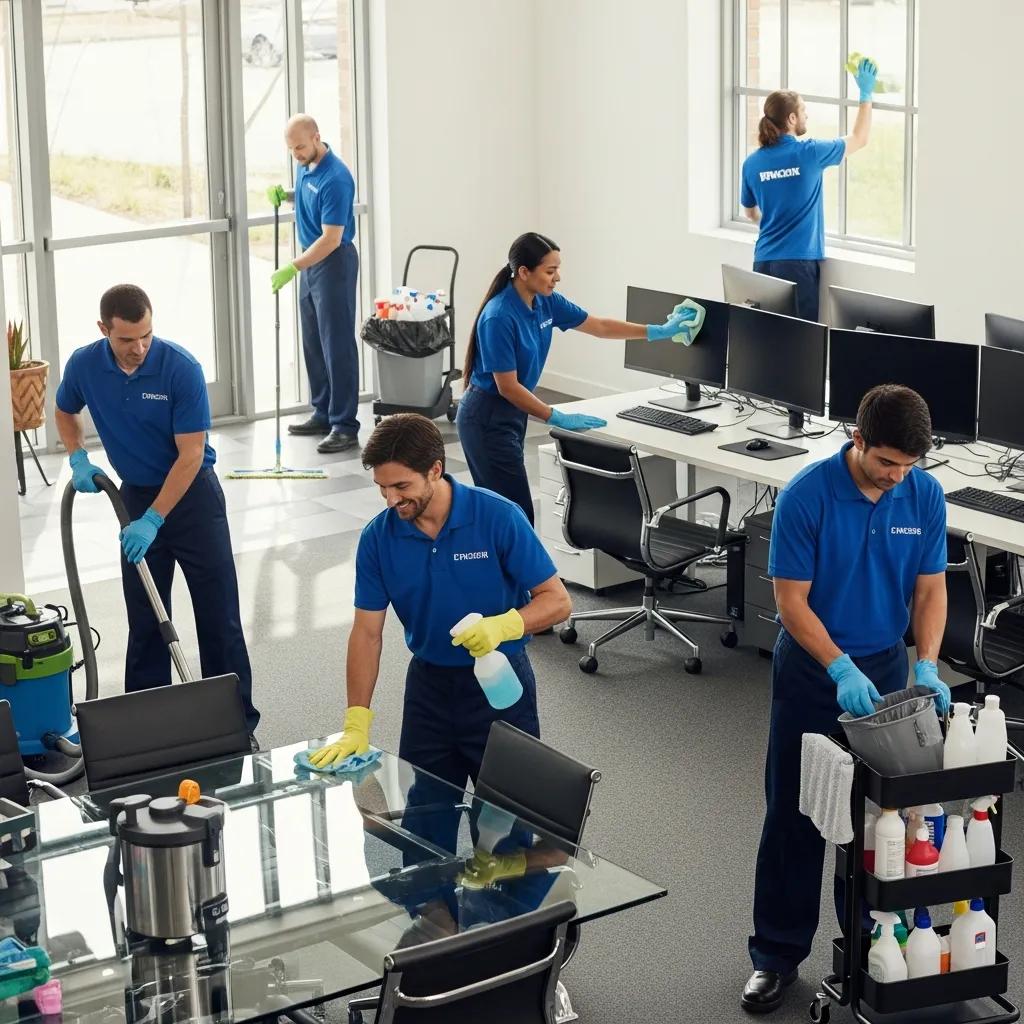
Divine Commercial Cleaning turns QA principles into reliable onsite performance with practical policies and trust signals tied to the pillars above. For example, a “same cleaner every time” policy builds site familiarity, reduces handover errors and improves task completion because staff learn site specifics. Teams are fully insured and police-checked to meet the security needs of medical centres and daycares, and a money-back guarantee provides a clear remediation path when standards slip. Together, these measures produce measurable reliability: higher checklist completion, faster corrective actions and stronger client retention through consistent delivery. When trust signals are paired with documented SOPs and scheduled inspections, Divine shows how QA theory maps to dependable results across Carseldine and nearby areas.
What Are the Core Components of the Divine Cleaning System?
The Divine Cleaning System breaks QA into linked components that cover assessment, execution and ongoing maintenance.
Engagements start with a consultation and site assessment to identify high-risk areas and ideal frequencies, then move to customised cleaning plans and checklists tailored to the site — for example, office versus medical centre requirements. Trained staff follow SOPs and log finished tasks, while quality-control checks and periodic audits verify outcomes and highlight issues. Maintenance cycles and regular reviews close the loop: inspection data and client feedback refine schedules and resource levels. Together these components create predictable cleaning rhythms that cut variability and keep sites aligned with local industry standards.
How Is the Divine Cleaning System Structured to Guarantee Cleaning Consistency?
The Divine Cleaning System is a six-step process that turns assessment and planning into measurable results through inspection, maintenance and review. Each step has a clear purpose and a measurable KPI so the system is auditable rather than anecdotal; the looped design ensures inspection findings are tracked and resolved. This structure supports consistent delivery across site types — from strata complexes to fitness centres — by standardising how plans are created, carried out and improved. The numbered summary below captures the six-step flow in a way you can compare and apply.
- Consultation: Assess site requirements, hazards and client expectations; KPI: comprehensive site profile completed within initial visit.
- Customised Plan: Build schedules, SOPs and checklists tailored to the site; KPI: checklist coverage matches risk areas 100%.
- Professional Execution: Assign trained staff and implement the plan with the “same cleaner every time” approach; KPI: task completion rate ≥ 95%.
- Quality Control Checks: Conduct routine inspections and record outcomes against checklists; KPI: inspection score threshold maintained.
- Ongoing Maintenance: Adjust frequencies and resources based on inspection trends and client feedback; KPI: corrective actions closed within agreed SLA.
- Review: Regular performance review meetings and continuous improvement cycles; KPI: client satisfaction and renewal metrics.
This six-step sequence works because every action ties to a measurable outcome and a named owner, creating a closed improvement loop that prevents performance drift.
To make it concrete, the table below pairs each step with the assurance it delivers and the practical outcomes facilities can expect.
| Step | What It Ensures | Practical Outcome |
|---|---|---|
| Consultation | Accurate site risk mapping | Tailored frequencies and resource allocation |
| Customised Plan | Task standardisation and clarity | Consistent task execution across shifts |
| Professional Execution | Competent, repeatable delivery | High task completion and fewer omissions |
| Quality Control Checks | Objective verification of outcomes | Early detection of issues and trend data |
| Ongoing Maintenance | Responsive adjustments to workload | Reduced rework and aligned resourcing |
| Review | Continuous improvement and accountability | Higher client satisfaction and renewals |
This comparison shows how each step converts policy into measurable results, so QA becomes routine rather than occasional. The system’s focus on KPIs and ownership makes consistency an operational standard, not a best-effort promise.
What Are the Six Steps of Divine Commercial Cleaning’s Quality Control Process?
The six QC steps are a practical version of the system above, providing measurable controls at every stage of the service lifecycle. It starts with a site consultation to identify high-touch zones and compliance needs, then moves through plan creation and execution by trained staff who often return to the same site for continuity. Quality-control checks are scheduled and recorded, corrective actions are tracked to resolution, and maintenance adjustments keep plans aligned with operational realities. Regular client reviews ensure standards remain fit for purpose and that incremental improvements are applied. Each step links to clear KPIs — inspection score targets, closure times for issues and task completion rates — that together protect the integrity of service across Carseldine sites.
How Do Customised Cleaning Plans Enhance Service Consistency?
Customised cleaning plans cut variability by turning broad QA pillars into site-specific SOPs, resource assignments and checklists that mirror actual use patterns and risk profiles. For example, an office plan prioritises desks, communal kitchens and high-touch areas daily, while a medical centre plan includes enhanced disinfection, waste segregation and stricter records. Documenting who does what, when and how makes training, inspections and corrective actions simpler and measurable. This targeted approach also optimises resources — matching frequency and staffing to real need — which avoids under- or over-cleaning and keeps budgets predictable. The result is consistent execution and a clearer basis for audits and continual improvement.
Which Quality Control Measures Maintain High Standards in Carseldine Commercial Cleaning?
High standards are maintained with a mix of standardised checklists, SOPs, regular inspections, audits and formal corrective-action processes. Together these create traceable records and objective metrics so facility managers assess performance beyond impressions. The practical benefits are immediate: clearer accountability, quicker issue resolution and data to guide decisions about frequency, scope or vendor performance. Below are common QC measures used by leading providers and auditors to keep standards consistent across site types.
- Detailed checklists that map tasks to frequencies and responsible staff.
- Standard operating procedures (SOPs) that specify method, materials and safety steps.
- Scheduled inspections and audits with scoring and photographic evidence.
- Corrective-action workflows that assign owners, due dates and closure checks.
- Client feedback loops and scheduled review meetings to drive improvement.
These measures work together: checklists standardise execution, SOPs keep methods consistent, inspections verify compliance and corrective-action systems address root causes.
As validation of these practices, Divine Commercial Cleaning uses documented checklists, a regular inspection cadence and a money-back guarantee to reinforce standards and give procurement teams confidence in remediation.
Before the next table, a short note on how to read it: the table lists typical QC items, the attribute each monitors, and a representative frequency or KPI organisations use to judge performance.
| Measure | Attribute Tracked | Frequency / KPI |
|---|---|---|
| Cleaning Checklist | Surface hygiene & task completion | Daily / Completion rate ≥ 95% |
| SOP Compliance | Method accuracy and safety | Quarterly review / Pass rate 90%+ |
| Supervisor Inspections | Overall site score & photographic proof | Weekly / Inspection score threshold |
| Third-party Audit | Independent compliance verification | Annual / Corrective action closure within 14 days |
| Corrective Actions Log | Issue resolution & response time | Real-time / SLA closure ≤ 48 hours |
This table makes it clear which QA elements monitor specific attributes and the cadence or metric that signals acceptable performance. Using these measures converts subjective expectations into quantitative oversight and reduces ambiguity when managing vendors.
How Are Detailed Checklists and SOPs Used to Ensure Cleaning Excellence?
Checklists and SOPs are the operational backbone of consistent cleaning. They spell out tasks, sequences, materials and acceptance criteria so staff follow the same steps across shifts. Checklists list tasks by room or zone and often use pass/fail or a 0–5 scoring system to produce objective inspection data. SOPs provide step-by-step guidance for higher-risk or regulated tasks — for example, disinfectant contact times or waste-handling protocols — ensuring compliance in medical centres and daycares. When checklists feed inspection apps and training modules, they enable rapid corrective action and reduce variation between individuals.
The result is standardised execution that simplifies supervision, reporting and continuous improvement.
What Role Do Regular Inspections and Audits Play in Quality Assurance?
Inspections and audits give objective proof that plans are followed and provide trend data for continuous improvement, turning ad-hoc results into predictable performance. Supervisor inspections check daily compliance and capture photographic evidence, while scheduled third-party audits validate long-term adherence and regulatory compliance.
Typical cadences: daily or weekly site checks for operational assurance, monthly reviews for trend analysis, and annual audits for contractual compliance. Inspection findings feed corrective-action logs with assigned owners and closure targets so issues are resolved promptly and recurrence is prevented. Over time, audit data reveals systemic gaps, enabling managers to refine SOPs, update training and reallocate resources to keep quality high.
How Does Staff Training and Certification Support Consistent Commercial Cleaning Quality?
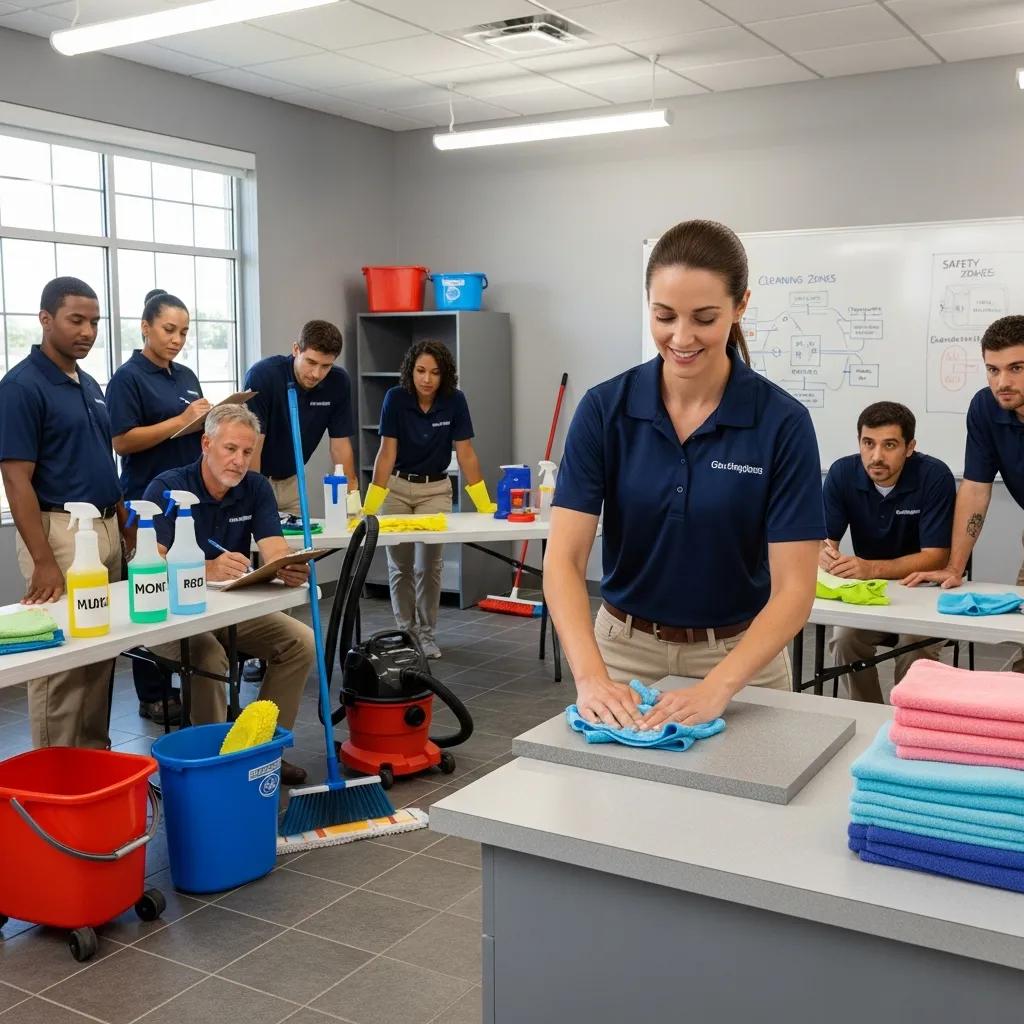
Training and certification build the human capability that executes documented plans consistently. Without training, SOPs stay theoretical and checklists become unreliable. Good programs begin with induction and site-specific onboarding covering SOPs, safety and client expectations, then add role-based modules on infection control, equipment use and chemical handling. Regular refresher training and practical assessments keep skills current and let supervisors re-certify competence on a schedule. Certified staff are more consistent because assessments link competence to task acceptance, and certification records give procurement teams confidence that personnel assigned to regulated sites meet standards. This people-focused element makes documented processes work at scale.
What Training Protocols Are Implemented for Divine Commercial Cleaning Staff?
Divine follows a structured training program that starts with induction on SOPs, site hazards and client expectations, followed by practical modules on safe chemical use, infection-control methods and equipment operation. New staff complete supervised shadow shifts to learn site specifics and receive a competency sign-off before working independently. Refresher sessions and periodic practical assessments keep standards current, and police checks plus insurance add onboarding assurance for sensitive locations. These steps reduce variability by ensuring staff can demonstrate procedures under supervision, supporting consistent results across Carseldine sites.
How Does Staff Certification Contribute to Reliable Cleaning Services?
Certification is proof of competence and ties personnel to site requirements, especially where regulated environments demand documented skills like infection control or hazardous waste handling. Matching certified staff to sites with specific compliance needs lowers the chance of incorrect procedures and rework, and increases client confidence because providers can show measurable competence. Certification also supports internal QA: supervisors allocate certified personnel to higher-risk tasks and use certification records during audits. In short, certification narrows performance variance and provides a defensible basis for compliance.
What Technologies Enhance Quality Assurance and Accountability in Commercial Cleaning?
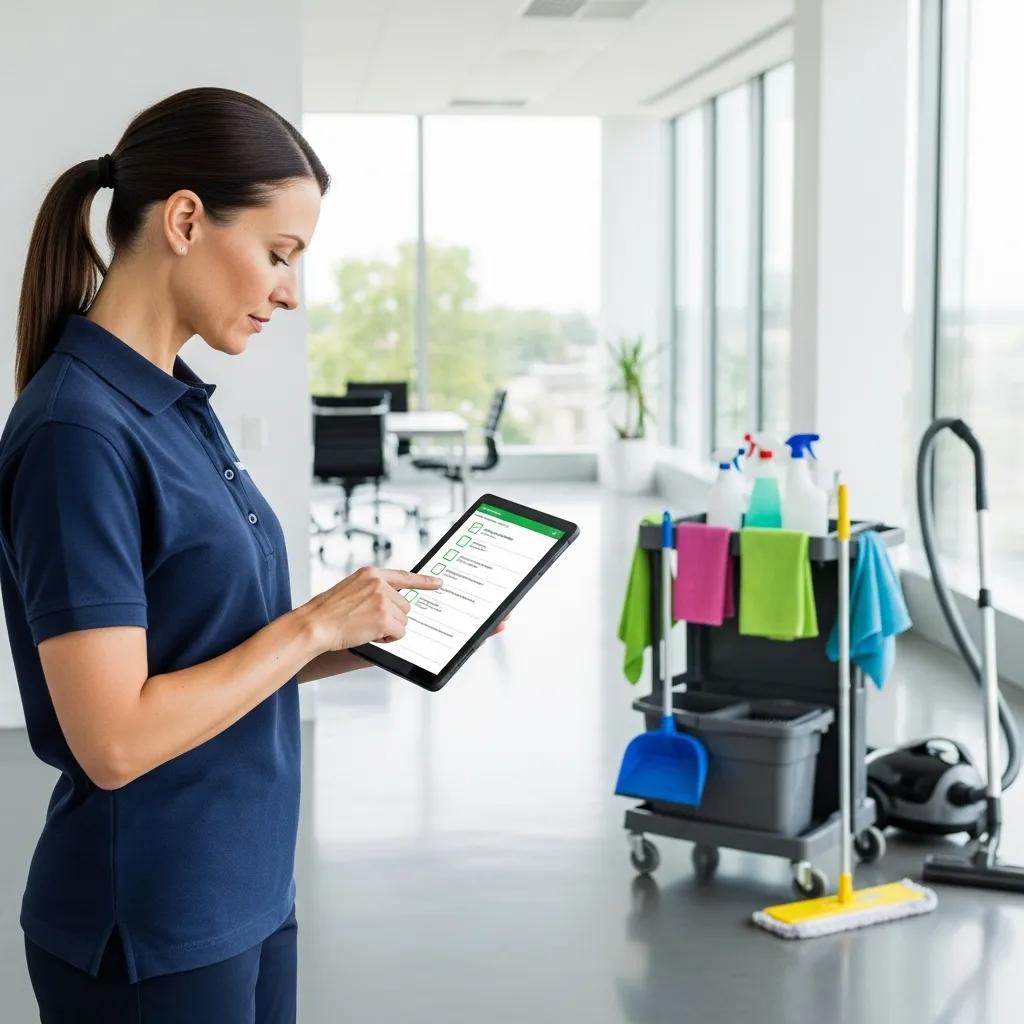
Technology strengthens QA by enabling real-time reporting, reliable inspection records and data-driven decisions that shorten response times and improve transparency. Common tools include mobile inspection apps that digitise checklists and timestamp photos, scheduling and workforce-management systems that support the “same cleaner every time” principle, and IoT sensors that monitor indoor air quality and high-touch surfaces. These tools give facility managers dashboards and audit trails that turn complaints into measurable issues, improving SLA adherence and speeding corrective action. Below are examples of technology functions and their QA benefits.
- Mobile inspection apps that capture checklist scores and timestamped photos for evidence-backed audits.
- Scheduling and rostering systems that maintain cleaner continuity and optimise resource allocation.
- IoT sensors and IAQ monitors that provide objective environmental data to guide targeted cleaning.
The next table maps common tools to their function and the benefit they deliver for QA and accountability, helping teams prioritise which investments give the biggest transparency and response gains.
| Tool | Function | Benefit |
|---|---|---|
| Mobile inspection app | Digitise checklists and photo evidence | Faster audits and immutable records |
| Scheduling software | Align staff to sites and shifts | Cleaner continuity and fewer handovers |
| IAQ / surface sensors | Monitor air quality and high-touch metrics | Objective triggers for targeted cleaning |
Each tool contributes measurable QA improvements and supports faster, evidence-led responses to issues, which helps keep cleaning consistent across sites.
Which Tools Does Divine Use for Real-Time Quality Monitoring?
Divine focuses on tool categories rather than naming specific vendors: mobile inspection apps for on-site quality checks, scheduling platforms that help keep the “same cleaner every time” continuity, and photographic timestamps for proof of service. Supervisors use these tools to record checklist scores, attach images of critical zones and monitor completion rates in near real time, creating an auditable trail for client reviews. Scheduling platforms reduce staff rotation and preserve site familiarity, which cuts errors and boosts checklist adherence. Photo evidence and timestamps speed dispute resolution because each issue ties back to a specific service event.
How Does Technology Improve Transparency and Client Communication?
Technology creates accessible records and dashboards clients and managers can review, moving discussions from impressions to objective metrics. When a client logs an issue, it can be recorded in the app, assigned an owner and tracked with timestamps through a corrective-action workflow — reducing resolution time and providing a clear audit trail. Client portals and automated reports enable SLA tracking and plain performance summaries, so renewals and scope changes are evidence-based rather than memory-based. The overall effect is faster issue resolution, stronger trust and a clearer path for continuous improvement driven by data.
Why Is Consistent Commercial Cleaning Vital for Business Productivity and Health in Carseldine?
Consistent cleaning protects workplace hygiene and supports staff wellbeing by lowering pathogen transmission, improving indoor air quality and reducing absenteeism from preventable illnesses. Regular, documented cleaning reduces microbial load on high-touch surfaces and helps maintain IAQ readings, which research links to better cognitive performance and fewer sick days. For businesses, reliable cleaning also protects reputation: consistently clean, client-facing spaces improve customer perception, support compliance in regulated settings and encourage repeat business. These outcomes help facility managers prioritise QA investments that deliver measurable operational and reputational returns.
How Does Consistent Cleaning Improve Workplace Hygiene and Employee Wellbeing?
Consistent cleaning reduces infection risk by focusing on high-touch surfaces and maintaining air-quality standards that affect respiratory health and comfort. Preventative schedules that combine routine disinfection with targeted incident responses keep microbial loads low and stabilise IAQ readings, which correlates with reduced absenteeism and improved productivity. When cleaning is consistent and documented, occupational health risks are easier to manage and employees feel safer — which supports morale.
Preventative cleaning is usually more cost-effective over time than reactive deep cleans because it prevents downtime and productivity losses from outbreaks or complaint-driven interruptions.
What Are the Effects of Reliable Cleaning on Business Reputation and Client Satisfaction?
Reliable cleaning protects public perception by keeping customer-facing spaces consistently clean and hygienic, which builds customer confidence and repeat visits. In regulated settings like medical centres and daycares, consistent QA proves compliance and reduces reputational and regulatory risk. Predictable outcomes also improve client satisfaction and retention because they reduce friction with vendors and make renewals more likely. Given these advantages, choose a provider that pairs documented SOPs, transparent reporting and responsive remediation — attributes offered by local providers such as Divine Commercial Cleaning across Brisbane and the Sunshine Coast. Divine’s services include fully insured, police-checked staff, eco-friendly practices and a money-back guarantee, offering procurement teams practical assurance when selecting a reliable local cleaning partner.
- Reliable hygiene reduces absenteeism and protects IAQ
- Consistent presentation improves customer confidence and sales
- Documented QA simplifies compliance and audit readiness
These benefits deliver a measurable return that stretches beyond cleanliness to workforce productivity and brand protection. Facility teams in Carseldine should prioritise providers that can demonstrate structured QA, transparent reporting and accountable remediation to achieve these outcomes.
Frequently Asked Questions
What are the benefits of using technology in commercial cleaning?
Technology helps by providing real-time reporting, reliable inspection records and data-driven decision-making. Mobile inspection apps let teams digitise checklists and attach photos, which makes audits quicker and disputes easier to resolve. Scheduling software keeps cleaner continuity and reduces handovers. IoT sensors can monitor air quality and high-touch areas, enabling targeted cleaning when it’s actually needed. Overall, tech improves transparency, speeds issue resolution and supports consistent service delivery, which leads to higher client satisfaction.
How can businesses measure the effectiveness of their cleaning services?
Measure effectiveness with clear metrics: task completion rates, inspection scores and client feedback. Detailed checklists and SOPs let you assess performance objectively. Regular inspections and audits provide compliance data, and tracking corrective actions and closure times highlights where improvements are needed. Analysing these metrics helps facility managers make informed decisions about service quality and vendor performance to keep cleaning consistent.
What role does client feedback play in quality assurance for cleaning services?
Client feedback is essential — it reveals real-world performance and points to areas that need adjustment. Scheduled reviews and feedback loops let clients raise concerns and suggest improvements, creating a partnership rather than a one-way service. Feedback informs schedule tweaks, resource allocation and targeted training. When providers act on client input, service quality improves and client satisfaction and retention follow.
How do customised cleaning plans adapt to different business environments?
Customised plans account for site type, usage patterns and regulatory needs. An office plan focuses on desks, kitchens and high-touch areas; a medical facility plan includes extra disinfection, waste segregation and stricter documentation. By assessing risks and required frequencies, these plans ensure cleaning is effective, efficient and compliant, which produces predictable, auditable results.
What are the key indicators of a reliable cleaning service provider?
Look for documented SOPs, regular inspections and transparent reporting. A reliable provider has a QA framework with measurable KPIs — task completion rates, inspection scores and corrective-action times. Client testimonials and feedback show responsiveness and consistency. Training and certification programs for staff indicate commitment to standards and regulatory compliance, which supports long-term reliability.
How does staff training impact the quality of cleaning services?
Training has a direct impact: well-trained staff follow procedures correctly, work safely and meet client expectations consistently. Site-specific onboarding, practical modules and ongoing refreshers ensure staff maintain skills. Certified employees deliver more consistent results, which reduces variability and strengthens overall service quality while improving staff confidence and morale.
Consistent commercial cleaning is essential for high hygiene standards, employee wellbeing and business reputation. Structured quality assurance practices give predictable outcomes that build client confidence and operational efficiency. Working with a provider like Divine Commercial Cleaning means your cleaning is handled with professionalism, clear reporting and accountable remediation. Contact us to see how our tailored solutions can raise your cleaning standards in Carseldine and beyond.

Dianne, originally from Rockhampton, hails from a business-oriented family, with her father owning electrical stores and her uncle serving as Mayor. Moving to the Sunshine Coast at 13, she later pursued a rewarding real estate career and raised three children. As a single mom, she balanced university studies with domestic cleaning work. Armed with a Bachelor’s Degree in Business, majoring in Supply Chain Management, Dianne founded and grew Divine Commercial Cleaning into a thriving company. Her success is rooted in strong family mentorship, a positive attitude, and a solution-oriented approach, offering tailored cleaning services with integrity and strategic insight.