Why choose Everton Hills medical cleaning services for safe, compliant healthcare spaces?
Medical cleaning is a specialist service that blends infection-control practice, approved disinfectants and organised workflows to cut Healthcare-Associated Infections (HAIs) and keep clinics audit-ready. Picking trained, verified cleaners lowers cross-contamination on high-touch areas, protects patients with reduced immunity and helps practices meet national guidance during inspections. This guide walks through the cleaning needs typical of Everton Hills clinics, the Australian standards that shape clinical cleaning, and a practical, step-by-step approach clinics can use to keep treatment rooms, waiting areas and diagnostic suites hygienic. You’ll also see how a local, experienced provider applies TGA-approved products, verifies staff, and delivers measurable benefits for patient safety and team wellbeing — plus simple steps to get a tailored quote. We use locally relevant phrases such as Medical cleaning Everton Hills, clinic disinfection Everton Hills and hospital-grade cleaning Everton Hills to help clinic managers and practice owners find useful, actionable information.
The need to focus on these risks — especially frequently touched surfaces — is clearly supported by the scientific literature.
High-touch surfaces and preventing HAIs through cleaning
Despite ongoing efforts, healthcare-associated infections remain an important cause of illness, added cost and longer hospital stays. Patient care items and frequently touched environmental surfaces are common points in the chain of transmission. These surfaces can carry bacteria, viruses, yeasts and other organisms; improving cleaning and disinfection has been shown to reduce HAI rates.
High-touch surfaces: microbial neighbours at hand, MM Azevedo, 2017
What specific medical cleaning needs do Everton Hills clinics and medical centres have?
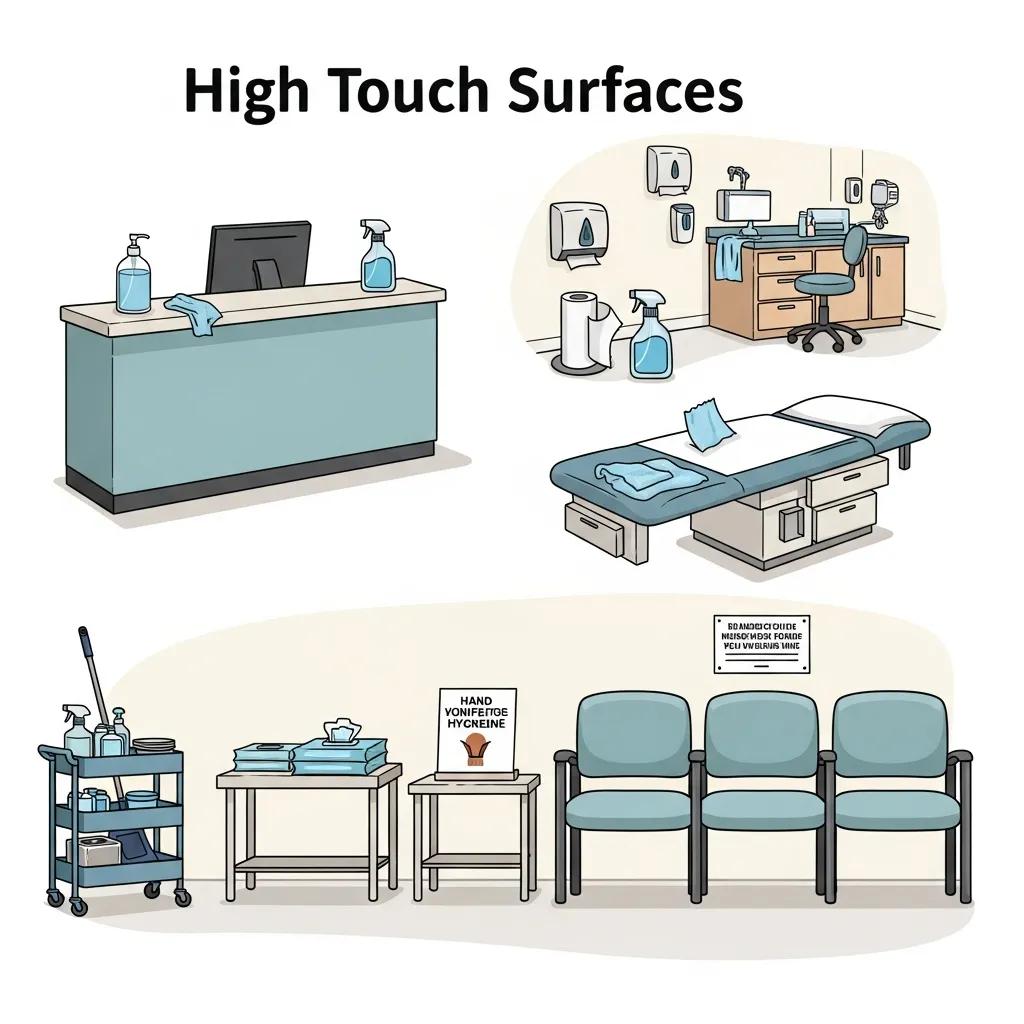
Clinics in Everton Hills face a mix of routine disinfection and targeted interventions because of high patient turnover, invasive procedures and specialist equipment that can hold contamination. Effective cleaning removes visible soil, then applies TGA-approved disinfectants at the correct contact time to inactivate pathogens — a two-step routine that reduces transmission and meets audit expectations. High-touch areas like reception counters, door handles, waiting-room seats, treatment surfaces and shared devices need more frequent attention. Local practices also benefit from clear documentation, audit-ready cleaning logs and visible infection-control measures to keep patients confident and regulators satisfied.
Below are the main clinical cleaning priorities Everton Hills facilities commonly need — priorities that shape schedules and SOPs.
- High-touch surface control: Regular cleaning and disinfecting of desks, chairs and handrails to reduce pathogen transfer.
- Treatment-room terminal cleaning: Thorough post-procedure disinfection to remove biological residues and protect the next patient.
- Equipment-safe disinfection: Protocols for imaging, diagnostic and portable devices that prevent damage while ensuring microbiological control.
- Waiting-area management: Surface disinfection combined with air-hygiene measures to lower communal exposure.
- Waste and linen handling: Safe segregation, handling and laundering workflows to avoid environmental contamination.
These five focus areas guide operational planning, staffing and product choice. Understanding them makes decisions about cleaning frequency, disinfectant selection and staff training much clearer — topics we cover next with facility-specific detail.
Which types of medical facilities in Everton Hills need specialised cleaning?
Different facility types need tailored approaches because risk and equipment vary. General practices require strong waiting-room and treatment-room routines to cope with high throughput. Dental clinics need special care for operatories, dental chairs and suction systems where disinfectant compatibility matters. Imaging and X-ray centres need protocols that protect sensitive machines while keeping surfaces disinfected; these sites often schedule deep cleans between sessions in addition to routine wipes. Specialist outpatient clinics and minor-procedure rooms combine these needs and usually require terminal cleaning after invasive treatments and careful instrument handling.
Recommended cleaning frequencies depend on the space: waiting areas and high-touch surfaces often need multiple clears per day, treatment rooms usually require terminal cleaning after each procedure, and imaging suites benefit from between-patient wipes plus overnight deep disinfection. These tailored schedules reduce cross-contamination and help clinics keep patient flow predictable and safe.
How does local knowledge improve cleaning effectiveness in Everton Hills?
Local knowledge — knowing peak times, common layouts and nearby service routes — makes cleaning work more efficient and less disruptive. A provider familiar with Everton Hills can target high-impact cleans during natural lulls, plan route-efficient visits across nearby sites and adapt staffing to local clinic rhythms. This shortens onboarding because teams already understand typical room arrangements and consent procedures, allowing faster, safer work with minimal disruption to patient care.
Local familiarity also smooths communication with clinic managers and nursing staff, letting cleaning plans be adjusted quickly when hours or services change. That responsiveness helps practices stay audit-ready as patient flows shift.
How Divine Commercial Cleaning delivers specialist medical cleaning in Everton Hills
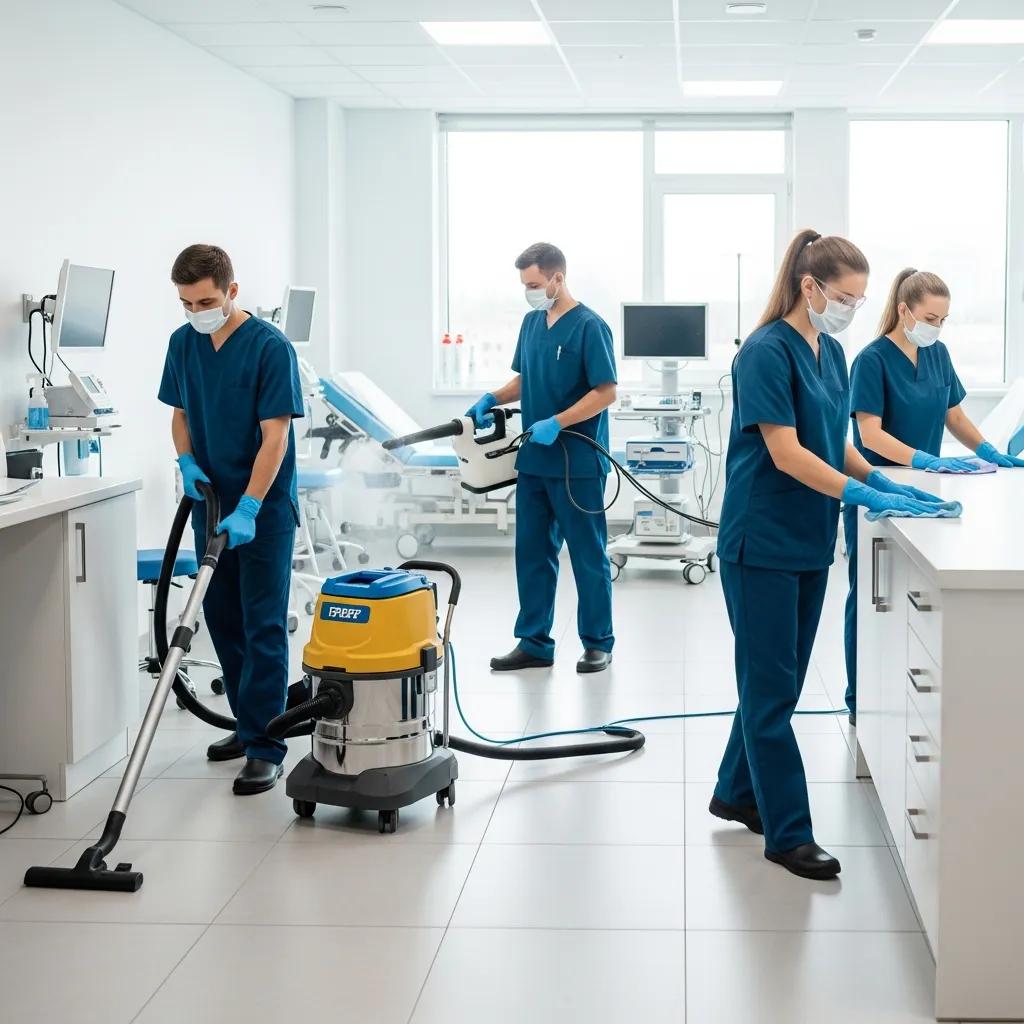
Reliable medical cleaning follows a repeatable process: scoping, written plan, trained execution and documented verification. Typical steps include a site assessment, a customised cleaning plan with frequencies and products, trained teams using hospital-grade equipment, and ongoing quality checks with logging and periodic review. When consistently applied, this approach lowers surface contamination, protects patients and staff, and produces records clinics need for audits and reassurance.
Below is a clear, numbered outline of what clinics can expect when they engage a specialist medical cleaning service.
- Initial contact and site scoping
: We gather the clinic layout, service types and peak times to identify risk zones. - Customised cleaning plan development
: Define frequencies, disinfectants and staff assignments tailored to your facility. - Trained execution
: Skilled teams apply TGA-approved disinfectants, follow PPE protocols and use hospital-grade equipment. - Verification and documentation
: Supervisors complete checklists and maintain cleaning logs for audits. - Ongoing quality assurance
: Regular reviews and adjustments keep the plan effective and compliant.
This step-by-step process makes expectations clear for clinic managers and treats cleaning as part of clinical governance — not an afterthought. The table below compares common equipment and disinfectant choices used in high-quality medical cleaning and explains where they help most in Everton Hills settings.
The table explains typical hospital-grade tools and disinfectant categories, why they matter and where we apply them.
| Equipment or product | Typical use case | Practical benefit |
|---|---|---|
| HEPA vacuum | Dust and particulate removal in waiting areas and labs | Reduces airborne particulates and supports overall air hygiene |
| Electrostatic sprayer | Rapid coverage for large rooms and communal zones | Even disinfectant coverage and faster turnarounds between patients |
| Colour-coded microfiber system | Dedicated cloths for each zone (clean to dirty) | Minimises cross-contamination between clinical and non-clinical areas |
| TGA-approved surface disinfectant | Routine and terminal surface disinfection | Validated contact times for reliable pathogen inactivation |
Matching the right tools and products improves speed, safety and microbiological outcomes. The next section covers the on-the-ground cleaning steps clinics should expect once a plan is approved.
What does the step-by-step medical cleaning process for Everton Hills look like?
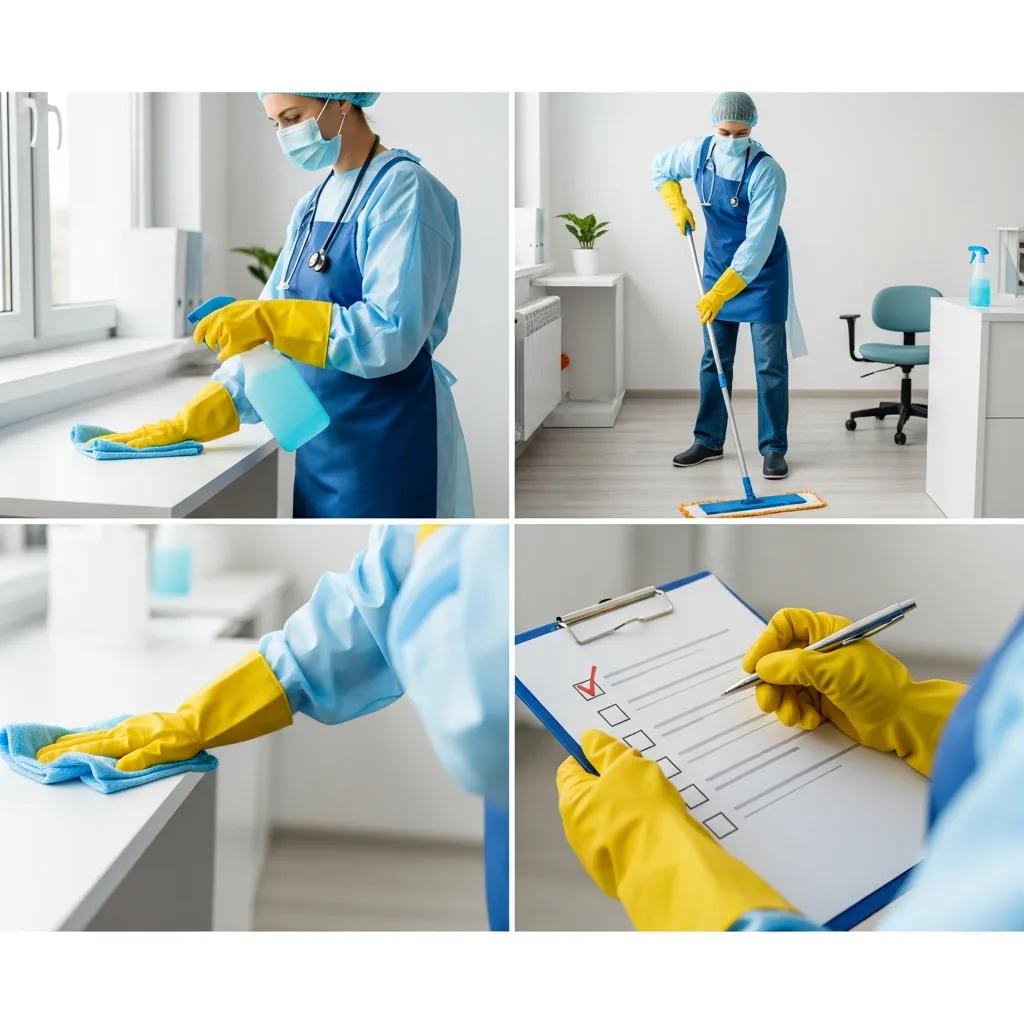
A clear sequence turns cleaning from a routine chore into a measurable infection-control activity and helps clinics track performance. Engagements start with a detailed assessment that lists room types, equipment and high-touch surfaces; that assessment informs a written scope defining frequencies and responsibilities. Execution follows the scope: crews remove visible soil, apply TGA-approved disinfectants with the correct contact time, and use single-use or laundered consumables as required. After each shift or terminal clean, supervisors complete checklists, record product batch numbers and contact times, and report any equipment concerns to clinic technicians. These records form audit-ready documentation. Periodic quality reviews — visual audits or swab testing — close the loop and prompt plan updates as needs change.
This consistent process delivers predictable results and supports both patient safety and operational continuity by turning infection-control standards into daily practice.
Which hospital-grade equipment and TGA-approved disinfectants do we use?
Choosing equipment and disinfectants balances microbiological efficacy with material compatibility and staff safety. HEPA-filtered vacuums remove particulate matter, electrostatic sprayers speed coverage of large areas, and colour-coded microfibres prevent cross-zone contamination. TGA-approved disinfectants are selected for their validated claims and used at manufacturer-recommended concentrations and contact times. Proper PPE, signage and ventilation are part of safe application to protect staff and patients.
The table below compares common disinfectant types and practical application notes relevant for Everton Hills clinics.
| Product type | Contact time guidance | Surface suitability |
|---|---|---|
| Quaternary ammonium formulations | Manufacturer-specified minutes; best for non-porous surfaces | Workstations, desks, chairs |
| Alcohol-based wipes | Fast-acting; shorter contact time for small surfaces | Hands, small devices (follow device guidance) |
| Hydrogen peroxide systems | Moderate contact time; broad-spectrum effectiveness | Clinical benches, terminal cleaning |
| Chlorine-based products | Strong efficacy; can be corrosive in some uses | Waste areas, linen carts (avoid on sensitive equipment) |
Choosing the right disinfectant is important for effective infection control, as research into their performance shows.
TGA-approved hospital-grade disinfectants
A TGA-approved hospital-grade disinfectant with both cleaning and disinfection action is preferred where suitable.
An evaluation of buffered peracetic acid as an alternative to chlorine and hydrogen peroxide based disinfectants, 2019
Knowing these product attributes helps clinics specify safe storage and application, and ensures cleaners record product lot numbers and usage details — improving traceability for audits and incident reviews.
Divine Commercial Cleaning
combines trained staff, documented procedures and the equipment/product choices outlined above when servicing Everton Hills. We focus on tailored cleaning plans, consistent crews with police checks, full insurance cover and a money-back guarantee — operational controls that support reliable clinical cleaning.
Which Australian health and safety standards guide medical cleaning in Everton Hills?
Clinical cleaning in Australia is guided by a concise set of references that shape infection prevention, disinfectant selection and worker safety. Key sources include NHMRC infection-control guidance, Therapeutic Goods Administration (TGA) approvals for disinfectants, and Safe Work Australia recommendations for PPE and hazardous chemical handling. These standards promote evidence-based disinfection, safe chemical use and clear documentation to reduce HAIs while protecting staff. Clinics should align cleaning plans to these references to show compliance during inspections and continuous-improvement reviews.
The short table below maps major standards to typical company practices to illustrate audit readiness in operational terms.
| Standard / guideline | Key requirement | Typical Divine practice |
|---|---|---|
| NHMRC infection-control guidance | Defined cleaning frequencies and techniques for clinical areas | Documented SOPs and scheduled terminal cleans |
| TGA approvals | Use of validated disinfectants with manufacturer contact times | Only TGA-approved products used; application logs kept |
| Safe Work Australia | Worker safety, PPE and hazardous chemical handling | Staff training, PPE provision and SDS on file |
| Local reporting expectations | Maintain records for audits and incident responses | Cleaning logs and supervisor reports for every visit |
Linking standards to daily practice shows how a compliant cleaning programme covers microbiological control and staff safety. The sections below explain how an operator turns these references into everyday procedures and safe product selection.
How does Divine Commercial Cleaning meet NHMRC infection-control guidelines?
Compliance needs written procedures, competent staff and verifiable records that reflect NHMRC recommendations. In practice that means SOPs for cleaning methods, frequency matrices for room types and regular staff training. Supervisory checks and audit logs provide the evidence trail for inspections and show that terminal cleans and between-patient disinfections happened as scheduled. This alignment helps clinics demonstrate consistent infection-control practice and make incremental improvements based on audit findings.
Keeping records of product batch numbers, contact times and the staff member responsible for each clean supports traceability and a rapid response if questions arise.
What role do TGA-approved products and Safe Work Australia guidance play?
TGA approval indicates a disinfectant’s validated claims for efficacy — important when clinics need documented proof that a product will inactivate target pathogens under real conditions. Using TGA-approved products with documented contact times protects clinics during audits and helps ensure predictable results. Safe Work Australia guidance complements this by setting safe handling, PPE use and storage requirements to protect cleaning teams. Together, product approvals and safe-work guidance create a practical compliance framework: effective disinfectants applied safely by trained staff.
Clinics should request product documentation and safe-use procedures from their cleaning provider and keep SDS sheets as part of their compliance records.
What are the key benefits of using medical cleaning services in Everton Hills?
Professional medical cleaning delivers clinical, operational and compliance benefits that improve patient outcomes and clinic performance. Clinically, thorough cleaning reduces pathogen reservoirs and lowers HAI risk. Operationally, scheduled, documented cleans cut unplanned downtime and support predictable patient flow. From a compliance perspective, accessible cleaning logs, product records and training evidence speed audits. Together these advantages protect reputation, build patient trust and simplify regulatory interactions.
The table below links common professional-cleaning benefits to measurable outcomes clinics can expect.
| Benefit | Outcome | Typical metric |
|---|---|---|
| Consistent staffing and scheduling | Fewer missed cleans and steady service quality | Reduced rate of missed cleans per month |
| Documented cleaning and logs | Better audit readiness and quicker inspections | Faster audit closure times |
| Tailored cleaning plans | Optimised resources and less disruption | Improved room turnaround times |
| Use of TGA-approved products | Reliable pathogen control | Compliance with disinfectant documentation |
These benefits show how a clinical cleaning programme supports patient safety and clinic efficiency. The sections below unpack patient-facing and staff-facing advantages in more detail.
How does professional medical cleaning improve patient safety and trust?
Professional cleaning lowers the microbial load on surfaces and shared devices, which reduces transmission risk in waiting rooms and treatment areas. Clinics that visibly follow rigorous cleaning schedules and use documented, TGA-approved disinfectants build confidence among patients and referrers because hygiene becomes both visible and verifiable. Sharing cleaning practices — for example visible post-procedure terminal cleans or accessible cleaning logs — improves perceived safety and can boost patient satisfaction and return rates. When visible measures are backed by audit-ready documentation, patient trust is supported by measurable control.
Australian studies repeatedly show that improved cleaning protocols play a key role in reducing healthcare-associated infections and maintaining patient confidence.
Australian study: improved cleaning reduces healthcare infections
Nurses and midwives are frontline in infection control for conditions like COVID-19, influenza, multi-drug resistant organisms and other healthcare-associated infections. Improved cleaning can reduce infection incidence and is cost effective, but it depends on healthcare staff correctly applying cleaning measures.
Nurses’ and midwives’ cleaning knowledge, attitudes and practices:
An Australian study, BG Mitchell, 2020
These practices show infection prevention is built into everyday operations rather than left to chance.
How does a hygienic environment support staff wellbeing and regulatory compliance?
A clean workplace lowers staff exposure to pathogens and chemical hazards by ensuring controlled product use and correct PPE, which can reduce absenteeism and help morale. Clear SOPs and ongoing training remove uncertainty and make cleaning tasks more efficient, letting clinical teams focus on patient care instead of ad hoc sanitising. For compliance, consistent records and documented training simplify inspections and reduce the administrative load on clinic managers during audits. Altogether, these improvements create a safer, more stable workplace that supports service delivery.
Implementing reliable cleaning routines therefore helps both staff wellbeing and governance objectives, creating a sustainable operational environment.
Why choose Divine Commercial Cleaning for medical cleaning in Everton Hills?
Divine Commercial Cleaning offers Everton Hills clinics practical, dependable cleaning with tailored plans and operational assurances that reduce client risk and administrative work. We provide consistent staffing so the same vetted crews attend regular visits, police checks for peace of mind, full insurance cover and a money-back guarantee to protect clients. These assurances complement clinical cleaning protocols and give practices contractual and operational confidence that scheduled cleans will meet agreed standards.
- Customised plans
: Frequencies and scope tailored by facility type to match risk and patient flow. - Consistent staffing
: Repeat crew assignments so teams learn your layout and expectations. - Operational assurances
: Police-checked staff, full insurance and a money-back guarantee to reduce client risk.
These commitments align dependable delivery with documented compliance and give clinics a single point of contact and accountability in Everton Hills.
What customised solutions and reliable service does Divine provide?
Customised solutions translate a clinic’s risk profile into a clear schedule, assign staff experienced with the facility type and provide SOPs and checklists aligned with NHMRC expectations. Reliability practices include consistent crew assignments and supervised quality checks to keep standards high. For clinics, this reduces the time spent managing an external supplier and makes it easier to coordinate staff and storage. Tailored schedules let clinics focus on high-risk areas without paying for unnecessary activity in low-risk zones.
This service-focused approach helps clinic managers fold cleaning into their clinical governance framework with minimal fuss.
How do the money-back guarantee and consistent staffing build client confidence?
A money-back guarantee lowers perceived risk by giving a contractual remedy if agreed standards aren’t met. Consistent staffing increases reliability because crews become familiar with clinic layouts and expectations. Police checks and insurance add vetting and financial protection in case of incidents. Together these measures reduce the friction of outsourcing cleaning and build trust through predictable, verifiable performance.
These operational safeguards make it straightforward for clinics to judge service quality and hold providers accountable when standards slip.
How can Everton Hills medical practices request a free quote and start cleaning services?
Asking for a tailored cleaning quote should be simple and transparent, producing a clear scope, price estimate and timeline. A good quoting process captures key facility details, delivers a written proposal that lists scope and frequencies, and suggests an initial start date and onboarding plan. An efficient timeline typically moves from enquiry to site scoping in a few days and from scoping to first service within one to two weeks, depending on clinic schedules and staff availability. Clinics can prepare information in advance to speed the process and make proposals more accurate.
Use the checklist below to gather details that help produce an accurate customised quote.
- Facility size and floor plan: Approximate square metres and room layout to estimate labour and time.
- Room types and equipment: Number of treatment rooms, imaging suites, dental operatories and shared areas.
- Desired cleaning frequency: Between-patient terminal cleans, daily high-touch cleans or weekly deep cleans.
- Existing product or compatibility constraints: Any equipment sensitivity or preferred disinfectants.
- Preferred start date and access instructions: Clinic opening hours and any after-hours access requirements.
Providing these details upfront cuts follow-up questions and speeds delivery of a tailored proposal. The next section explains contact options and the practical steps to start a quote with a local provider.
What is the process to obtain a customised medical cleaning quote?
When you request a quote, expect the provider to confirm facility details, propose a scope with frequencies and product choices, and give a price estimate and timeline. A site visit may follow to validate the scope and check equipment or access constraints. The written quote should include a scope of work, proposed schedule and terms covering staff vetting and insurance. A clear proposal lets clinic managers compare options objectively and plan onboarding steps such as staff introductions and secure storage for cleaning consumables.
This transparent approach helps clinics move from enquiry to service delivery with clear expectations and minimal ambiguity.
How to contact Divine Commercial Cleaning for Everton Hills medical cleaning services?
To get a tailored quote or discuss cleaning options for Everton Hills medical facilities, contact Divine Commercial Cleaning via the channels below. Have facility details — layout, room types and desired frequencies — ready before calling or emailing to speed the quoting process. We emphasise local responsiveness and provide documented plans, vetted staff and operational assurances for clinics to review before engagement. For extra confidence, ask for scope documents and sample checklists during your initial conversation.
Contact details for direct enquiries:
- Phone: 0459 949 969
- Email: info@divinecleaning.com.au
- Business address: 5 Bluff St, Birtinya, QLD 4575
Reaching out with these details ensures fast scoping and a prompt, audit-ready proposal for your Everton Hills medical practice.
Frequently asked questions
What are the main differences between routine cleaning and specialised medical cleaning?
Routine cleaning covers general tasks like dusting, vacuuming and surface wipes, which help general upkeep but don’t always meet infection-control needs. Specialised medical cleaning focuses on disinfection protocols tailored for healthcare settings — using TGA-approved products, observing correct contact times and targeting high-touch surfaces to reduce HAIs. It also requires trained staff who understand equipment compatibility and regulatory expectations, ensuring both safety and compliance.
How often should medical facilities in Everton Hills schedule cleaning services?
Cleaning frequency depends on facility type and patient flow. High-traffic spaces such as waiting rooms and treatment areas may need multiple cleans per day. Treatment rooms generally need terminal cleaning after each procedure. Imaging suites often combine between-patient wipes with overnight deep cleaning. A tailored schedule based on actual use keeps hygiene high without unnecessary cost.
What qualifications should medical cleaning staff have?
Medical cleaning staff should receive infection-control training and know how to use hospital-grade products safely. They should understand TGA-approved disinfectants, correct application and contact times, and device-compatibility issues. Background checks are important since teams work in sensitive clinical settings. Ongoing training and adherence to safety protocols keep standards consistent.
How can clinics ensure compliance with Australian health and safety standards?
Clinics can meet standards by documenting cleaning procedures that follow NHMRC and Safe Work Australia guidance, keeping cleaning logs, using TGA-approved disinfectants and providing staff with training and appropriate PPE. Regular audits and quality checks identify improvement areas and verify practices meet regulatory requirements. Engaging a provider familiar with these standards further strengthens compliance and operational efficiency.
What should clinics look for when choosing a medical cleaning service?
When choosing a service, check the provider’s healthcare experience, staff training and infection-control procedures. Confirm they use TGA-approved products and maintain clear documentation of cleaning activities. Look for operational assurances such as consistent staffing, insurance coverage and a money-back guarantee. A supplier offering customised plans matched to your clinic’s needs will deliver better outcomes and value.
How does effective medical cleaning affect patient satisfaction?
Effective medical cleaning enhances patient satisfaction by creating a safer, cleaner environment and reducing infection risk. Patients trust clinics that visibly maintain high cleaning standards and can produce documentation of their practices. That trust can lead to better retention and referrals. A clean, well-maintained facility also improves the overall patient experience and supports better health outcomes.
Choosing a professional medical cleaning service in Everton Hills helps create a safer environment for patients and staff and reduces the risk of Healthcare-Associated Infections (HAIs). With tailored cleaning plans, consistent staffing and adherence to Australian health standards, clinics can stay compliant and operate smoothly. Partnering with a reliable local provider like Divine Commercial Cleaning improves hygiene and builds patient trust through clear, documented practice. Contact us to discuss how we can support your clinic’s cleaning needs.

Dianne, originally from Rockhampton, hails from a business-oriented family, with her father owning electrical stores and her uncle serving as Mayor. Moving to the Sunshine Coast at 13, she later pursued a rewarding real estate career and raised three children. As a single mom, she balanced university studies with domestic cleaning work. Armed with a Bachelor’s Degree in Business, majoring in Supply Chain Management, Dianne founded and grew Divine Commercial Cleaning into a thriving company. Her success is rooted in strong family mentorship, a positive attitude, and a solution-oriented approach, offering tailored cleaning services with integrity and strategic insight.