Why Choose Minyama Medical Centre Cleaning — Expert Commercial Cleaning on the Sunshine Coast
Medical centre cleaning is a specialised discipline of commercial cleaning centred on infection control, patient safety and meeting healthcare regulations. This page explains how purpose-built cleaning for Minyama Medical Centre differs from standard janitorial work, how it reduces infection risk, and the operational benefits clinics gain from professional services. You’ll read about the main healthcare cleaning standards, practical hygiene and disinfection protocols, the advantages of hiring trained commercial cleaners, and how tailored schedules and greener products protect safety without interrupting care. We also cover quality-assurance practices, side-by-side comparisons of outcomes and product choices, and clear steps to request a customised quote on the Sunshine Coast. Technical terms—like high-touch surface disinfection, terminal cleans and audit logs—are used so facility managers can accurately assess cleaning providers against compliance and operational needs.
What Are the Key Healthcare Cleaning Compliance Standards for Medical Centres?
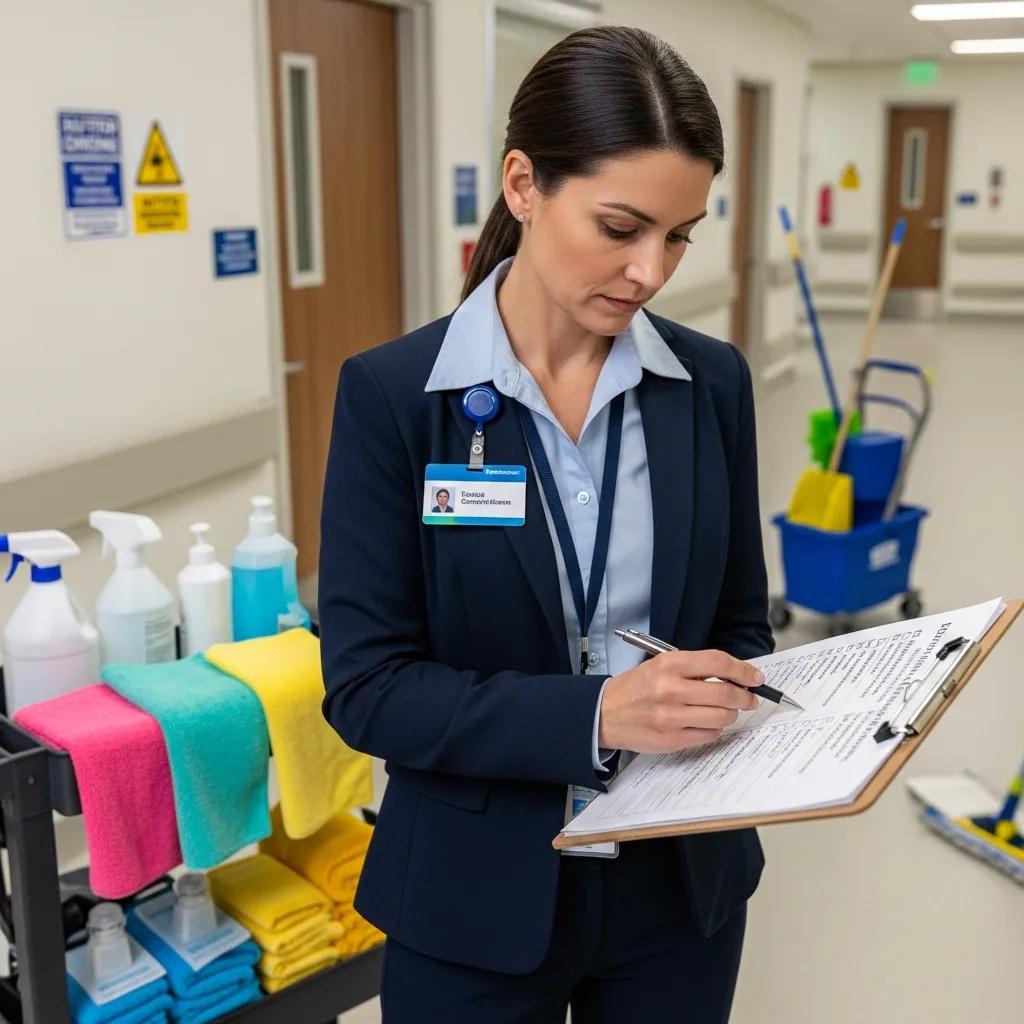
Healthcare cleaning compliance is the set of regulatory requirements and industry best practices that govern how medical centres manage hygiene, waste and infection control. These standards protect patients and staff by specifying cleaning frequency, suitable product choices and documented quality checks. In practice, compliance looks like written checklists, PPE procedures for staff, and measurable testing—such as ATP surface monitoring—to confirm effectiveness. Knowing these requirements helps facility managers select partners who can supply documented evidence of adherence and demonstrate continuous improvement. The section below outlines the principal standards and what they mean day to day.
Key standards and guidance commonly applied in medical centre cleaning include:
- Infection-control guidance for healthcare settings that defines required disinfection routines and priority high-touch surfaces.
- Clinical cleaning frequency expectations that set daily tasks and terminal cleans for patient areas and procedure rooms.
- PPE and waste-handling procedures for safe management of sharps, clinical waste and contaminated materials.
- Quality-assurance obligations such as documented checklists, audit trails and verification testing to show compliance.
These standards determine how cleaning tasks are scheduled and audited, and they create the documentation needed to satisfy inspections and protect patient safety.
Which hygiene and infection control protocols do Minyama Medical Centre cleaning services follow?
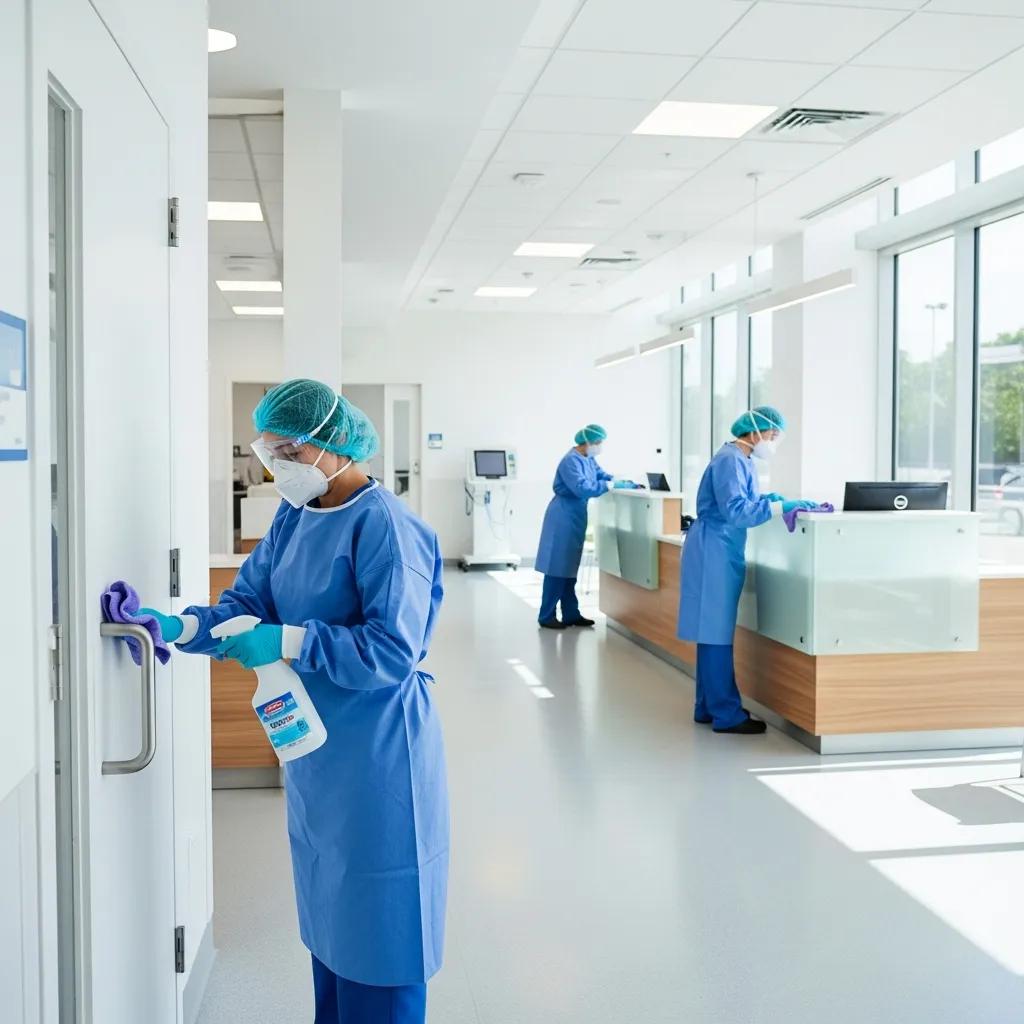
Protocols at Minyama focus on targeted disinfection, managing high-touch surfaces and carrying out terminal cleans after clinical procedures. Daily routines prioritise door handles, reception counters, shared equipment and seating, using hospital-grade disinfectants with validated contact times to inactivate pathogens. Terminal cleaning of clinical and procedure rooms includes safe waste removal, cleaning from clean-to-dirty zones and documented sign-off on completion. Consistent high-touch surface disinfection reduces transmission risk, verified through routine visual inspections and, where appropriate, ATP or other surface testing. Every step links back to measurable safety objectives and audit-ready records.
How do healthcare regulations shape commercial cleaning requirements?
Healthcare regulations define both the scope and administrative duties of commercial cleaners in clinical settings, so services must include documented procedures, formal training and traceable records. When a regulation specifies cleaning frequencies or waste protocols, cleaners implement checklists and audit logs to prove compliance. Required training covers infection-control principles, PPE use and incident response, lowering operational risk. The documentation requirement also encourages use of QA tools—like inspection forms or digital logs—that supply evidence during audits and support continuous improvement. This regulatory framework explains why medical-centre cleaning differs substantially from regular commercial cleaning.
What Benefits Do Professional Commercial Cleaners Bring to Medical Centres?
Professional commercial cleaners bring measurable benefits: they lower infection risk, support uninterrupted operations and back regulatory compliance with documented QA processes. Trained teams use clinical-grade products, follow evidence-based protocols and keep records that help sites demonstrate audit readiness. Outsourcing cleaning also increases efficiency—clinical staff can focus on care while cleaners schedule work to minimise disruption. These gains mean fewer infection-related events, clearer compliance trails and consistent cleaning outcomes that protect reputation and patient trust. Below are the primary benefits, stated plainly.
Hiring professional cleaners provides these core benefits:
- Infection-risk reduction: Structured disinfection and high-touch routines reduce pathogen spread and protect patients.
- Regulatory compliance: Detailed cleaning records and QA checks streamline audit preparation and response.
- Operational continuity: Flexible schedules limit downtime and coordinate cleaning around clinical workflows.
- Specialist expertise: Trained teams use the right products and methods for clinical areas, not generic office approaches.
- Quality assurance: Regular inspections and reporting deliver measurable performance data for facility managers.
These benefits meet immediate infection-control needs and support long-term operational resilience—making professional cleaning a strategic choice for medical centres.
Different metrics show how these benefits translate to real outcomes. The table below compares outcome areas, the attributes professional cleaning provides and the practical value for a medical centre.
| Outcome Area | Attribute | Practical Impact |
|---|---|---|
| Infection control | High-touch protocols & terminal cleans | Lower transmission risk and stronger patient safety |
| Frequency management | Risk-based scheduling (daily/weekly/terminal) | Tasks match clinical need and footfall patterns |
| Quality assurance | Audit logs, inspections, verification testing | Clear evidence of compliance and quicker audit responses |
This comparison shows how focused cleaning practices produce measurable safety and operational benefits facility managers can report.
How does Divine Commercial Cleaning ensure quality and trust in healthcare environments?
We build trust through structured oversight, ongoing staff training and open communication adapted to healthcare settings. Supervisors perform regular site inspections and use checklists to confirm each task—especially high-risk ones like terminal cleans—is completed to standard; these checks are recorded for client review. Staff receive infection-control training and follow PPE protocols while cleaning clinical areas. Clear communication channels with facility management enable rapid escalation of issues and routine performance reporting. Together, these QA practices align cleaning operations with regulatory expectations and the practical needs of medical centres.
What advantages do specialised medical centre cleaning services offer over general office cleaning?
Specialist medical-centre cleaning differs from office cleaning in four key ways: training, product choice, documentation and infection-control focus. Clinical cleaners receive targeted infection-control education to manage clinical waste, perform terminal cleans and apply disinfectants with correct contact times. Medical cleaning uses clinical-grade disinfectants and validated protocols rather than multipurpose office products, ensuring effectiveness against healthcare pathogens. Documentation—such as audit logs and verification testing—creates traceable evidence that office cleaning usually lacks. Together, these differences deliver measurable infection-control results and compliance readiness that general services cannot reliably provide.
How Are Customised Cleaning Schedules Designed for Healthcare Facilities?
Custom schedules start with a risk-based assessment of clinical areas, foot traffic and levels of patient contact. The plan identifies areas needing daily attention (reception, waiting rooms), zones requiring multiple daily touch-point wipes (chairs, counters), and spaces that demand terminal or procedure-room cleans. Schedules balance infection-control priorities with operational realities, assigning work to times that reduce disruption—between clinics or after hours—and include surge plans for outbreaks. This risk-to-frequency mapping shapes routine workflows and contingency steps so cleanliness standards are maintained while clinical services continue uninterrupted. The following subsection explains why flexible scheduling matters.
A sample frequency outline used to plan schedules may list daily, weekly and monthly tasks linked to risk zones and clinic timetables.
Why is flexible scheduling important for minimising disruption in medical centres?
Flexible scheduling matters because medical centres have variable patient loads and procedures that need non-intrusive cleaning windows. After-hours cleans, staggered tasks between clinics and quick touch-ups during low-traffic periods all reduce interference with consultations and procedures. Flexibility also lets providers reallocate resources during peak demand or when outbreaks require enhanced cleaning. By coordinating with clinical teams and using quieter times, cleaners maintain high hygiene standards while protecting patient privacy and uninterrupted care. Adaptable schedules therefore support infection control and a better patient experience.
How does Divine Commercial Cleaning tailor cleaning frequency to healthcare needs?
We tailor frequency through a consultative assessment that identifies high-risk zones, footfall patterns and clinical workflows, then turn that analysis into a risk-based cleaning plan. The process starts with an on-site review to prioritise areas needing daily or multiple daily attention and results in a customised schedule aligned with clinic timetables. Periodic reviews and client feedback let us adjust—adding frequency during peak infection seasons or after layout changes. This consult-assess-review cycle keeps schedules responsive while preserving consistent documentation for audits.
What Role Do Eco-Friendly and Safe Cleaning Products Play in Medical Centre Cleaning?
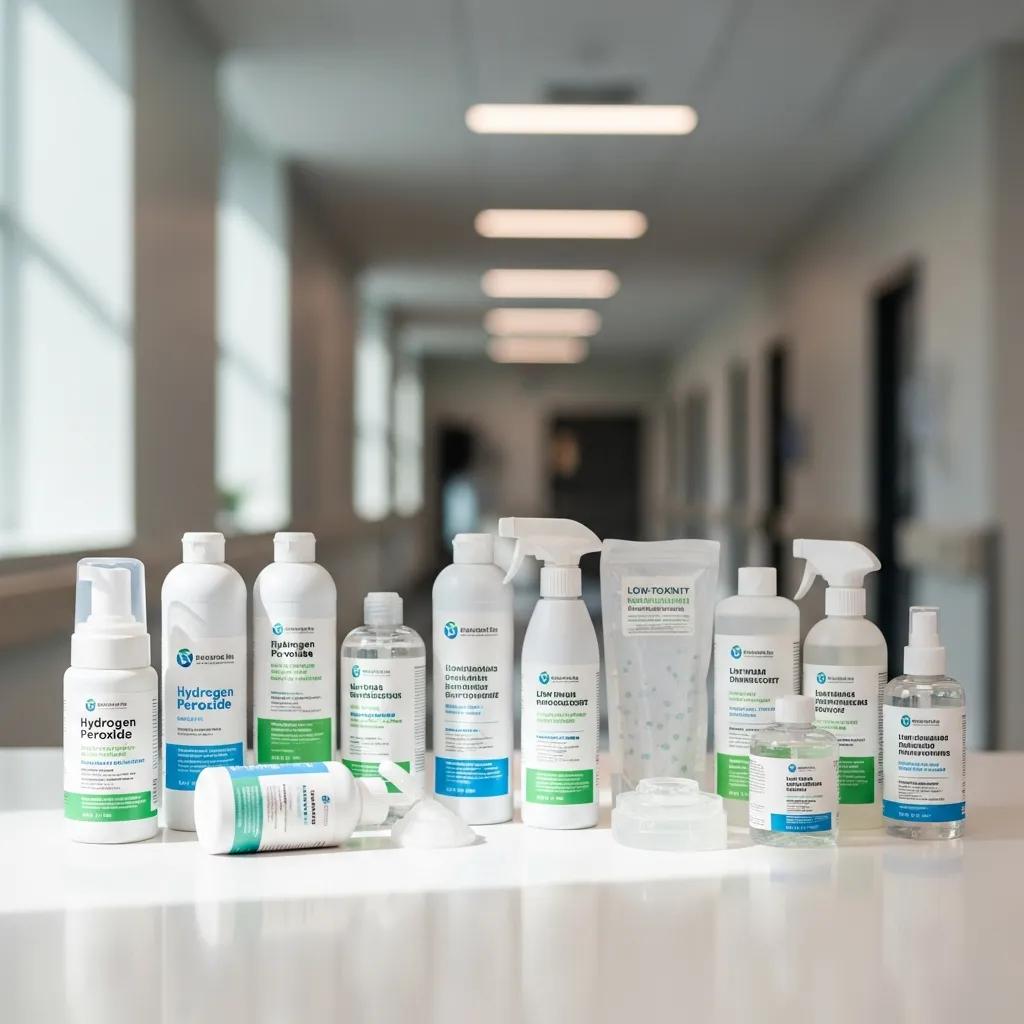
Eco-friendly and low-toxicity products can support medical-centre hygiene when chosen and used correctly, balancing staff and patient safety with proven antimicrobial performance. The key is selecting products with validated disinfectant claims and ensuring required contact times are observed so infection-control goals aren’t compromised. Practical selection considers efficacy data, surface compatibility and the chance of respiratory irritation among vulnerable people. Green options can lower environmental impact and occupational exposure, but must be validated to ensure pathogen inactivation. The list below summarises product classes commonly suitable for clinical use.
Eco-friendly product classes suitable for healthcare (selection requires validation):
- Hydrogen peroxide-based disinfectants: Broad-spectrum efficacy with lower residue concerns.
- Accelerated hydrogen peroxide and peroxide derivatives: Faster action and reduced irritant profiles.
- Low-toxicity quat alternatives: Engineered to lower VOCs while keeping validated antimicrobial activity.
Choosing these categories requires checking manufacturer efficacy data and label claims so they meet clinical requirements. The next subsection explains how to verify and implement green cleaning safely.
Before the table below, consider how product attributes affect infection-control outcomes and staff safety. The table contrasts common product/approach categories, their safety traits and their impact on infection control to aid decision-making.
| Product/Approach | Safety Attribute | Impact on Infection Control |
|---|---|---|
| Hydrogen-peroxide based | Low residue, lower respiratory irritation | Effective disinfection with reduced occupational exposure |
| Accelerated peroxide | Fast contact times, biodegradable | Efficient disinfection without persistent toxins |
| Low-toxicity quats | Reduced VOCs, engineered formulations | Effective on surfaces when validated by manufacturer data |
This table clarifies trade-offs between safety and efficacy and underscores the importance of validated data when selecting green options for clinical use.
Which eco-friendly products are used to maintain safety and hygiene at Minyama Medical Centre?
Suitable eco-friendly choices for Minyama include peroxide-based disinfectants and newer low-toxicity formulations that balance staff safety with antimicrobial performance. These products act by oxidising or disrupting microbes while leaving minimal residue and producing fewer VOCs. Selection is based on manufacturer efficacy data, label claims for clinical pathogens, and surface-compatibility testing to avoid equipment damage. Staff training covers correct dilution, application and required contact times—this validation is essential to ensure green products deliver clinical-level disinfection. Proper use combines product choice with clear protocols and training.
How do green cleaning solutions support infection control in healthcare settings?
Green solutions support infection control when formulations have validated claims and are used to achieve specified contact times and dilution rates. Their compatibility with sensitive equipment and lower respiratory impact can improve occupational safety and patient comfort—especially in outpatient settings with vulnerable users. Still, efficacy depends on correct application and verification: staff must be trained on contact times and coverage, and facilities should perform periodic testing to confirm outcomes. Integrating green products into documented QA workflows ensures they reliably contribute to infection-control goals without unintended trade-offs.
What Do Client Testimonials Reveal About Minyama Medical Centre Cleaning Services?
Clients typically highlight improved cleanliness, reduced disruption and clearer regulatory documentation when describing medical-centre cleaning services. Common feedback emphasises responsiveness, protocol adherence and reliability in meeting scheduled times. While we don’t reproduce individual quotes here, the recurring themes show that providers prioritising training, transparent reporting and flexible scheduling deliver measurable benefits to healthcare facilities. The list below summarises the outcomes most often reported and how they help operations.
Common outcomes reported by healthcare clients include:
- Greater confidence in cleanliness and infection control after adopting clinical-grade protocols.
- Fewer service interruptions thanks to coordinated scheduling and trained staff.
- Improved audit readiness through routine documentation and QA reporting.
These themes help facility managers judge whether a cleaning partner can meet both operational and compliance expectations. The subsection below summarises how Divine Commercial Cleaning aligns with these outcomes.
How have healthcare facilities benefited from Divine Commercial Cleaning's services?
Facilities that work with Divine Commercial Cleaning report operational gains such as less downtime for cleaning and clearer audit evidence, reflecting our focus on documentation and schedules that suit clinic timetables. Trained teams and compliant protocols support infection-control goals and help sites maintain consistent cleanliness standards. While individual client data isn’t shown here, the overall result is measurable: fewer workflow disruptions and improved inspection readiness. These benefits come from combining trained staff, documented procedures and prompt communication.
What feedback highlights the company’s commitment to healthcare cleaning standards?
Feedback that points to our commitment includes praise for reliability, straightforward communication and strict adherence to documented protocols. Clients note regular supervision, routine inspections and quick issue escalation as signs of a service aligned with regulatory expectations. These recurring themes indicate we integrate QA cycles into daily work and prioritise transparency in reporting. Facility managers evaluating providers should look for trustworthiness, compliance and responsiveness—qualities our clients consistently value.
How Can You Request a Quote for Medical Centre Cleaning Services on the Sunshine Coast?
Requesting a quote is a simple three-step process that leads to a customised proposal based on your facility’s risk profile and scheduling needs. A clear process sets expectations for timelines, site assessments and deliverables so clinics can compare proposals fairly. Below is a concise step-by-step to make requesting a tailored cleaning plan straightforward for busy facility managers.
- Submit an inquiry with basic details: site type, size and cleaning priorities.
- Book a site assessment to review risk zones, footfall and scheduling constraints.
- Receive a customised proposal outlining recommended frequencies, QA measures and pricing options.
These steps create a transparent path from first contact to a tailored plan and set expectations for an on-site review that informs an evidence-based proposal. The next subsection explains what to expect during contact and assessment.
What is the process to contact Divine Commercial Cleaning for a customised cleaning plan?
Contacting us for a customised plan begins with a brief inquiry followed by a site assessment and a written proposal aligned to clinical priorities. The inquiry gathers basic facts—facility size, hours and high-risk areas—to guide the site visit. During assessment, our experts observe workflows, identify high-touch zones and recommend risk-based frequencies. The proposal details scope, suggested frequencies, QA procedures and an implementation timeline so facility managers can make an informed decision with no hidden costs or assumptions.
Which local service areas are covered for medical centre cleaning solutions?
We provide medical-centre cleaning across the Sunshine Coast and into Brisbane, serving regional healthcare facilities throughout these areas. A live site map or list of suburbs helps clients confirm availability quickly; if you’re unsure, request availability during your initial inquiry to arrange a site assessment. We’ll confirm logistics and timing for regular or after-hours work as part of the assessment process.
Frequently Asked Questions
What types of training do cleaning staff receive for medical centre cleaning?
Our cleaning teams receive focused training in infection control, correct PPE use and safe handling of clinical waste. Training covers high-touch surface disinfection, terminal cleaning procedures and the correct use of clinical-grade products. Staff also learn regulatory expectations and documentation requirements so they can deliver consistently safe, audit-ready cleaning.
How often should cleaning audits be conducted in medical centres?
Cleaning audits should be scheduled regularly—commonly monthly or quarterly—depending on patient volume and facility complexity. Audits check compliance with cleaning protocols, evaluate disinfection effectiveness and confirm regulatory adherence. Regular audits highlight improvement opportunities and produce the records needed for inspections by health authorities.
What are the environmental benefits of using eco-friendly cleaning products in medical centres?
Eco-friendly products reduce chemical exposure for staff and patients, lower VOCs and lessen environmental pollution. Many are biodegradable and kinder to aquatic life, supporting broader sustainability goals. They can also improve indoor air quality—important for vulnerable patients—when chosen and used with validated efficacy to ensure infection-control standards remain intact.
How can medical centres ensure compliance with cleaning regulations?
Ensure compliance by running a strong quality-assurance programme that includes regular training, clear written procedures and routine audits. Define cleaning frequencies, product usage and waste-disposal protocols, and keep accurate records of activities and checks. Working with a specialist healthcare cleaner familiar with current regulations further strengthens compliance efforts.
What role does communication play in effective cleaning services for medical centres?
Clear communication is essential. Open channels between cleaning teams and facility management enable quick issue resolution, schedule adjustments and updates on compliance. Regular feedback sessions let cleaners understand clinical needs and adapt services accordingly. This collaborative approach builds trust and ensures cleaning operations support clinical workflows and patient safety.
What should medical centres look for when choosing a cleaning service provider?
Look for healthcare experience, regulatory knowledge and the use of clinical-grade products. Evaluate the provider’s training programmes, QA processes and ability to customise schedules. Ask for testimonials or case studies from other healthcare clients and prioritise transparent communication and a commitment to continuous improvement—these indicate a reliable partner for maintaining a safe, hygienic environment.
Choosing specialised cleaning services for Minyama Medical Centre delivers stronger infection control, clearer regulatory compliance and smoother operations. With trained teams, tailored protocols and documented quality assurance, facilities sustain a safer environment for patients and staff. The practical value shows up in improved cleanliness, audit readiness and greater confidence in day-to-day operations. Contact us to discuss a cleaning solution designed for your healthcare facility’s exact needs.

Dianne, originally from Rockhampton, hails from a business-oriented family, with her father owning electrical stores and her uncle serving as Mayor. Moving to the Sunshine Coast at 13, she later pursued a rewarding real estate career and raised three children. As a single mom, she balanced university studies with domestic cleaning work. Armed with a Bachelor’s Degree in Business, majoring in Supply Chain Management, Dianne founded and grew Divine Commercial Cleaning into a thriving company. Her success is rooted in strong family mentorship, a positive attitude, and a solution-oriented approach, offering tailored cleaning services with integrity and strategic insight.