
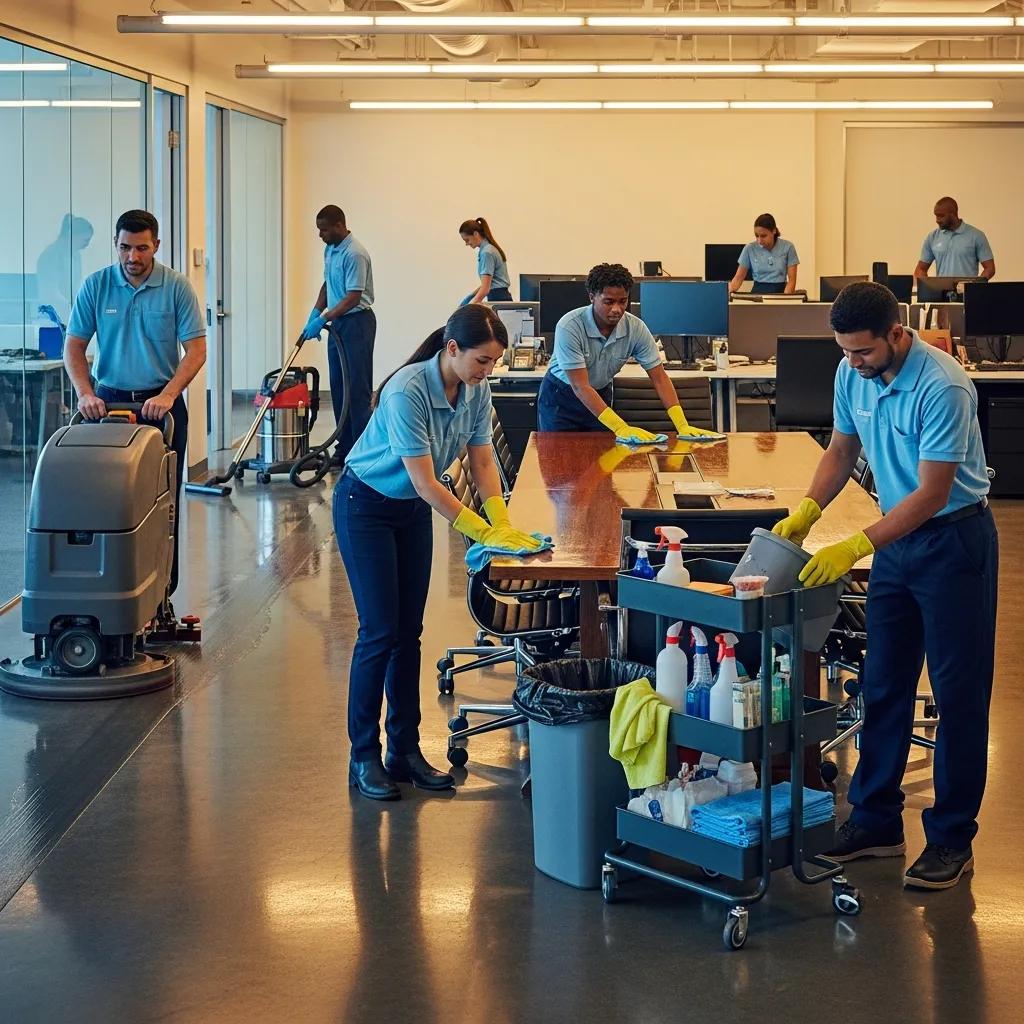
After-Hours Commercial Cleaning Services for Business Continuity in Sunshine Coast and Brisbane
After-hours commercial cleaning refers to professional cleaning and sanitisation performed outside regular business hours to avoid disrupting daily operations, customer service, and staff workflow. This article explains how night cleaning services, overnight janitorial work, and non-disruptive cleaning strategies directly support business continuity by minimising downtime, reducing infection spread, and preserving facilities. Readers will learn the core benefits of evening business cleaning, practical examples of disruptions avoided, industry-specific approaches for offices, medical centres and retail, plus operational and security trade-offs to consider when choosing after-hours providers. The guide also outlines quality controls, scheduling options, and how to evaluate a vendor’s assurances so facilities teams can make evidence-based decisions. Finally, concise procedural steps and common questions are provided to help facility managers implement after-hours cleaning with minimal friction and maximum operational resilience.
Why Choose After-Hours Commercial Cleaning? Benefits for Business Continuity
After-hours commercial cleaning is a targeted strategy that schedules comprehensive janitorial and sanitisation tasks when workplaces are empty, which reduces interruptions to staff and customers while enabling deeper, safer cleaning. By shifting routine and deep-clean tasks to evenings or overnight windows, businesses can complete floor restoration, equipment-safe disinfection, and large-area cleaning without moving staff or halting production, preserving continuity of operations. This timing also allows stronger disinfectants and dwell times to be used safely, improving hygiene outcomes that lower sick-day rates and boost workplace productivity. The approach supports a professional customer presentation by ensuring spaces are reset overnight and ready for business at opening, which protects reputation and customer experience. These operational gains translate into clear business outcomes: fewer unscheduled closures, improved asset longevity, and a consistent environment that supports ongoing activity.
After-hours cleaning avoids specific daytime disruptions that commonly erode productivity and service quality, and the next subsection explains the mechanisms and concrete examples of those disruptions.
How Does After-Hours Cleaning Minimise Disruption and Maximise Productivity?
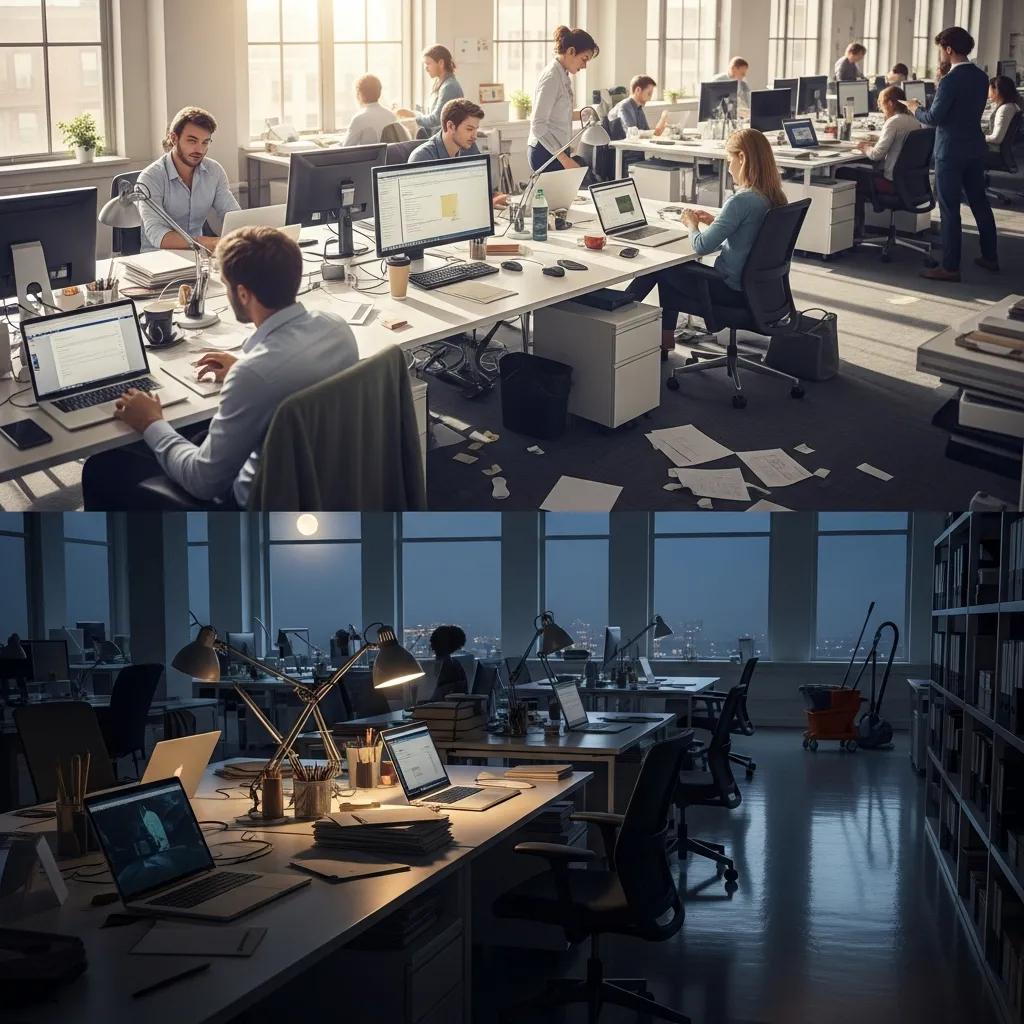
After-hours cleaning minimises on-site interruptions by performing noisy, space-clearing, or equipment-moving tasks when staff and customers are not present, ensuring daytime workflows remain uninterrupted. For example, retail floor polishing completed after close prevents slip hazards and sight-line obstruction during trading hours, while overnight carpet extraction removes deep soils without moving desks during the workday. Consolidating heavy tasks into off-hours also shortens total cleaning windows through uninterrupted task sequencing, which reduces contractor presence and logistical coordination during operating hours. Typical disruptions avoided include temporary area closures, frequent staff displacement for cleaning, and restricted customer access, and these avoided impacts directly support higher daytime productivity and better customer service. Understanding these mechanisms clarifies why scheduling strategy is a keystone of business continuity planning.
Below is a short list summarising typical disruptions avoided by after-hours cleaning, with a brief explanation of each.
- Unexpected area closures: Keeps high-traffic areas available during business hours by scheduling closures overnight.
- Staff displacement during tasks: Prevents employees from being moved or interrupted due to in-shift cleaning.
- Customer access restrictions: Eliminates the need to limit or redirect customers while maintenance occurs.
- Noise and odour impacts: Reduces exposure to loud equipment and cleaning odours during operating hours.
These avoidance outcomes set the stage for measurable workplace benefits, which include health and hygiene improvements discussed next.
What Are the Health and Hygiene Advantages of Night Office Cleaning?
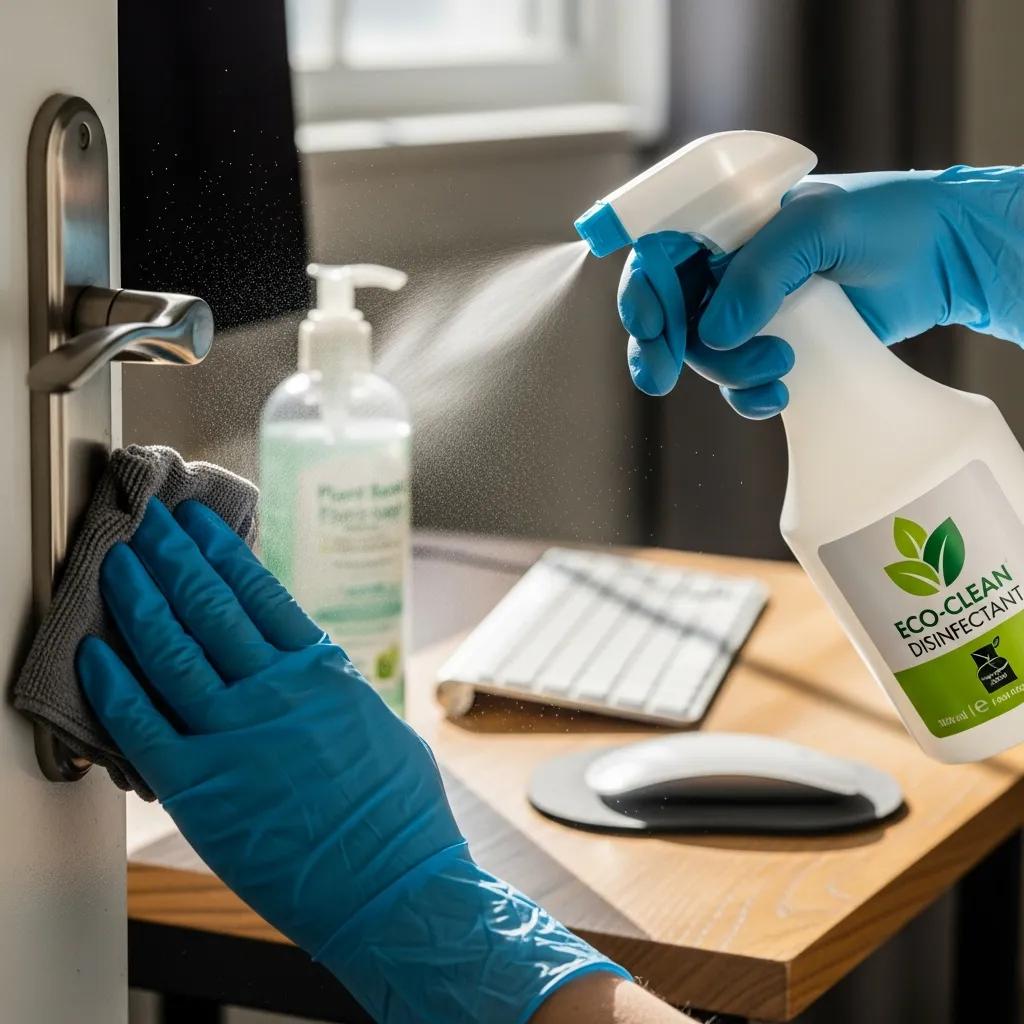
Night office cleaning enables deeper disinfection cycles and targeted high-touch sanitation that are difficult to perform thoroughly during the day, reducing cross-contamination and airborne transmission risk. When offices are vacant, teams can use higher-efficacy disinfectants with proper dwell times on door handles, shared equipment, kitchen areas, and meeting rooms without exposing staff to chemical residues. The result is often a measurable reduction in respiratory and gastrointestinal illness spread, which correlates to fewer sick days and more consistent staffing levels. Night cleaning also supports periodic deep tasks—like high-level dusting and HVAC-access cleaning—that improve indoor air quality and long-term asset hygiene. These hygiene improvements contribute directly to business continuity by lowering unplanned absenteeism and maintaining a healthier, more reliable workforce.
An appreciation of hygiene benefits leads into how providers ensure consistent quality and flexibility when delivering these after-hours services.
How Does Divine Commercial Cleaning Ensure Quality and Flexibility in After-Hours Services?
Divine Commercial Cleaning combines vetted personnel, adaptable scheduling and structured quality checks to deliver reliable non-disruptive cleaning across Sunshine Coast and Brisbane, tailored for after-hours needs. Quality is reinforced through police-checked staff, pre-shift verification, and monthly audits that verify procedural compliance and equipment readiness, while flexibility comes from bespoke plans, no lock-in contracts, and eco-friendly options for sensitive sites. The operational model centres on a documented scope developed during consultation, coordinated access arrangements with clients, and a feedback loop to adjust frequencies and tasks as business needs change. Guarantees such as a money-back promise and responsive communication channels underpin trust and make after-hours programs easier to integrate into existing continuity plans. Below is a compact EAV table that clarifies key quality measures, their control attributes and how Divine applies them in practice.
Intro to table: This table compares core quality and control measures used in after-hours service delivery, outlining the control attribute and typical execution frequency or method.
| Quality Measure | Control Attribute | Typical Execution / Value |
|---|---|---|
| Police-checked staff | Background screening | Pre-engagement verification; ongoing spot checks |
| Pre-shift verification | Operational readiness | Daily checklists and equipment inspection before each shift |
| Monthly audits | Quality assurance | Supervisor audits with corrective action where needed |
| Eco-friendly options | Chemical selection | Green-certified products on request and when sensitive scheduling allows |
This comparison demonstrates how structured controls reduce risk and maintain consistent service levels during non-disruptive cleaning.
After describing corporate quality controls, the next subsection outlines Divine’s step-by-step process for customised after-hours cleaning plans.
What Is the Customised After-Hours Cleaning Process at Divine Commercial Cleaning?
Divine Commercial Cleaning follows a six-step, consultative process that translates business continuity objectives into a practical after-hours cleaning plan, ensuring clarity and accountability. The process begins with an on-site consultation and risk assessment to identify sensitive areas, access points and continuity priorities, followed by a detailed scope of work that specifies tasks, frequencies and safe chemical use. Scheduling is then coordinated with the client’s security and operations teams to establish access protocols and key-holder arrangements, after which the execution phase sees trained, police-checked staff perform the agreed services using professional equipment and eco-friendly alternatives where required. Post-shift documentation and supervisory checks feed into monthly audits, and final client feedback closes the loop, enabling iterative refinement. Expected timeframes typically range from an initial proposal within days to an operational cadence that can start within one to two scheduled windows after agreement.
This structured process ties directly into flexible scheduling options and non-disruptive techniques, which are described next.
How Do Flexible Scheduling and Non-Disruptive Cleaning Support Business Needs?
Flexible scheduling and non-disruptive techniques align cleaning operations with business rhythms by offering evening, overnight and weekend windows that match each client’s opening hours and peak activity patterns. Scheduling scenarios commonly include nightly after-close shifts for retail, early-morning windows before staff arrival for offices, and weekend deep-clean slots for manufacturing or large-format spaces, with coordination protocols for secure access and minimal noise. Non-disruptive techniques include low-noise equipment, silent entry procedures, and discrete waste handling that prevent visible or audible impact on business functions. No lock-in contracts and adaptable plans allow organisations to scale frequency up or down for peak periods, events or seasonal changes without long-term penalty. These approaches ensure cleaning service delivery supports continuity rather than imposing additional operational constraints.
An illustrative numbered list below summarises standard scheduling options facilities managers typically request.
- Nightly after-close cleaning: Regular overnight maintenance to prepare spaces for the next day.
- Early-morning pre-opening windows: Brief cleaning passes before staff and customers arrive.
- Weekend deep-clean sessions: Longer windows for floor care, machinery cleaning and deep sanitisation.
These scheduling frameworks enable businesses to pick arrangements that keep operations fluent while providing robust cleaning outcomes.
Which Industries Benefit Most from After-Hours Commercial Cleaning Services?
After-hours cleaning provides industry-specific advantages by tailoring tasks, agents and scheduling to each sector’s operational and regulatory needs, from offices to medical centres and retail environments. Offices benefit from focused workstation and communal area management that improves employee well-being and presentation, while medical centres require rigorous sanitisation protocols and controlled access to protect patients and meet clinical expectations. Retail spaces use overnight windows for restorative floor care and display preparation that preserve sales readiness each morning, whereas warehouses and industrial sites leverage off-hour cleaning to perform heavy-duty tasks that would impede daytime workflows. The combination of procedural tailoring and careful scheduling ensures industry-specific risks—like cross-contamination in clinics or slip hazards in retail—are addressed without disrupting normal business processes.
The following table compares industry-specific after-hours cleaning priorities, the focal cleaning attribute, and the practical value delivered.
| Industry | Cleaning Focus | Value Delivered |
|---|---|---|
| Offices | Workstation and communal sanitation | Healthier staff, improved presentation, reduced absenteeism |
| Medical | High-level sanitisation and cross-contamination control | Patient safety, compliance with clinical standards |
| Retail | Floor care and presentation turnaround | Enhanced customer experience and sales readiness |
| Industrial/Warehouse | Heavy-duty cleaning and safety compliance | Reduced downtime and safer workplaces |
This industry comparison highlights how aligning cleaning focus with operational goals preserves continuity across diverse environments.
Next we look specifically at office and medical/retail tailoring to show practical task lists and protocol distinctions.
How Are After-Hours Cleaning Services Tailored for Offices and Professional Spaces?
Office-focused after-hours cleaning prioritises desks, meeting rooms, kitchens, restrooms and high-touch communal surfaces, sequencing tasks to avoid interfering with scheduled events and to maintain productivity during work hours. Typical frequencies are daily wipe-downs of high-touch areas, weekly carpet vacuum and monthly deep-clean tasks such as upholstery shampoo or high-reach dusting; optional extras include window cleaning and floor polishing scheduled in extended windows. Custom schedules are created to avoid early-morning meetings or critical deadlines, with secure access arranged for cleaning teams and clear reporting so managers can track completion. These tailored practices not only maintain a professional environment but also extend furniture and floor life through preventative maintenance.
A short bulleted list below outlines priority tasks and recommended cadences for small, medium and large offices.
- Small offices: Daily trash removal and surface wipe-downs; weekly vacuuming.
- Medium offices: Daily sanitation, biweekly floor care, monthly deep-clean.
- Large offices: Nightly high-touch sanitation, scheduled weekend deep-floor restoration.
What Specialised Night Cleaning Solutions Are Offered for Medical and Retail Facilities?
Medical facilities and retail spaces demand different night-cleaning specialisations: clinics require medical-grade disinfection, while retail prioritises presentation and floor turnaround to retain customer appeal. Medical-grade protocols include contact-point disinfection, airborne pathogen considerations and scheduled chemical dissipation periods to ensure staff and patient safety, with specific agents selected for efficacy against clinically relevant organisms. Retail solutions emphasise floor polishing, detailed display area cleaning, fitting-room reset and trash removal coordinated to have merchandise and presentation ready for opening. Both types of sites benefit from eco-friendly timing—using stronger agents when premises are empty and allowing safe air exchange before reuse—which balances effectiveness with occupant safety.
A brief list summarises specialised night services by facility type.
- Medical: Contact-point disinfection, scheduled chemical dwell, bio-safe waste handling.
- Retail: Floor restoration, shelf/display cleaning, after-hours restocking coordination.
- Both: Chemical dissipation scheduling and documentation to confirm safe re-entry.
How Does After-Hours Cleaning Enhance Security, Privacy, and Cost Efficiency?
After-hours cleaning enhances security and privacy by limiting contractor presence during peak hours, reducing the chance that sensitive documents or data are exposed to visitors or day contractors, and enforcing scheduled, logged access that is easier to monitor. From a cost perspective, consolidating tasks during off-hours can improve labour efficiency and reduce customer-impact costs, though premium hourly rates for unusual shifts may apply; the net savings frequently come from avoided downtime and higher operational throughput. Privacy benefits stem from restricted access windows and key-holder procedures that minimise incidental visibility of confidential materials, while security controls such as police-checked staff and supervised entry lower internal risk. The following EAV-style table compares after-hours versus daytime service times across operational impact and cost drivers to clarify trade-offs.
| Service Time | Operational Impact | Cost / Security Implication |
|---|---|---|
| After-hours | Minimal daytime interruption; longer uninterrupted task runs | Possible shift premiums; offset by reduced downtime and higher productivity |
| Daytime | Potential disruption to staff and customers; limited deep-clean capability | Lower base rates but hidden productivity costs and scheduling friction |
| Hybrid (mix) | Balances maintenance tasks across windows | Optimises cost vs disruption based on task criticality |
This comparison shows that while after-hours rates can include premium elements, the operational savings and continuity benefits often make them the more cost-effective choice for mission-critical functions.
In What Ways Does Night Cleaning Improve Business Security and Privacy?
Night cleaning improves security by consolidating access to controlled windows with logged entry, supervised key-holder protocols and staff who have undergone police checks, which collectively reduce the risk of unauthorised exposure to sensitive materials. Scheduled after-hours access makes it easier for onsite security or building management to escort teams and verify work scopes without daytime foot traffic complicating oversight. The privacy advantage is that documents, prototype items or client data are less likely to be inadvertently seen by contractors or customers when cleaning is performed in empty buildings. These practices, combined with documented shift logs and supervisory sign-offs, create an auditable chain of custody for premises access that supports both compliance and business continuity.
These security controls feed into cost considerations, which are addressed in the following subsection on comparative cost-effectiveness.
Is After-Hours Cleaning More Cost-Effective Compared to Daytime Services?
After-hours cleaning can be more cost-effective when the value of uninterrupted operations, reduced customer impact and consolidated task execution outweighs any additional shift premium for overnight work. Efficiency gains come from uninterrupted task stacks—where teams complete sequences without daytime coordination pauses—reducing total hours required across a week. However, employers should account for potential overtime or premium rates in budgets and compare them to hidden daytime costs such as lost sales, staff downtime or event rescheduling. The rule of thumb is to request tailored quotes that model both direct cleaning costs and estimated operational savings; this provides a clearer ROI than a simple per-hour comparison. Below is a small EAV-style table highlighting typical cost drivers and operational impacts for quick reference.
| Cost Driver | Operational Impact | Typical Value Note |
|---|---|---|
| Hourly rate | May be higher after-hours | Offset by lower business interruption costs |
| Task consolidation | Higher efficiency | Fewer total contractor hours per project |
| Hidden daytime costs | Lost productivity/customers | Often exceeds nominal daytime savings |
This concise comparison helps decision-makers weigh direct rates against broader continuity-related savings when choosing schedule strategies.
What Are Common Questions About After-Hours Commercial Cleaning?
Facility managers commonly ask about the scope of after-hours services, custom scheduling, security, insurance and how vendors report completion; concise answers reduce friction and speed procurement decisions. This FAQ-style section provides direct, PAA-optimised responses designed to be actionable: it clarifies typical included tasks, how schedules are customised, and what security assurances are standard practice when working with experienced providers. Where bespoke arrangements are needed—such as integration with lock systems or special chemical restrictions—providers that offer no lock-in contracts and flexible plans can adapt quickly. For businesses on the Sunshine Coast and Brisbane looking to implement or change after-hours programs, discussing specifics with a vendor that documents processes and provides post-shift reports is essential.
What Tasks Are Included in After-Hours Commercial Cleaning Services?
After-hours commercial cleaning typically includes routine janitorial tasks such as trash removal, vacuuming, restroom sanitation and surface wiping, plus deeper overnight tasks like floor polishing, carpet extraction and high-level dusting that require empty spaces. Many providers also offer specialty services during off-hours, including window cleaning, tile and grout restoration, and targeted disinfection cycles for high-touch areas. Optional add-ons often include scheduled upholstery care and inventory-coordinated restocking for retail clients, enabling a turnkey morning-ready environment. Clients should confirm task lists in the scope of work to ensure both routine and deep-clean responsibilities are explicitly assigned and scheduled.
Follow-up: The next FAQ explains how businesses can tailor these tasks and schedules to their operational patterns.
How Can Businesses Customise After-Hours Cleaning Schedules?
Businesses can customise after-hours schedules by selecting service frequency (daily, nightly, weekly, fortnightly or monthly), defining preferred windows (overnight, early morning, weekends) and establishing secure access and communication protocols for special events or peak periods. Customisation begins with a site consultation that identifies busy periods to avoid, areas requiring special attention, and any chemical or noise restrictions; the provider then proposes a schedule with contingency options. Flexible vendors that operate without lock-in contracts make it easier to trial different cadences and scale services up or down according to seasonal or event-driven needs. For bespoke plans, contacting the service provider to discuss building access arrangements, required documentation and reporting expectations ensures a practical, low-risk implementation.
- For tailored quotes or to discuss bespoke after-hours plans, Divine Commercial Cleaning can be contacted at 0459 949 969 or via email at info@divinecleaning.com.au.
- Office location is 5 Bluff St, Birtinya, QLD 4575, serving Sunshine Coast and Brisbane with police-checked staff, no lock-in contracts, flexible scheduling and a money-back guarantee.

Dianne, originally from Rockhampton, hails from a business-oriented family, with her father owning electrical stores and her uncle serving as Mayor. Moving to the Sunshine Coast at 13, she later pursued a rewarding real estate career and raised three children. As a single mom, she balanced university studies with domestic cleaning work. Armed with a Bachelor’s Degree in Business, majoring in Supply Chain Management, Dianne founded and grew Divine Commercial Cleaning into a thriving company. Her success is rooted in strong family mentorship, a positive attitude, and a solution-oriented approach, offering tailored cleaning services with integrity and strategic insight.