
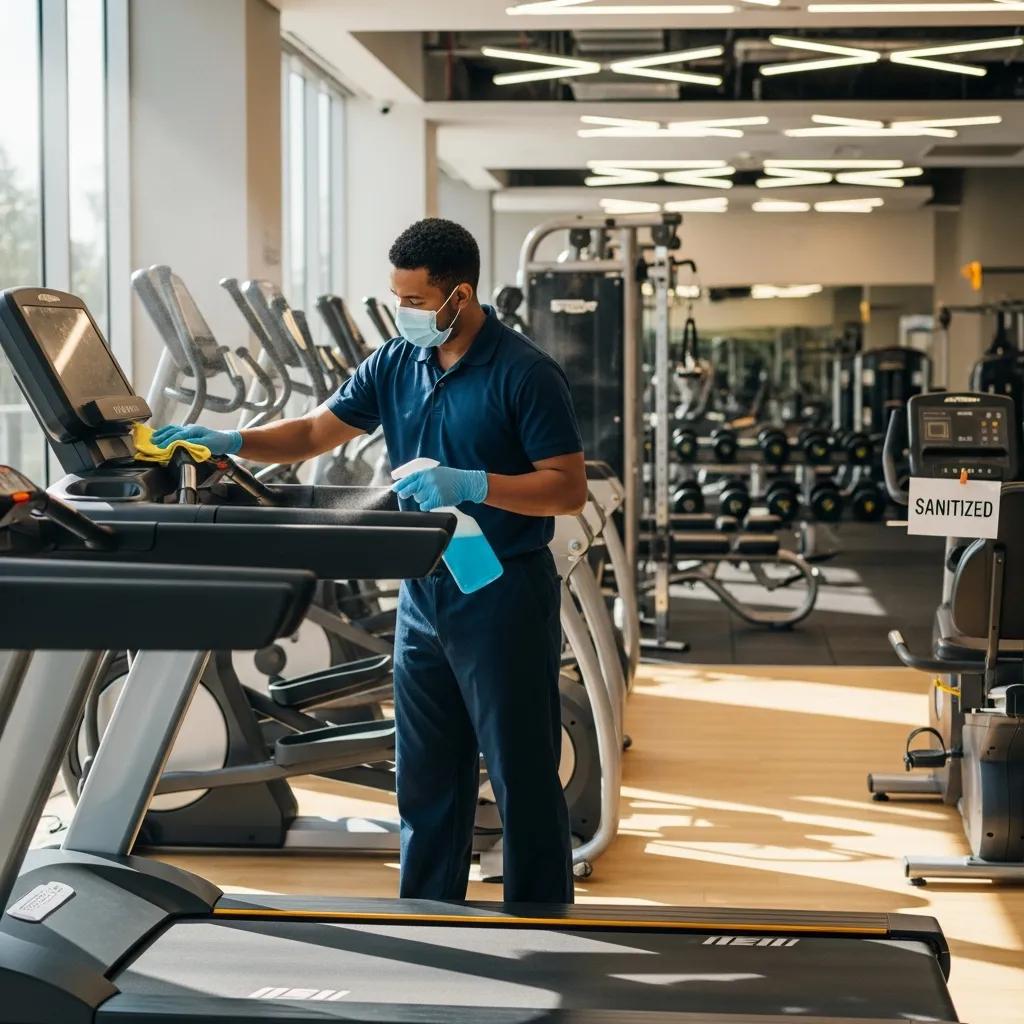
Comprehensive Gym and Fitness Facility Cleaning and Sanitisation Services for Healthier Spaces
Gyms and fitness centres are high-contact commercial spaces where sweat, skin oils, and respiratory droplets converge on shared equipment and facilities, creating ideal conditions for germ transmission and surface degradation. This guide explains how professional gym cleaning and fitness facility sanitation reduce pathogen loads, control odour, prevent mould growth, and protect member confidence, so managers can keep facilities open, safe, and well-maintained. You will learn why professional disinfection is essential, the best practices for exercise equipment disinfection, targeted locker-room and shower-area hygiene, applicable health and safety compliance standards, and how customised cleaning plans help balance cost with hygiene outcomes.
The article integrates practical, evidence-based protocols like high-touch surface schedules, dwell-time guidelines, and eco-friendly product choices alongside operational tools such as checklists and EAV comparison tables for equipment, wet areas, and maintenance plans. Keywords covered include exercise equipment disinfection, gym cleaning services, fitness facility sanitation, gym hygiene standards, and eco-friendly gym disinfection to support facility managers and commercial health club operators seeking actionable solutions.
Divine Commercial Cleaning operates locally in the Sunshine Coast and Brisbane area and provides tailored gym/dance cleaning services, offering trained professional cleaners, environmentally conscious practices, and flexible scheduling to support facilities that need reliable infection prevention and upkeep. Facility managers can request a service quote or discuss a customised plan directly with Divine Commercial Cleaning to align disinfection routines with peak usage and regulatory expectations.
Why Is Professional Gym Disinfection Essential for Fitness Centers?
Professional gym disinfection is the targeted application of proven cleaning and sanitising protocols to reduce pathogen load on high-touch surfaces and shared equipment, improving member safety and organisational resilience. High-contact meronyms in gyms—such as exercise machines, free weights, locker room fixtures, and shower drains—regularly accumulate bacteria and viruses, and professional cleaning uses validated disinfectants and protocols to break transmission chains and maintain operational continuity. Recent studies and industry guidance indicate that consistent disinfection combined with ventilation and moisture control reduces surface microbial counts and supports member confidence, which in turn protects revenue through retention. Understanding these core advantages clarifies why ad hoc or inconsistent cleaning falls short and creates business risks.
Gym disinfection produces three primary benefits for commercial health clubs:
- Reduced infection transmission: Targeted disinfection lowers pathogen viability on high-touch surfaces between users.
- Improved member trust and retention: Visible, documented cleaning builds confidence and reduces churn.
- Operational continuity and compliance: Ongoing sanitation helps meet regulatory expectations and reduces closure risk.
Each benefit provides a practical reason to adopt standardised cleaning protocols across cardio zones, strength areas, and wet facilities, and the next section explains how those protocols translate into measurable improvements in health and safety.
How Does Gym Cleaning Improve Member Health and Safety?
Professional cleaning improves member health by reducing viable pathogens on surfaces and interrupting fomite transmission, while also removing sweat and soil that support microbial growth. Mechanisms include routine high-touch wipe-downs, scheduled spray-and-wipe applications with appropriate dwell times, and periodic deep cleaning of porous surfaces—actions that together lower microbial counts and reduce respiratory and contact-transmitted illness risk. Measurable outcomes for facilities can include fewer staff and member sick days, fewer complaints about odour or cleanliness, and improved inspection results; for example, consistent cleaning of touchscreens and handles correlates with measurable reductions in bacterial load. By implementing documented cleaning logs and visible protocols, facilities also reinforce member perception of safety and professional standards, which supports retention and positive word-of-mouth.
The operational logic of surface reduction leads naturally to specific equipment disinfection practices that ensure both effectiveness and material compatibility.
What Are the Risks of Inadequate Fitness Facility Sanitisation?
Inadequate sanitation increases the risk of infection spread, persistent odours, mould and mildew growth, surface staining, and equipment deterioration that can shorten asset life. Health risks include skin infections, gastrointestinal and respiratory illnesses, and fungal infections originating from damp areas; business risks include lost memberships, negative reviews, and potential temporary closures after outbreaks. For example, poor drain maintenance and grout neglect can produce mould that requires costly remediation and downtime, while inconsistent high-touch cleaning can allow bacteria to accumulate on cardio touchscreens and free-weight grips, undermining member confidence.
Addressing these risks proactively through documented cleaning regimes and environmental controls mitigates both health and reputational consequences, and the next section outlines precise cleaning protocols for different equipment types.
What Are the Best Practices for Exercise Equipment Disinfection?
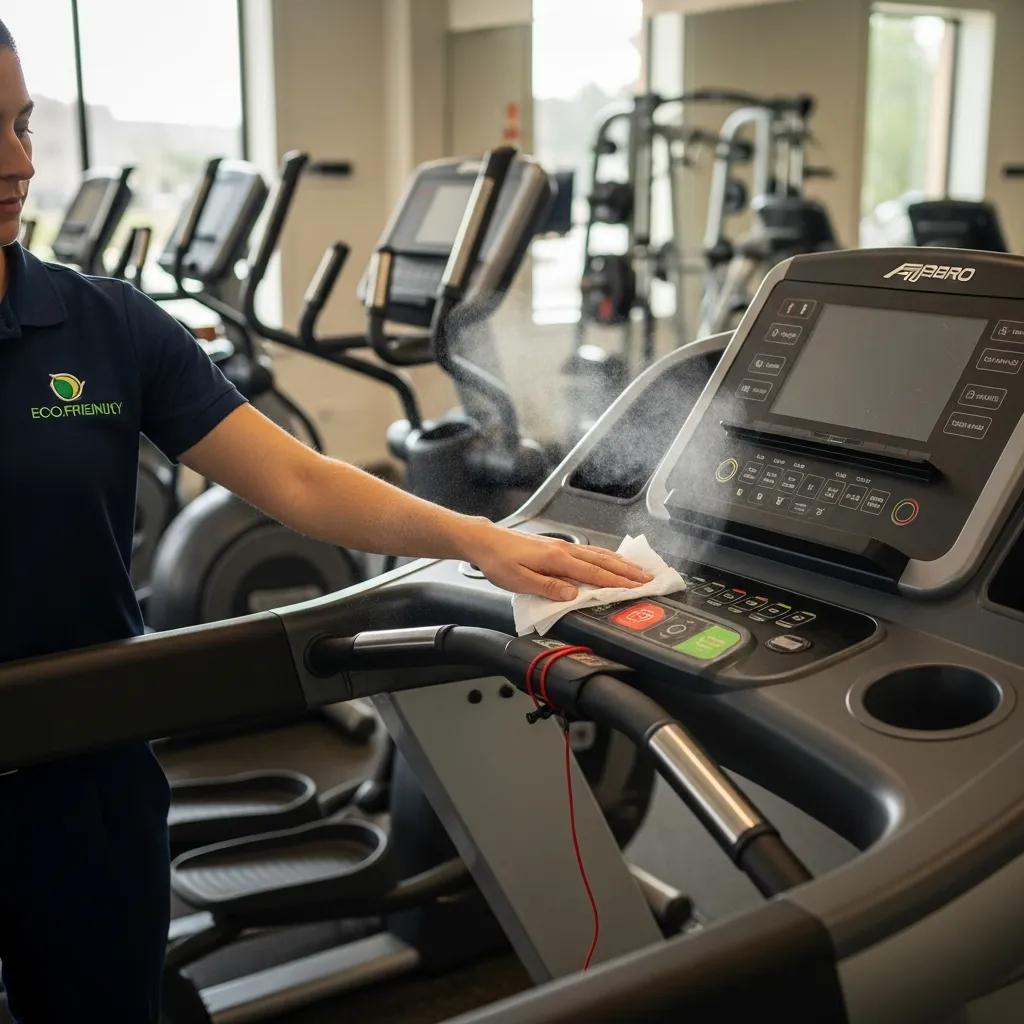
Best practices for exercise equipment disinfection combine correct product selection, surface-safe application methods, frequency tied to usage, and material-sensitive techniques to protect equipment finish and electronics. Define high-touch surfaces (screens, grips, adjustment knobs) and apply routine wipe-downs multiple times per day during peak periods; use spray-and-wipe or dwell-time disinfectants where electronics allow, and prefer microfiber cloths to avoid abrasion. A stepwise protocol helps teams standardise tasks and ensure rapid, repeatable cleaning across cardio and weight zones.
- Establish zones and frequencies: Identify high-touch cardio and free-weight zones and set wipe schedules (multiple times/day for high traffic).
- Use surface-compatible disinfectants: Select products that are effective against expected pathogens and labelled safe for plastics, rubber, and electronics.
- Follow contact time and drying: Apply disinfectant with required dwell time and ensure surfaces fully dry before use; log actions for QA.
- Train staff on material handling: Use microfiber, avoid soaking electronics, and rotate deep-cleaning schedules to preserve finishes.
The following table summarises equipment-specific recommendations to help managers match disinfectant types and methods to equipment.
| Equipment Type | Recommended Disinfectant Type | Frequency / Method |
|---|---|---|
| Treadmills & Bikes | Low-residue, alcohol-based wipes or hydrogen-peroxide sprays (electronics-safe) | Wipe high-touch areas after each use; deep clean handles and consoles daily |
| Strength Machines (cushioned) | Quaternary ammonium (surface-safe) or peroxide-based sprays | Wipe adjustment knobs and seats after each use; weekly full surface clean |
| Free Weights & Bars | Alcohol-based wipes for rapid drying | Wipe handles between users; deep clean racks daily |
| Mats & Accessories | EPA-/regulatory-equivalent disinfectant with label for porous surfaces | Sanitise after each class; launder mats weekly if fabric |
This comparison highlights how disinfectant choice depends on surface materials and usage patterns; next, we examine stepwise protocols for cardio versus weight equipment to operationalise these recommendations.
At the end of this section: Divine Commercial Cleaning deploys equipment-safe, eco-conscious disinfectant choices and can implement high-touch wipe schedules, helping facilities maintain consistent daily sanitation without damaging sensitive equipment.
How to Effectively Sanitise Cardio and Weight Training Equipment?
Cardio and weight equipment require distinct handling: cardio machines often have electronics and display surfaces while weight equipment is primarily metal and rubber. For cardio machines, start by powering down or using manufacturer-recommended locks before cleaning, then apply an electronics-safe disinfectant to touchscreens and consoles with a microfiber cloth, allowing the product’s stated dwell time before drying. Clean handles and transit points with alcohol-based wipes or peroxide sprays to evaporate quickly and reduce residue. For weight training equipment, first remove loose chalk or debris, then wipe bars and plates with alcohol-based wipes or quaternary ammonium solutions compatible with metal finishes; inspect knurled grips for wear and use dedicated brushes where needed. Consistent logging of each cleaning cycle creates an audit trail and signals professionalism to members.
These protocols protect both user safety and equipment integrity, and staff training should emphasise dwell times, surface compatibility, and safe handling of disinfectants.
What Eco-Friendly Products Are Recommended for Gym Equipment Cleaning?
Eco-friendly gym disinfection balances environmental impact, staff safety, and disinfectant efficacy; options include hydrogen peroxide-based formulations, plant-derived quaternary alternatives, and stabilised peroxygen disinfectants that meet regulatory efficacy claims. Selection criteria should prioritise product label claims for pathogen kill, compatibility with plastics and electronics, low VOC profiles, biodegradability, and safety for staff during repeated use. Trade-offs exist: some green formulations require longer dwell times or surface rinsing, so operational schedules must account for those constraints. Facilities should verify that chosen eco-products have equivalent approval or efficacy documentation relative to regulatory expectations.
Choosing green disinfectants often requires small changes in process—longer contact times and clear labelling—but yields improved indoor air quality and reduced environmental load while maintaining infection control.
How Should Locker Rooms and Shower Areas Be Maintained for Hygiene?
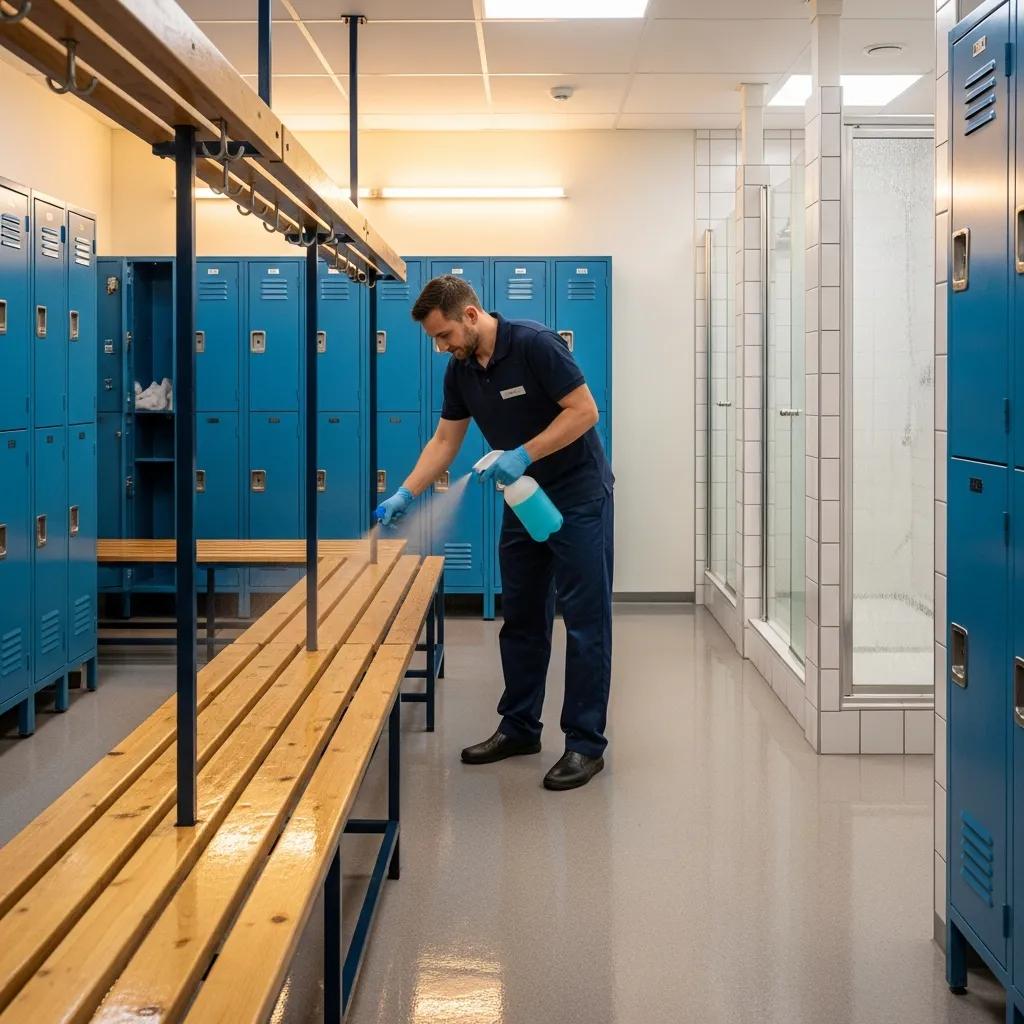
Locker rooms and showers pose moisture-driven risks that demand moisture management, targeted disinfection of drains and benches, and routine surface maintenance to prevent fungal growth and persistent odours. Effective maintenance combines daily cleaning of wet surfaces, scheduled drain and tile treatments, ventilation optimisation, and periodic deep-cleaning of grout and seals. Addressing these areas systematically reduces mould and mildew formation and reduces slip hazards. The table below compares common wet-area risks with recommended treatments to help facility managers prioritise actions.
| Area | Hygiene Risk | Recommended Treatment / Preventative Measure |
|---|---|---|
| Shower stalls | Mold and biofilm in grout and drains | Daily disinfectant spray, weekly drain treatments, monthly grout deep-clean |
| Locker benches & cubicles | Sweat buildup and odour | Wipe benches daily, apply enzymatic cleaners weekly, ensure ventilation |
| Shower drains | Biofilm and slow drainage | Enzymatic or oxidizing drain treatments weekly, inspect for blockages |
| Flooring & grout | Slip hazard and microbial growth | Daily mechanical scrubbing in high-use areas, quarterly deep extraction |
These preventive measures lower odour, reduce mould risk, and support a safer facility environment, leading into specific odour-control and mould-prevention tactics below.
- Daily: Remove standing water, wipe benches, and apply disinfectant to showerheads and fixtures.
- Weekly: Enzymatic drain treatments, grout spot-cleaning, and ventilation checks.
- Monthly: Deep grout cleaning and inspection of seals and HVAC/exhaust performance.
What Odor Control Solutions Are Effective in Fitness Facilities?
Odour control requires both source removal and targeted deodorising; displacement alone fails if biofilms and organic soils remain. Effective tactics include enzymatic cleaners that break down organic residues, regular laundering or sanitising of textiles, improved ventilation to dilute odours, and surface disinfectants with deodorising agents for persistent smells. Enzymatic formulations are particularly valuable in drains and porous surfaces where organic buildup supports malodour. Quick wins include scheduled drain treatments and ensuring HVAC/exhaust systems run sufficiently after peak hours to remove humid air. Combining cleaning with deodorisation prevents recurring issues rather than simply masking them.
Proper odour-control work reduces member complaints and signals high facility standards, prompting inspection of moisture-control tactics next.
How to Prevent Mold and Mildew in Wet Gym Areas?
Preventing mould and mildew hinges on moisture control, timely cleaning, and material selection: ensure surfaces dry quickly after use, maintain adequate ventilation, and use anti-microbial sealants on grout and porous materials where appropriate. Operational steps include running exhaust fans during and after peak periods, using squeegees or absorbent mats to reduce standing water, and scheduling more frequent deep-cleaning in colder or more humid months. Inspection checklists should include grout condition, seal integrity, underfloor drainage, and visual mold indicators; escalating to professional remediation is necessary if active mould growth appears beyond surface staining. Regular maintenance combined with quick response reduces remediation costs and preserves facility aesthetics.
These prevention strategies set the stage for meeting compliance expectations and documenting staff training and QA practices.
Which Health and Safety Compliance Standards Apply to Gym Cleaning?
Compliance for gym cleaning aligns with broader commercial cleaning and infection-control standards: use disinfectants with regulatory approval or equivalent claims for relevant pathogens, maintain documented cleaning logs, and train staff on PPE and safe-handling of chemicals. In many jurisdictions, facility managers should select products that claim efficacy against bacteria and viruses and maintain records demonstrating routine disinfection of high-touch surfaces. Documentation and record-keeping—daily logs, checklists, and incident reports—provide evidence of due diligence for inspectors and support operational transparency.
Practical examples of compliance measures include maintaining product labels and safety data sheets, logging cleaning cycles, and implementing QA spot checks to verify protocol adherence. The following bullets summarise core compliance components.
- Approved disinfectant use: Choose products with regulatory efficacy claims for target pathogens.
- Documented procedures: Keep cleaning logs, schedules, and material safety documentation.
- Staff training and QA: Train teams on PPE, dwell times, and safe storage; perform spot checks and supervisory audits.
After outlining standards, the next two subsections provide examples of suitable disinfectant classes and training structures that support compliance.
Divine Commercial Cleaning supports compliance by using EPA-equivalent approved disinfectants, conducting staff training on cleaning protocols, and maintaining insurance and police-checked staff—measures that demonstrate competence and help facilities meet regulatory expectations without overburdening managers.
What EPA-Approved Disinfectants Are Suitable for Fitness Centers?
EPA-approved or equivalent disinfectants effective in fitness contexts typically include alcohol-based wipes for quick surface drying, hydrogen peroxide-based cleaners for low-residue applications, and registered quaternary ammonium compounds for durable hard-surface disinfection. The practical interpretation of “EPA-approved” is that the product has label claims for inactivating specific pathogens when used per instructions, including correct dilution and dwell times. Selection must also consider surface compatibility—for example, alcohol for quick drying on metal and rubber, peroxide for electronics-safe cleaning, and quats for non-porous hard surfaces. Managers should keep product labels and efficacy claims on file and ensure staff follow manufacturer instructions to achieve stated kill claims.
Choosing disinfectants with clear label instructions simplifies training and audit readiness, which leads to the following training guidance for cleaning teams.
How Are Staff Trained on Cleaning Protocols for Gyms?
Staff training should cover product knowledge, PPE use, safe handling of chemicals, correct application methods (spray-and-wipe, dwell time adherence), equipment-specific techniques, and documentation practices. A typical training syllabus includes an orientation on disinfectant selection and safety data sheets, hands-on demonstrations for cardio and weight equipment cleaning, procedures for wet-area maintenance, and instruction on completing cleaning logs. Ongoing QA should include supervisory spot checks, review of daily checklists, and periodic refresher sessions focused on new products or procedural changes. Using simple logbooks or digital records helps track compliance over time and provides a basis for continuous improvement.
Well-trained staff reduce cleaning errors and improve consistency, which transitions into how customised cleaning plans make these protocols practical at scale.
How Can Customised Gym Cleaning Plans Enhance Facility Maintenance?
Customised cleaning plans align cleaning cadence, task lists, and add-on services to facility size, traffic patterns, and budget, optimising both hygiene outcomes and operational costs. Tailored plans map daily, weekly, and monthly tasks to specific zones—such as front-desk touchpoints, cardio zones, free-weight areas, group classes, and wet facilities—so that resources target the highest-risk areas without unnecessary expense. Custom plans also accommodate seasonal fluctuations and special events, enabling facilities to scale services up during peak periods and reduce frequency during low usage while maintaining baseline safety.
The following table helps facility managers choose an appropriate plan by connecting typical tasks to recommended client profiles and benefits.
| Plan Type | Typical Tasks (Daily/Weekly/Monthly) | Suggested Client Profile / Benefit |
|---|---|---|
| Basic Hygiene | Daily high-touch wipe-downs; weekly floor and bathroom clean; monthly equipment inspection | Small studios with low-to-moderate footfall; cost-effective baseline hygiene |
| Standard Maintenance | Multiple daily wipe cycles, weekly deep-clean of equipment, bi-weekly drain and grout care | Mid-size gyms with steady traffic; balanced hygiene and asset care |
| Premium Program | High-frequency wipe cycles, weekly deep extraction, monthly HVAC/audit, specialised add-ons on demand | Large health clubs or high-traffic facilities; highest hygiene and compliance standards |
This comparison clarifies how customisation matches service levels to facility needs, and the next subsection lists typical cadence tasks managers can adopt.
What Are Typical Daily, Weekly, and Monthly Cleaning Schedules?
Daily schedules focus on high-touch surfaces: wipe consoles, handles, locker-room benches, and restroom fixtures multiple times during peak hours, empty bins, and remove floor debris. Weekly tasks include deep cleaning mats, full disinfectant treatment of strength areas, enzyme drain maintenance, and a detailed inspection of grout and seals. Monthly activities comprise HVAC/exhaust checks, deep grout and tile extraction, polish or conditioning of equipment finishes, and an audit of cleaning logs and training refreshers. These cadences balance immediate hygiene needs with longer-term maintenance designed to prevent deterioration and expensive remediation.
Mapping tasks to cadence ensures predictable results and informs decisions about specialised add-ons discussed next.
Which Specialised Cleaning Add-Ons Improve Gym Hygiene?
Specialised add-ons extend baseline plans to address specific hygiene or aesthetic needs: carpet extraction to remove embedded soils, window and glass cleaning for member perception, deep grout restoration for wet areas, and HVAC/audit services to check ventilation and filtration performance. These add-ons are recommended when visual cleanliness or indoor air quality metrics matter—for instance, deep grout work after a wet-season spike in mould risk, or HVAC audits in older buildings. Scheduling add-ons seasonally or based on usage data optimises return on investment.
- Service highlights: Family-owned and operated, experienced professional cleaners, same cleaner every time.
- Quality & safety: Fully insured staff with police checks and a money-back guarantee.
- Flexibility: No lock-in contracts and custom schedules for Sunshine Coast and Brisbane gyms.
These service features support a practical transition from planning to execution and help facility managers choose the right hygiene strategy for their context.
- Request a quote: Compare plan types against traffic and hygiene goals.
- Pilot a schedule: Start with a standard maintenance plan and add specialised services as needed.
- Audit and adjust: Use logs and member feedback to refine frequencies and add-ons.
This actionable approach turns strategic hygiene planning into consistent operational practices that protect members and assets.

Dianne, originally from Rockhampton, hails from a business-oriented family, with her father owning electrical stores and her uncle serving as Mayor. Moving to the Sunshine Coast at 13, she later pursued a rewarding real estate career and raised three children. As a single mom, she balanced university studies with domestic cleaning work. Armed with a Bachelor’s Degree in Business, majoring in Supply Chain Management, Dianne founded and grew Divine Commercial Cleaning into a thriving company. Her success is rooted in strong family mentorship, a positive attitude, and a solution-oriented approach, offering tailored cleaning services with integrity and strategic insight.