Professional Hotel Cleaning Services Australia: Expert Hospitality Cleaning Standards and Solutions
A professional hotel cleaning service delivers systematic cleaning, sanitisation and facility maintenance tailored to accommodation facilities to protect guest health, preserve property assets, and maintain brand reputation. This article explains hotel cleaning services and hospitality cleaning standards in Australia, outlining practical protocols, zoned cleaning plans, and modern technologies that improve guest satisfaction while ensuring regulatory compliance.
Many accommodation managers face challenges with turnover times, infection control, and documenting cleaning for audits; targeted cleaning standards and specialist providers address these issues with consistent procedures and measurable outcomes.
Below we map essential Australian standards, daily sanitisation routines, the full range of hotel areas covered by professional cleaning, local advantages on the Sunshine Coast and Brisbane, emerging technologies, and a compliance checklist hotels can adopt.
Readers will learn what to require in service specifications, how to schedule deep cleans and linen handling, which innovations offer real ROI, and how to implement SOPs and staff training to protect guests and staff alike.
By combining standards-based practices with practical operational steps, hotels can reduce complaints, lift reviews, and demonstrate due diligence to auditors and guests.
What Are the Essential Hotel Cleaning Standards in Australia?
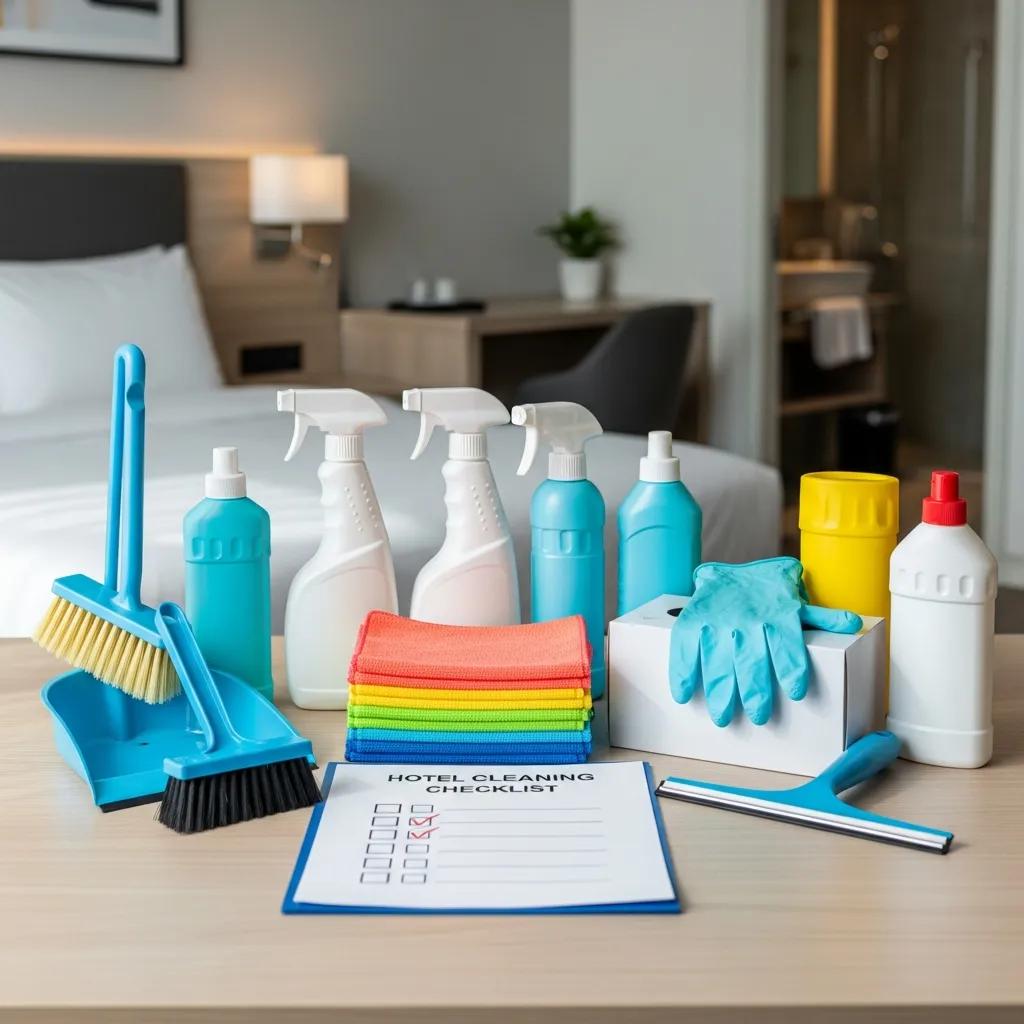
Hotel cleaning standards in Australia define minimum expectations for hygiene, frequency, chemical use and documentation to protect public health and guest safety.
These standards draw on national guidance such as workplace health and safety obligations and sector-specific best practice for accommodation and food-service areas, and they focus on high-touch disinfection, appropriate PPE, linen handling, waste segregation, and food-safety alignment where kitchens are present. Implementing these standards reduces cross-contamination risk, supports consistent guest experiences, and provides evidence for regulatory inspections through records and checklists.
Operators should codify frequency schedules, disinfectant types and concentrations, and cleaning verification steps into written SOPs so that frontline staff and supervisors follow identical procedures every shift.
- Core cleaning and disinfection frequencies: daily guest room cleans, interim high-touch spot disinfection, and scheduled deep cleans.
- Linen and laundry management: segregation, correct transport and laundering processes to avoid cross-contamination.
- Food-safety and HACCP alignment for kitchens and back-of-house areas to control cross-contact and microbial hazards.
- Documentation and audits: cleaning logs, chemical usage records, and supervisor sign-off for compliance evidence.
Adopting these items into SOPs leads naturally to specific protocols and compliance requirements that hotels must document and audit to maintain both guest confidence and regulatory proof.
Key Australian Hospitality Cleaning Protocols and Compliance Requirements
Key protocols specify approved disinfectants, PPE standards, record-keeping and verification procedures that front-line teams must follow to meet Australian expectations. For disinfection, choose registered products with manufacturer guidance for dwell time and contact concentration, and ensure staff are trained to follow those instructions precisely; PPE selection should align with tasks—gloves and eye protection for chemical handling, masks where aerosol risk exists—and be recorded in safety documents. Documentation should include daily cleaning logs, deep-clean schedules, incident reports and chemical safety datasheets stored centrally for audits and insurer requests. Regular supervisory inspections using checklists and photographic records support traceability and show continuous compliance.
This focus on documented protocols and approved products also connects to how standards translate to measurable guest outcomes and review metrics, which we discuss next.
How Do Cleaning Standards Ensure Guest Satisfaction and Safety?
Cleaning standards translate into safety and satisfaction by lowering infection transmission, reducing visible soiling and odour, and creating consistent room readiness at check-in, all of which improve guest perceptions and online ratings. When hotels enforce standardised procedures—such as a validated high-touch disinfection checklist and linen-handling controls—complaint rates for cleanliness drop and guest confidence rises, producing higher cleanliness scores on review platforms and fewer service recovery events. Monitoring tools like spot audits, guest feedback surveys and KPI dashboards quantify performance and reveal areas for targeted improvement; for example, tracking ‘time-to-room-ready’ metrics helps operations optimise turnover staffing. These measurable outcomes make it easier to justify investments in training, more effective chemistries, or specialist cleaning services to management.
Improving these guest-facing metrics relies on operational consistency, which is best achieved through professional sanitisation practices described next.
How Does Professional Hotel Sanitisation Enhance Guest Experience?
Professional hotel sanitisation is a structured approach combining cleaning, targeted disinfection and environmental controls to reduce microbial loads and present consistently clean guestrooms and common areas. This approach relies on trained staff, validated products and methods, and documented verification to ensure that sanitisation produces predictable outcomes such as lower complaint rates, faster room turnover and improved guest perceptions of safety. Hotels that adopt professional sanitisation see operational benefits including standardised cleaning outcomes across shifts, fewer emergency deep-cleans, and reduced liability from documented processes. Outsourcing or partnering with specialist providers also gives access to expertise in product selection, SOP design, and audit-ready documentation without increasing managerial burden.
- Perceived Cleanliness: Visible attention to high-touch points raises guest confidence in hygiene.
- Faster Turnovers: Efficient, standardised workflows reduce time between check-out and check-in.
- Risk Reduction: Targeted disinfection of high-risk zones lowers infection transmission potential.
Next, a comparative EAV table shows typical sanitisation actions and their direct guest-experience outcomes to guide operational decisions.
| Sanitisation Action | Primary Focus | Guest-Experience Outcome |
|---|---|---|
| Disinfection of high-touch surfaces | Kill or reduce pathogens on surfaces | Fewer cleanliness complaints and perceived safety increase |
| Linen management and segregation | Prevent cross-contamination during handling | Reduced risk of allergen or pathogen transfer; better guest confidence |
| Air quality control (filtration/ventilation) | Reduce airborne contaminants and odours | Improved comfort, fewer respiratory-related complaints |
This comparison highlights how combining surface disinfection, disciplined linen handling and air quality measures delivers comprehensive sanitisation benefits and supports consistent guest satisfaction. Choosing the right mix of actions depends on property type, occupancy patterns and risk profile.
Daily Guest Room Cleaning and Disinfection Procedures
Daily guest room cleaning and disinfection procedures set the baseline for hospitality hygiene by prioritising tasks that reduce infection risk while preparing rooms for new arrivals. A typical daily routine includes removing soiled linen, cleaning and disinfecting high-touch points (light switches, remotes, door handles), sanitising bathrooms and replenishing consumables, followed by vacuuming and floor care and final visual inspection. Disinfectants should be used according to manufacturer directions with correct contact times; order of operations reduces cross-contamination—clean from cleanest to dirtiest areas and finish with bathroom sanitisation to avoid recontamination. Quality checks, such as supervisor inspections and a signed cleaning log or digital checklist, ensure tasks are completed to the required standard and introduce accountability.
Consistent daily procedures also create the prerequisite conditions for periodic deep cleaning and effective linen management practices explained next.
Deep Cleaning and Linen Management Best Practices
Deep cleaning and linen management are scheduled programs designed to address accumulation, wear and microbial reservoirs that daily cleans cannot remove. Deep-clean scopes include mattress rotation or treatment, comprehensive bathroom descaling, grout and tile restoration, and high-level dusting; these tasks typically run quarterly or semi-annually depending on occupancy and guest profile. Linen management requires segregation of soiled textiles at source, sealed transport to laundry facilities, and laundering at temperatures and cycles that meet hygiene objectives; tracking linen lifecycle helps plan replacements before fabric integrity fails. Applying HACCP principles in laundry and kitchen linen workflows reduces cross-contamination risks and aligns textile handling with food-safety practices where needed.
Scheduling and verification for deep cleaning and linen handling closes the loop between daily sanitisation and long-term asset preservation, and it feeds directly into area-specific cleaning plans discussed next.
Which Areas Are Covered by Comprehensive Hospitality Cleaning Services?
Comprehensive hospitality cleaning covers all hotel zones—from guestrooms to back-of-house kitchens—each with unique cleaning needs, chemical choices and required frequencies. Service scopes typically include guestrooms, lobbies and reception, restaurants and dining areas, gyms and spas, pools, corridors and elevators, public restrooms, and kitchens with HACCP-aligned cleaning. Each area demands tailored methods: for example, restaurants need food-safe surface procedures and grease control, while gyms need focused sweat- and odour-management protocols and frequent equipment disinfection. Specialist providers map these zones into cleaning schedules, allocate resources based on peak usage, and recommend frequency and method to balance cost, guest experience, and regulatory compliance.
Hotels can use a quick-reference table to plan methods and frequencies for operational staffing and audit-ready documentation.
| Area | Common Issues | Recommended Frequency / Method |
|---|---|---|
| Lobby / Reception | High-touch surfaces, floor soiling | High-touch wipe hourly; full floor care daily; carpet spot-cleaning daily |
| Restaurant / Dining | Food contact surfaces, grease | HACCP-aligned surface sanitising after each service; deep-clean weekly |
| Gym / Spa | Sweat residues, shared equipment | Equipment wipe between uses; floor and mat clean daily; deep-clean weekly |
| Kitchen / Back-of-house | Grease buildup, cross-contamination | HACCP cleaning schedule, end-of-day sanitation, vent/hood weekly |
| Guestrooms | High-touch surfaces, linen turnover | Full clean each check-out; mid-stay refresh as required |
| Public bathrooms | Odour, microbial hotspots | High-touch disinfection multiple times per day; deep-clean daily |
Cleaning Protocols for Common Areas: Lobbies, Restaurants, and Gyms
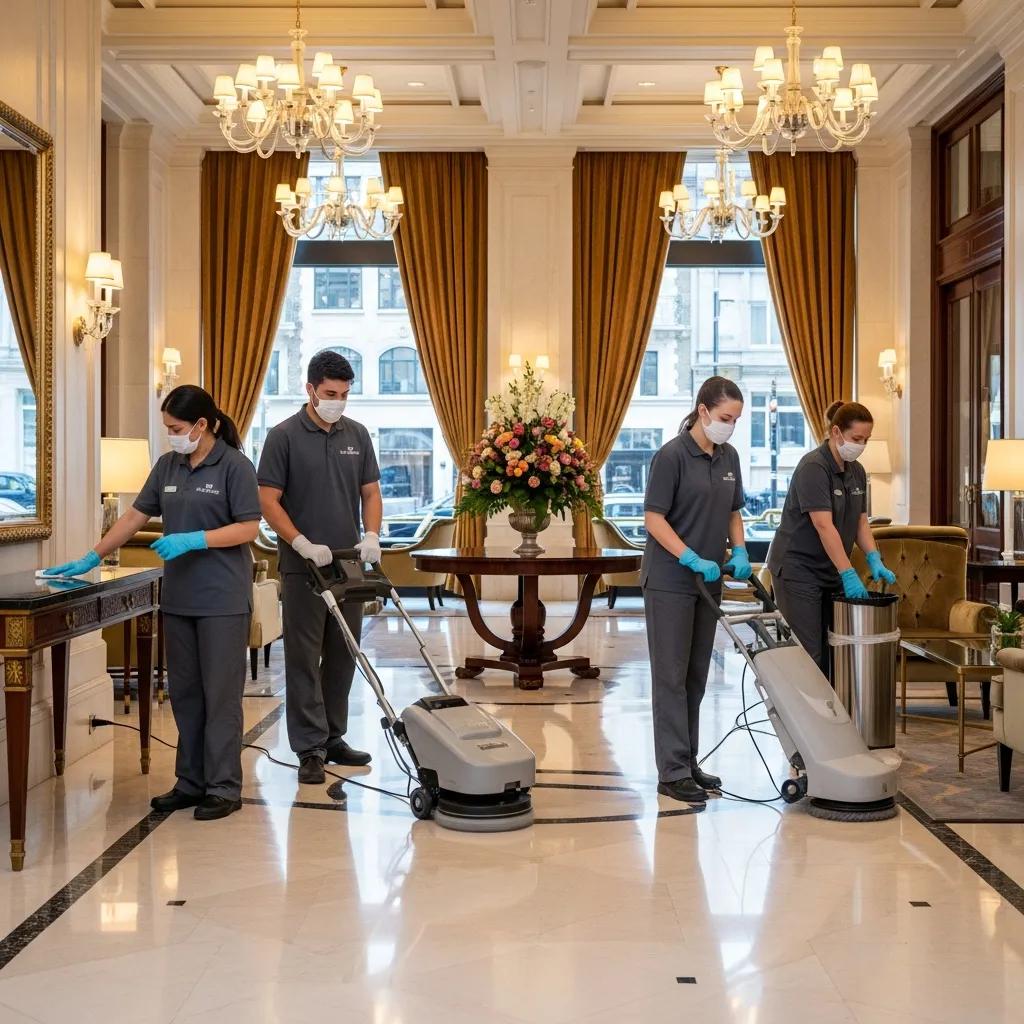
Common areas require distinct cleaning rhythms because of continuous public use and variable peak times; protocols combine frequent spot-cleaning with scheduled deep maintenance. Lobbies benefit from hourly high-touch surface wipes, regular floor care (mechanical cleaning on high-traffic days) to preserve presentation. Restaurants must follow HACCP principles: sanitise food-contact surfaces between services, use food-safe sanitiser concentrations, and maintain logs for each service period to prevent cross-contamination. Gyms require immediate cleaning of equipment between uses, routine deep-cleaning of mats, and odour control measures such as ventilation and scheduled deep steam-cleaning to manage sweat-related issues.
These common-area approaches reduce visible wear and perceived cleanliness problems, and they transition naturally into the specialised cleaning needs of kitchens, bathrooms and other high-traffic zones.
Specialised Cleaning for Kitchens, Bathrooms, and High-Traffic Zones
Specialised cleaning in kitchens, bathrooms and heavy-traffic corridors focuses on hazard control, grease and odour management, and resilient flooring care to reduce safety risks and maintain aesthetics. Kitchen cleaning must sequence tasks to prevent contamination—clean non-food areas first, then food-contact surfaces last—and follow HACCP-aligned methods, including degreasing hoods and regular microbial testing for critical points. Bathrooms need disinfectant regimens that tackle biofilms and descaling agents on fixtures, plus odour-control strategies using ventilation and surface-compatible products. For high-traffic corridors and elevators, choose durable floor-care systems, non-slip treatments and scheduled restorative cleaning to prevent premature deterioration.
Adopting these specialist SOPs helps protect guests and staff while extending asset life and ensuring compliance with food-safety and hygiene expectations.
Why Choose Local Hospitality Cleaning Experts on the Sunshine Coast and Brisbane?
Choosing local cleaning experts offers concrete advantages: faster response times for urgent re-service, knowledge of local health and building regulations, and established relationships with regional suppliers for eco-friendly products and equipment. Local teams understand seasonal occupancy patterns on the Sunshine Coast and in Brisbane and can scale staffing to match peaks or special events without lengthy lead times. Partnering with a local provider reduces logistical friction, improves supervision opportunities, and supports community-aligned service expectations while enabling quicker quality checks and site-specific SOP refinement. For hotels seeking a partner, proximity often translates into measurable operational reliability and tailored scheduling.
Divine Commercial Cleaning is a family-owned business providing commercial cleaning across the Sunshine Coast and Brisbane. The site highlights services for offices, retail, medical centres, daycare, strata, gyms, shopping centres, and X-ray/imaging centres. Divine Commercial Cleaning positions itself around experienced professional cleaners, customised solutions without lock-in contracts, a satisfaction guarantee, and environmentally conscious practices; those attributes make local partnerships practical and trustable for hotel operators seeking dependable, flexible service.
Local advantage and a tailored approach create stronger operational outcomes, which naturally leads hotels to evaluate trends and technologies that can further improve performance.
Benefits of Customised Hotel Cleaning Plans by Divine Commercial Cleaning
Customised cleaning plans align frequency, scope and chemical choices with a hotel’s size, occupancy patterns and guest profile to deliver cost-effective, consistent results. By assessing room-turnover ratios and common-area usage, a tailored plan staggers staff for peak times, schedules deep cleans when occupancy dips, and specifies linen rotations to reduce wear. Divine Commercial Cleaning emphasises customised solutions without lock-in contracts and offers a satisfaction guarantee, enabling hotels to trial tailored programmes and scale based on measured improvements. These tailored plans also include documented SOPs and supervisor sign-off procedures, so hotels gain both operational flexibility and audit-ready records.
Tailored plans combined with sustainable choices also help hotels meet guest expectation for eco-conscious operations, described next.
Eco-Friendly and Sustainable Cleaning Solutions for Hotels
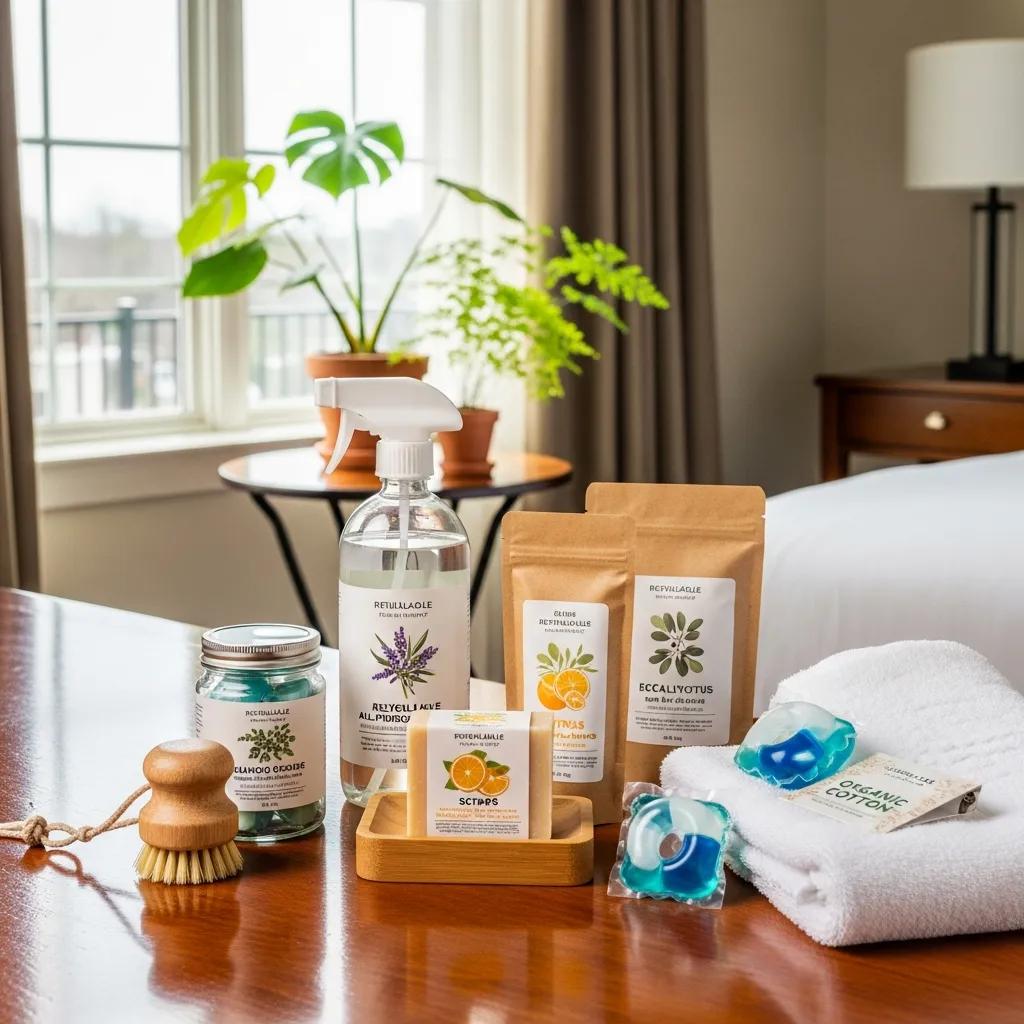
Eco-friendly cleaning solutions reduce environmental impact and can be a guest-facing differentiator when implemented transparently and effectively. Sustainable options include concentrated chemical dosing systems to lower packaging waste, biodegradable cleaners for non-food surfaces, and enzyme-based formulations for odour control that minimise harmful residues. Using such products can reduce regulatory concerns around effluent and align with guest preference for greener operations, while maintaining efficacy when validated in real-world hotel settings. Divine Commercial Cleaning highlights environmentally conscious practices in its service offering, allowing hotels to adopt greener programmes without compromising hygiene performance.
Sustainability efforts, when paired with robust SOPs and measurement, improve brand appeal and operational resilience in increasingly environmentally aware markets.
What Are the Latest Trends and Technologies in Hotel Cleaning Services?
Recent trends in hotel cleaning emphasise evidence-based disinfection, smarter equipment, and sustainability to meet post-pandemic guest expectations while improving efficiency. Innovations include electrostatic sprayers for more even surface coverage, UV-C for targeted terminal disinfection of unoccupied spaces, robotic vacuums and scrubbers for repeatable floor care, and upgraded air-filtration systems with HEPA-level performance to reduce airborne particulates. Hotels evaluating these technologies should assess realistic ROI: robotics excel in predictable open spaces like lobbies and corridors, while UV-C and electrostatic applications are best applied as adjuncts for terminal cleans rather than daily replacements for manual cleaning. Adoption should be phased with pilot testing and integration into SOPs to preserve auditability.
The following table compares common technologies, their primary benefits and typical use cases to aid decision-making for property managers.
| Technology | Benefit | Typical Use Case |
|---|---|---|
| Robotic vacuums / scrubbers | Consistent, repeatable floor care | Large lobbies and corridors during off-peak hours |
| Electrostatic sprayers | Uniform surface coverage with reduced labor | High-touch surface cycles for rapid disinfection |
| HEPA filtration / upgraded HVAC | Reduced airborne particulates and allergens | Guestroom and public-space air quality improvements |
| Eco-friendly chemistries | Lower environmental impact with maintained efficacy | Daily surface cleaning where residue and sustainability matter |
Innovations in Disinfection and Hygiene Post-Pandemic
Post-pandemic protocols prioritise documented effectiveness, occupant safety and visible hygiene measures to restore guest confidence while remaining practical for operations. Evidence-based approaches recommend combining manual cleaning with targeted technologies—manual removal of soils followed by validated disinfection methods (electrostatic application or UV in vacant spaces) to reduce microbial burden. Operators should require manufacturer validation and documented dwell times, and incorporate technology use into SOPs and training to maintain consistency and proof for inspections. Piloting innovations in single areas before scaling helps evaluate true efficiency gains versus cost and operational complexity.
Understanding realistic use-cases and integrating new methods into training and audits enables hotels to modernise hygiene without disrupting service delivery.
Use of Eco-Friendly Products and Robotic Cleaning Solutions
Eco-friendly products and robotics offer complementary benefits: chemistry improvements lower environmental footprint while robotics handle repetitive floor tasks to free staff for high-value sanitisation. Eco-formulations reduce volatile residues and can be compatible with food-service environments when certified for such use, improving guest perception of sustainability. Robotic solutions work best in structured, predictable environments—lobbies, long corridors and pre-programmable common areas—while human teams retain responsibility for detailed disinfection and guest-facing tasks. Limitations include navigation obstacles, charging needs, and integration with existing workflows; hotels should evaluate total cost of ownership and pilot deployments to align investments with labour savings and cleanliness targets.
A balanced deployment strategy combines sustainable chemistries for routine tasks with robotics where they deliver clear time savings, supporting both guest experience and operational efficiency.
How Can Hotels Maintain Compliance with Health and Safety Standards?
Maintaining compliance requires hotels to implement clear SOPs, ongoing staff training and systematic audits that produce documentary evidence for regulators and stakeholders. SOPs should be written, version-controlled and accessible to staff; they must specify scope, chemicals, PPE, cleaning sequence, frequencies and verification steps. Training programs should be regular, competency-based, and include observed practical assessments; refresher training and incident debriefs keep standards current. Audits—both internal and third-party—use checklists, photographic evidence and records to verify adherence and highlight continuous improvement opportunities.
The next subsections provide a practical SOP template and training and QC recommendations that hotels can adopt immediately.
Implementing Standard Operating Procedures for Consistency
An effective SOP includes a clear scope, step-by-step tasks, chemical specifications, PPE requirements, estimated time per task, verification checks and record fields for sign-off; templates reduce variation between teams. SOPs should be reviewed periodically—at least annually or after any regulatory change—and updated with version history to support audits. Visual aids such as step-by-step photos or short video demonstrations reinforce correct technique and are particularly useful for onboarding new staff. Scheduling SOP reviews after peak seasons or capital works ensures that operational changes are captured and that the SOP remains practical for frontline use.
Embedding SOPs into daily workflows creates predictable performance and prepares the hotel for both internal quality reviews and external inspections.
Training and Quality Control for Hospitality Cleaning Staff
Training programmes must combine theoretical knowledge (chemical safety, infection control principles) with hands-on competency assessments that verify correct technique, use of PPE, and adherence to SOPs. Quality control (QC) should include routine supervisory inspections, use of digital checklists with time-stamped sign-offs, and KPI monitoring such as room- readiness times, complaint rates and audit pass-rates to measure effectiveness. Refresher training schedules—quarterly or semi-annually depending on risk—help mitigate skill drift, and incident-based retraining maintains standards after deviations. Setting clear KPIs linked to quality incentives reinforces expectations and supports continuous improvement in both service delivery and compliance.
These training and QC practices close the loop between documented procedures and consistent frontline performance, ensuring hotels can demonstrate compliance and deliver excellent guest experiences.

Dianne, originally from Rockhampton, hails from a business-oriented family, with her father owning electrical stores and her uncle serving as Mayor. Moving to the Sunshine Coast at 13, she later pursued a rewarding real estate career and raised three children. As a single mom, she balanced university studies with domestic cleaning work. Armed with a Bachelor’s Degree in Business, majoring in Supply Chain Management, Dianne founded and grew Divine Commercial Cleaning into a thriving company. Her success is rooted in strong family mentorship, a positive attitude, and a solution-oriented approach, offering tailored cleaning services with integrity and strategic insight.