Industrial Facility Cleaning and Heavy Equipment Sanitation Services in Sunshine Coast and Brisbane
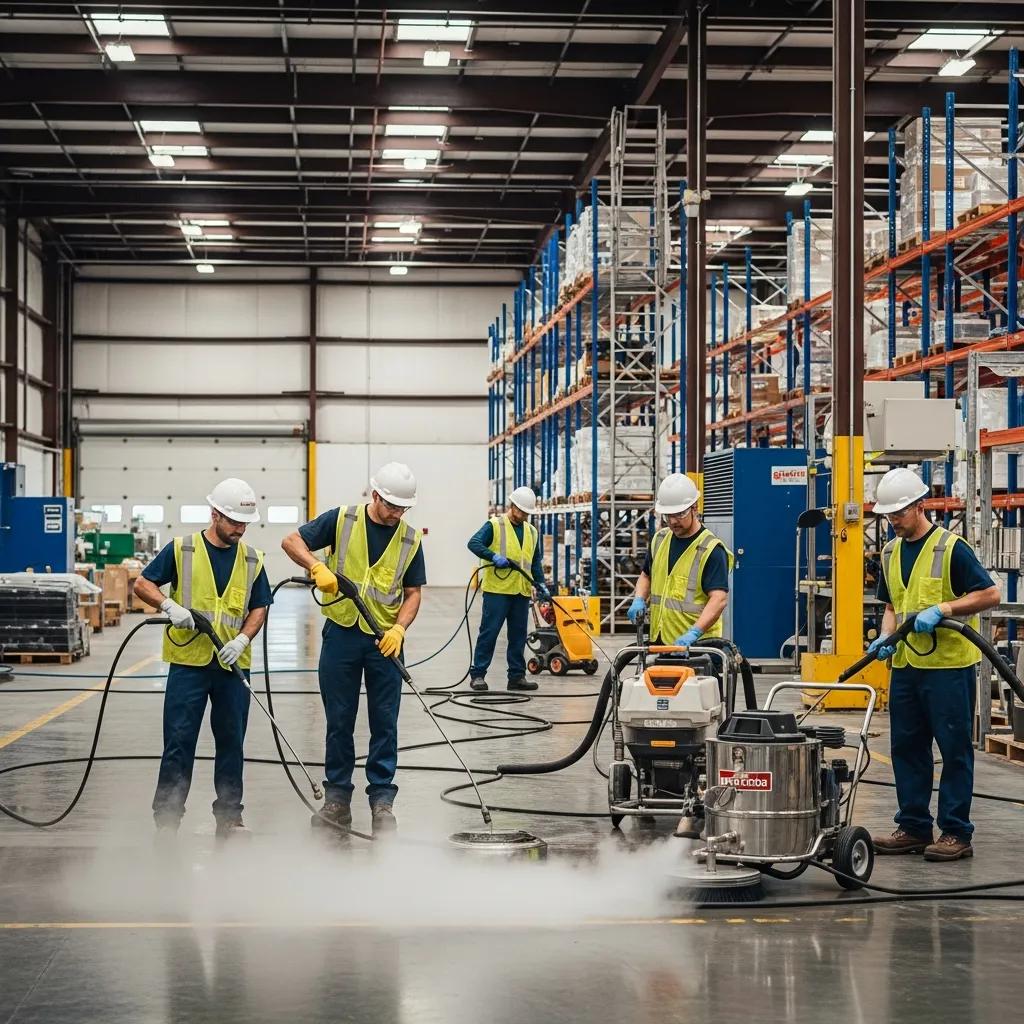
Industrial facility cleaning and heavy equipment sanitation combine targeted surface and deep-clean methods—pressure washing, steam cleaning, solvent degreasing and dry-ice blasting—to remove soils, residues and biological contaminants that threaten safety, compliance and uptime. This article explains how industrial facility cleaning and heavy machinery sanitation work, why they matter for workplace safety and asset longevity, and which techniques suit factories, warehouses and heavy equipment across the Sunshine Coast and Brisbane regions.
Facility managers and operations teams often face contamination, regulatory pressure and unplanned downtime; properly specified cleaning programs reduce slip-and-fall hazards, control cross-contamination, and extend mean time between failures.
Below we map the principal benefits, list essential heavy-equipment sanitation services with operational triggers, compare factory and warehouse requirements for the two regions, summarise industry standards and safety protocols, and provide a practical checklist to choose the right industrial cleaning contractor.
Throughout the guide we use terms such as industrial cleaning services, heavy machinery sanitation, factory cleaning and warehouse cleaning services to align with procurement priorities and current research on industrial hygiene and environmental compliance.
What Are the Key Benefits of Industrial Facility Cleaning?
Industrial facility cleaning delivers measurable outcomes by removing hazardous soils and contaminants that directly reduce operational risk, improve efficiency, and support regulatory compliance. Clean environments lower slip, trip and fall incidents and reduce particulate and microbial loads that can compromise product integrity and worker health.
Regular sanitation programmes also protect equipment from corrosive residues, decrease emergency repairs and improve throughput by minimising unplanned downtime. The following three benefits capture the operational ROI facility managers report most often.
Industrial facility cleaning provides three primary operational benefits:
- Improved Safety: Removing spills and grease reduces slip and trip incidents and limits combustible dust accumulation.
- Operational Continuity: Scheduled deep cleaning prevents equipment fouling that causes breakdowns and unscheduled stoppages.
- Regulatory and Environmental Compliance: Proper handling and disposal reduce liability risks and limit environmental incidents.
These benefits translate into lower incident rates and clearer audit trails for compliance; the next subsections explore safety mechanisms and environmental advantages in more depth.
How Does Industrial Cleaning Improve Workplace Safety?
Industrial cleaning improves workplace safety by eliminating immediate physical hazards—liquids, oils, loose debris—and by reducing airborne particulates and biological contamination that impair respiratory health. Effective cleaning programmes combine surface removal, degreasing, and targeted particulate extraction using industrial vacuums and filtration systems, and they integrate PPE and lockout/tagout procedures to protect workers during cleaning. For example, scheduled degreasing of production lines can prevent hydraulic fluid buildup that causes conveyor slip or motor stalls; similarly, removing dust layers from elevated structures reduces combustible dust risk. Routine verification—visual inspections and ATP swabs where appropriate—confirms that cleaning objectives are met and informs frequency adjustments. Maintaining this control pathway directly reduces incidents and supports safe, continuous operations.
What Environmental Advantages Does Facility Sanitation Provide?
Facility sanitation reduces environmental impact by controlling chemical runoff, managing wastewater, and ensuring correct disposal of hazardous residues in accordance with environmental regulations. Using biodegradable detergents and targeted application techniques minimises the volume of chemicals released to drains, while capture and treatment systems prevent contamination of stormwater and soils. Proper segregation and documentation of waste streams—oily residues, solvents and biological waste—limit regulatory exposure and community impact. Implementing eco-friendly product choices and water-efficient pressure-wash systems also conserves resources and demonstrates corporate responsibility during environmental audits. Together, these practices reduce incident frequency and support sustainable operations without compromising cleaning performance.
Which Heavy Equipment Cleaning Services Are Essential for Industrial Sites?
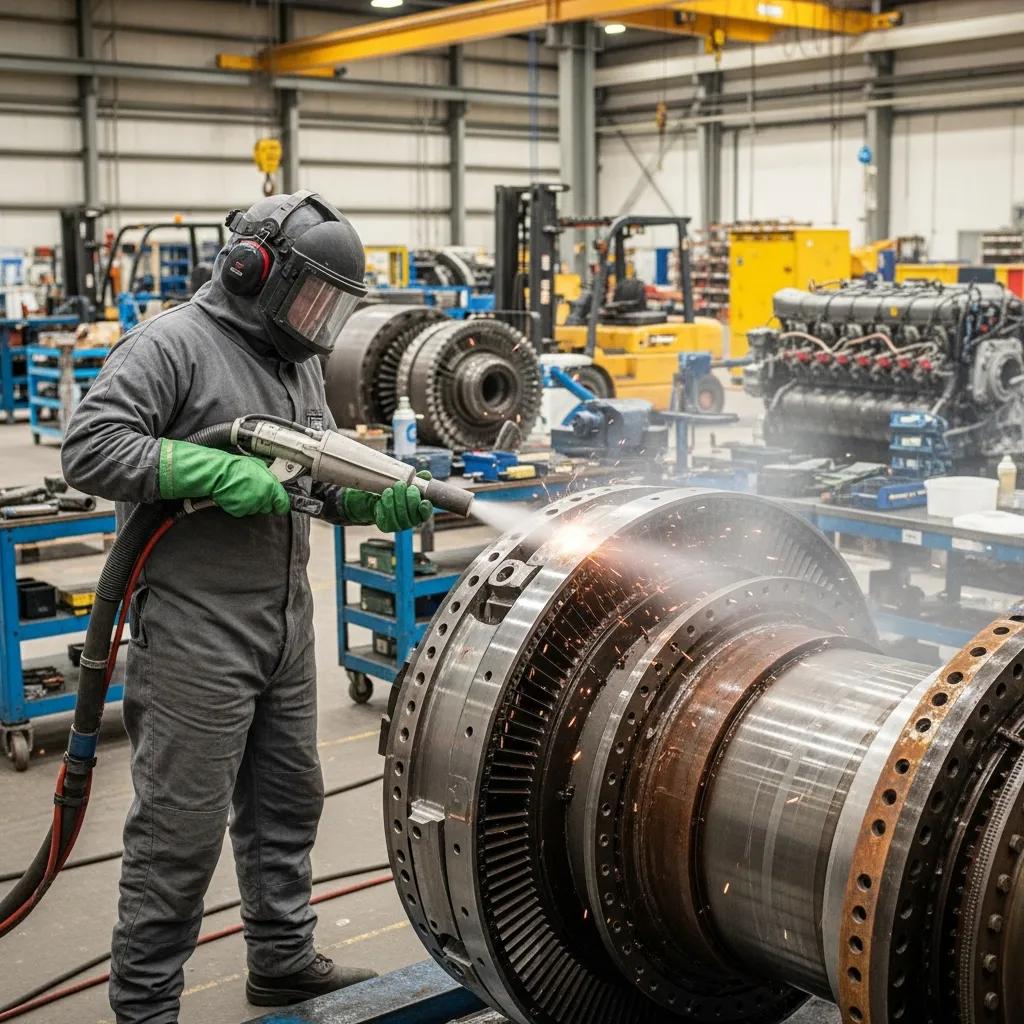
Essential heavy equipment cleaning services target the specific soils and operational constraints of large assets—forklifts, conveyors, presses and turbines—using matched methods such as pressure washing, steam cleaning, solvent degreasing and dry-ice blasting. A practical sanitation programme begins with an assessment of contamination type, access constraints and required downtime, then specifies method, frequency and verification steps to restore equipment to safe, operable condition. Regularly scheduled cleaning prevents lubricant contamination, reduces bearing failure and stops residue-driven corrosion, while deep cleans after maintenance or production shifts remove embedded soils that accelerate wear. The table below compares common heavy-equipment types, recommended sanitation methods and typical frequency triggers to help planners prioritise interventions.
Introductory table: heavy equipment sanitation options, matched to contamination types and recommended approaches.
| Equipment Type | Recommended Method | Typical Frequency / Trigger |
|---|---|---|
| Forklifts and mobile units | Low-pressure wash + degreasing, vacuum extraction | Weekly visual wash; deep clean quarterly or after fluid leaks |
| Conveyors and belts | Targeted solvent degrease, steam cleaning, belt strip-down | Biweekly to monthly; immediate after product contamination |
| Hydraulic presses and tooling | Solvent degreasing, controlled steam, protective relubrication | After maintenance or every production cycle changeover |
| Turbines and large rotating equipment | Dry-ice blasting for delicate surfaces, steam for heat exchangers | During planned outages; condition-based triggers |
This comparison clarifies matching cleaning technology to equipment risk and access; the next subsection outlines stepwise sanitation procedures for heavy machinery.
How Are Heavy Machinery and Equipment Effectively Sanitised?
Effective heavy machinery sanitation follows a strict sequence: assessment, isolation and lockout, method selection, execution, and verification. The assessment identifies soils—oils, greases, product residues, biological contaminants—and access issues; isolation uses lockout/tagout to ensure mechanical and electrical safety before any cleaning begins. Method selection pairs contamination with technique: dry-ice blasting for delicate electronics and embedded residues, steam or pressure washing for heavy oil and grime, and solvent degreasing for hydraulic contamination followed by neutralisation and relubrication. Execution requires trained crews with appropriate PPE and fall protection, and verification uses inspections and functional tests to confirm equipment readiness. Following these steps reduces risk to technicians and ensures cleaning activities do not introduce failure modes into production systems.
Introductory table summary: matching methods to contaminant types guides safer, faster sanitation cycles and supports predictable equipment availability.
What Are the Best Practices for Maintaining Equipment Longevity?
Maintaining equipment longevity after sanitation requires scheduled cleaning tied to usage metrics, protective corrosion controls and proper re-lubrication following solvent-based processes. Best practice schedules combine calendar-based tasks with condition-based triggers such as vibration trends, temperature spikes or visual residue accumulation; this hybrid approach optimises resource allocation and reduces over-cleaning. Applying corrosion-inhibiting coatings where appropriate and following manufacturer recommendations for lubrication restores protective films removed during cleaning and preserves component life. Documentation—logged cleaning events, materials used and inspection results—creates a maintenance history that supports root-cause analysis and ROI calculations. Implementing these measures reduces mean time to repair and extends mean time between failures across heavy assets.
How Do Factory and Warehouse Cleaning Services Differ in Brisbane and Sunshine Coast?
Factory and warehouse cleaning services prioritise different operational goals: factories focus on contamination control around production equipment and process lines, while warehouses prioritise floor integrity, racking cleanliness and pest prevention to protect stored goods. Regional factors in Brisbane and the Sunshine Coast—such as humidity, local industry types and logistics volumes—influence frequency and technique selection; higher humidity increases dust adherence and microbial growth, requiring more frequent dust suppression and targeted dehumidification in storage zones. Factory cleaning often leverages line shutdown windows for deep degreasing and containment, while warehouse cleaning uses high-reach equipment for racking and dust extraction to reduce airborne particulates. The comparison table below highlights how layout complexity, contamination risk and required cleaning frequency differ between the two facility types.
Contrasting factory and warehouse cleaning attributes to guide programme design.
| Facility Type | Primary Cleaning Focus | Typical Frequency & Considerations |
|---|---|---|
| Factory (production) | Production lines, machinery access, contamination control | Daily surface cleaning; planned deep cleans during shutdowns; containment for hazardous processes |
| Warehouse (storage) | Floors, racking, pest control, dust suppression | Regular aisle sweeping, monthly high-reach racking clean, pest management tied to inventory cycles |
| Cross-dock / distribution | Rapid turnover, spill response, floor load marking | Frequent spot cleaning and rapid response teams for fluid spills and pallet debris |
This contrast shows the need for tailored protocols; the following subsections describe specialised factory techniques and warehouse-specific strategies.
What Specialised Techniques Are Used in Factory Cleaning?
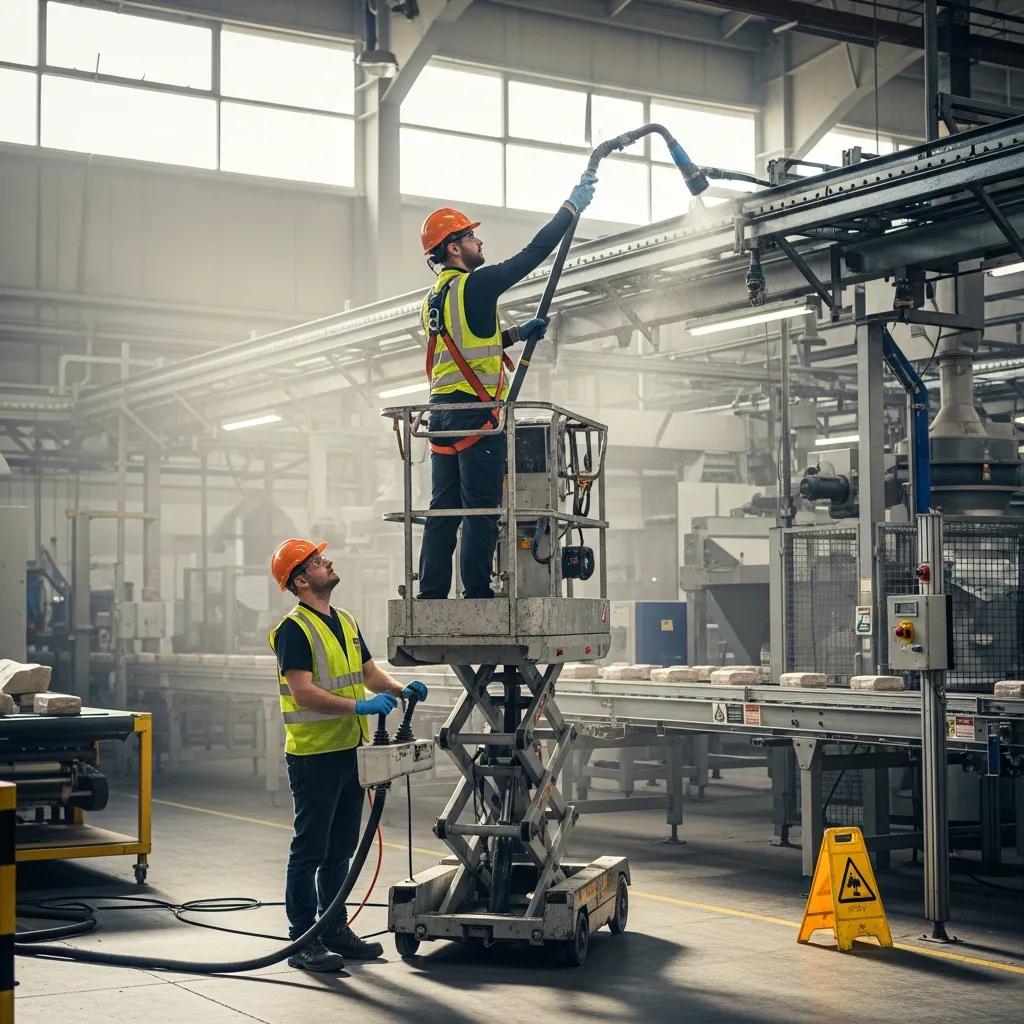
Factory cleaning uses specialised techniques such as contained line shutdown cleaning, targeted degreasing of production zones, and high-access cleaning with containment to prevent cross-contamination. Containment strategies—temporary barriers and localised extraction—protect adjacent processes and maintain product integrity during deep cleans, particularly in food or pharmaceutical-adjacent lines. Techniques like targeted chemical application with controlled dwell times and pressure-modulated washing reduce water usage while maximising soil removal. Scheduling deep cleans during planned downtime minimises production impact and allows full inspection of machinery surfaces. These methods combine to keep production quality high while reducing downtime and contamination risk.
How Are Warehouse Cleaning Services Tailored to Storage Needs?
Warehouse cleaning emphasises racking cleaning, aisle maintenance and dust suppression to protect inventory and maintain safe handling conditions for forklifts and personnel. High-reach vacuum systems and microfibre wiping protocols remove settled dust from racking shelves without displacing stored goods, while floor scrubbing and oil-absorbent treatments maintain slip-resistant surfaces. Pest risk management integrates cleaning schedules with inspections, sealing of entry points and proper waste segregation to reduce attractants. Frequency recommendations often link to turnover rates: high-throughput zones require daily cleaning, while long-term storage areas may need monthly attention. These tailored approaches preserve inventory condition and support efficient warehouse operations.
What Are the Industry Standards and Safety Protocols for Industrial Facility Sanitation?
Industry standards and safety protocols for industrial sanitation centre on occupational health and safety, hazardous chemical handling, environmental discharge controls and documented verification of cleaning outcomes. Compliance requires risk assessments, PPE specification, confined-space procedures where applicable, and lockout/tagout implementation during cleaning of energised equipment. Documentation practices—safety data sheets (SDS) for chemicals, training records and insurance evidence—are essential items clients should request from service providers. The table below maps key compliance areas to responsible parties and practical actions that meet those standards, helping procurement and safety teams verify contractor readiness.
Introductory table: mapping compliance requirements to responsible party and actionable practices.
| Compliance Area | Responsible Party | Practical Actions to Meet Requirement |
|---|---|---|
| Occupational Health & Safety (OHS) | Cleaning contractor & site safety officer | Conduct JSA/JHA, provide PPE, maintain training and incident reporting |
| Chemical Handling & SDS | Cleaning contractor | Keep SDS on-site, use approved chemicals, train staff on spill response |
| Environmental Discharge & Waste | Site operations & contractor | Use containment, capture runoff, segregate and document waste disposal |
| Lockout/Tagout & Confined Space | Contractor supervisors & site maintenance | Implement isolation, provide permits, supervise entry and rescue plans |
This mapping clarifies who does what to achieve compliance; the next subsections explain required documents and worker safety measures in practice.
Which Compliance Requirements Must Cleaning Services Meet?
Cleaning services must meet compliance requirements covering OHS, chemical storage and handling, wastewater management and relevant environmental reporting; clients should request evidence that contractors follow these standards. Key documents to verify include safety data sheets for all chemicals used, training and competency records for crews, insurance certificates and written procedures for confined space and lockout/tagout work.
A short checklist helps procurement teams evaluate proposals: ask for SDSs, evidence of training, description of containment methods and waste handling protocols. Ensuring these items are provided before work commences reduces liability and demonstrates that the provider operates to accepted professional standards. Verification through site audits and documented work completion records completes the compliance loop.
How Is Worker Safety Ensured During Heavy Equipment Cleaning?
Worker safety during heavy equipment cleaning relies on strict isolation protocols, appropriate PPE, trained operators and active supervision to manage mechanical and chemical hazards. Lockout/tagout procedures remove energy sources before crews work on moving or energised components, while confined space permits govern any interior equipment entry.
PPE selection matches the method and materials—chemical-resistant gloves for solvents, respiratory protection for particulate-generating processes—and supervisors verify adherence to protocols. Routine toolbox talks and competency checks ensure crews remain current on safe methods and emergency procedures. These controls protect personnel and maintain continuity of operations by preventing cleaning-related incidents.
How to Choose the Right Industrial Cleaning Service in Sunshine Coast and Brisbane?
Selecting the right industrial cleaning contractor requires a methodical evaluation of experience, equipment, safety record and local responsiveness to support both routine and emergency needs. A sound selection process includes requesting detailed proposals that outline methods, verification steps and waste-handling practices, checking references and confirming local availability to meet scheduling constraints in the Sunshine Coast and Brisbane regions. The checklist below provides a stepwise approach to vetting providers and comparing quotes in a way that balances cost with risk mitigation and operational continuity.
Choosing a provider: stepwise checklist for procurement teams
- Verify experience and equipment: Confirm the contractor has the specialist machinery and access systems for your asset types.
- Confirm safety and compliance documentation: Request SDSs, training records and evidence of insurance.
- Assess local availability and response time: Prioritise firms that can meet shutdown windows or rapid spill response.
- Compare scopes, verification and waste handling: Ensure proposals include post-clean inspections and documented disposal methods.
Using this checklist helps decision-makers compare apples-to-apples and prioritise long-term value over headline price. The next subsection details selection criteria and what to ask during vendor interviews.
What Factors Should Be Considered When Selecting a Cleaning Provider?
When selecting a provider consider operational capabilities, specialist equipment, safety systems, insurance and references to ensure the partner can meet your technical and legal requirements. Evaluate whether the provider has experience with similar assets—heavy machinery, conveyors or sensitive production lines—and whether they can perform work within your required shutdown windows without introducing contamination risks.
Insurance and documented training records reduce procurement risk, and references or case examples demonstrate capability under real-world constraints. Cost is important, but proposals should be evaluated on scope clarity, verification steps and waste-handling methods to avoid hidden liabilities. A thorough review of these factors leads to a reliable, compliant sanitation partnership.
How Do Customer Reviews and Certifications Influence Choice?
Customer reviews and certifications provide external validation of a contractor’s reliability, safety practices and technical competence, helping reduce procurement risk when combined with direct references and documented evidence. Prioritise providers that can produce verifiable references for similar projects and that maintain relevant training certifications for crews; while certifications are not the only measure, they signal formal commitment to standards.
When reviewing testimonials, probe for details about scheduling adherence, incident handling and post-clean verification to understand actual performance. Validating reviews with direct reference checks and reviewing supplied documentation yields a stronger basis for selection than reputation alone.
For organisations seeking a dependable provider in the region, the company’s role as an information hub and lead generator can help connect operations teams with bespoke cleaning plans; request a site assessment or quote to align cleaning frequency and methods with your production calendar and compliance needs.
Our team can supply a tailored scope of work and scheduling options on request, ensuring proposals specify verification steps and disposal procedures that meet regulatory expectations.
This direct engagement helps operations managers secure predictable downtime windows and documented outcomes without compromising safety or environmental controls.

Dianne, originally from Rockhampton, hails from a business-oriented family, with her father owning electrical stores and her uncle serving as Mayor. Moving to the Sunshine Coast at 13, she later pursued a rewarding real estate career and raised three children. As a single mom, she balanced university studies with domestic cleaning work. Armed with a Bachelor’s Degree in Business, majoring in Supply Chain Management, Dianne founded and grew Divine Commercial Cleaning into a thriving company. Her success is rooted in strong family mentorship, a positive attitude, and a solution-oriented approach, offering tailored cleaning services with integrity and strategic insight.